

Soldiers sample life in fast lane
The role of an automotive technician is vital when it comes to keeping the New Zealand Army, Ngāti Tūmatauenga, moving in conflict.
From keeping light armoured vehicles and armoured Bushmaster personnel carriers in prime shape, through to heavy vehicles, generators and chainsaws, technicians are the problem solvers to ensure machines run smoothly in workshops, at camps and bases or in challenging field conditions.
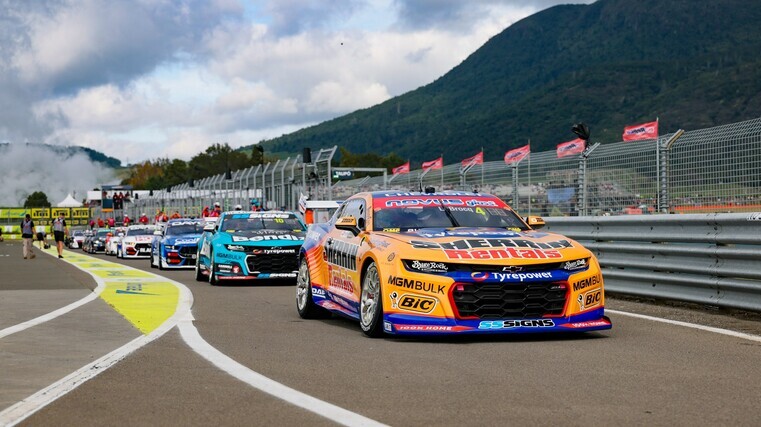
Four NZ Army automotive technicians got to test their training and skills in a different environment when they linked up with V8 Supercars outfit Matt Stone Racing Team for the two New Zealand legs of the series this month, with two going to Taupo and Ruapuna Raceway, Christchurch, respectively.
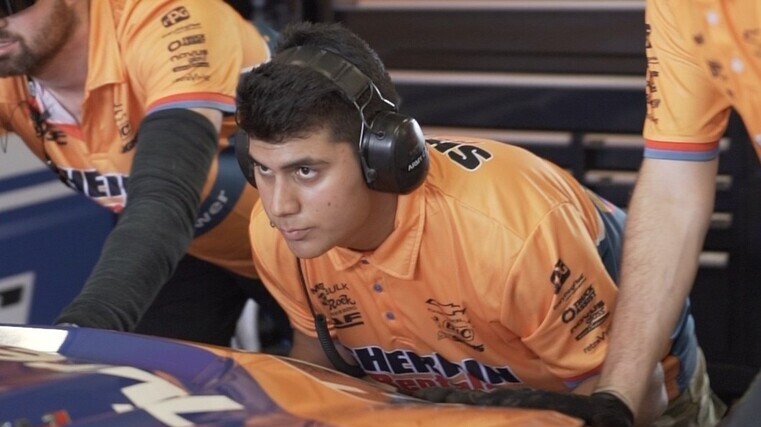
Lance Corporal Miguel Orejuela-Triana, an NZ Army automotive technician from 2nd Combat Service Support Battalion, says the experience showed how fast and co-ordinated a workshop team can be.
“It felt very similar to army deployments – everyone has a job, a time frame and works seamlessly together,” he adds. “I didn’t expect it to feel so familiar to how the army operates. Everyone knew exactly what they were doing and when to do it.”
Orejuela-Triana, pictured above, says a lot of their role was hands-on support, such as moving tyres, pushing cars across scales and setting up in the tyre bay.
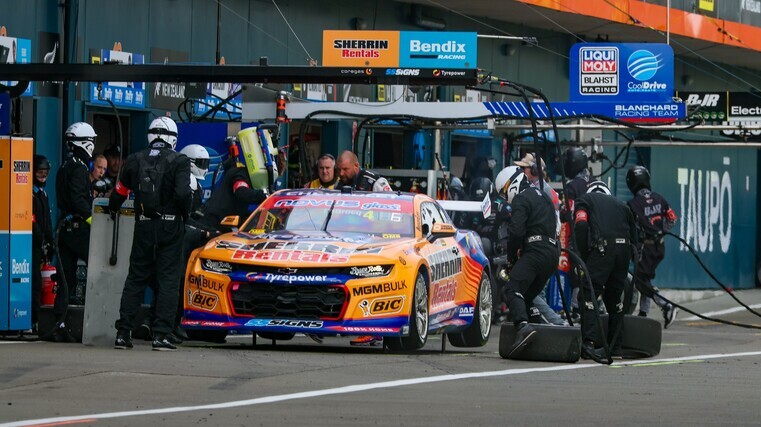
“It was about keeping things moving and being ready to help wherever needed. You had to be fast handling tyres during pit stops – getting the new ones in and old ones out of the way. There was very little room in the pit area.”
The cars use a bottled ethanol-based fuel manufactured in Australia and were refuelled by quickly swapping out the bottles as both vehicles came in.
“We were shown how to use the handheld refuelling system – connecting the 30-litre bottle to deliver fuel to the car,” explains Orejuela-Triana.
When the V8 vehicles are stationary and no air is flowing, heat builds up rapidly because they rely on forced induction from high-speed movement to push air through the radiators and brake ducts.
“The cars also don’t have room for their own built-in radiator fans, so we helped operate the cooling fan by placing it on the car during stops to bring temperatures down and assisted with basic maintenance and cleaning where needed.”
The opportunity came about after a strong relationship between the team at Matt Stone Racing and members of the Australian Defence Force, with recent efforts expanding to New Zealand servicepeople.
“The collaboration with military auto technicians is mutually beneficial,” says Matt Stone, owner of the team. “There’s a great deal our crew and the army technicians can learn from each other.
“The automotive technicians who joined us at the Taupo 440 and at Ruapuna proved to be a tremendous asset. They integrated seamlessly into the team, and our mechanics always spoke highly of the skill, professionalism and contribution.”
Orejuela-Triana says it was a fantastic opportunity to develop their professional skills in a high-performance environment. “The efficiency and co-ordination are very similar to how the military operates.
“But what really stood out for me was how efficient and structured everything was, and the pace of the environment. Everything happens extremely quickly.”
He adds it was a rush to experience the ups and downs of a Supercars weekend and the team was happy with the result.
In Taupo, one Matt Stone Racing car finished 18th after starting 21st, and the other came home ninth after starting further back. In Christchurch, the team did even better with one finishing seventh and the other placing 12th.
Orejuela-Triana recommends others embrace such an experience if they get the chance. “It’s a great experience to see everything up close and adds real value. I was so grateful for how open the team was in sharing knowledge and explaining things.
“You get a lot of learning out of it. The more questions you ask, the more you take away. It showed the importance of clear communication to work effectively and stay co-ordinated, and trusting your team to do the job. I plan to take all that back with me into the workshop and field.”