

Update for clean car data
The NZTA has updated the reference data used for the clean vehicle standard (CVS) even though the government is currently assessing whether to revise the targets for new and used light vehicle imports.
Chris Bishop, Minister of Transport, announced last year that a review of the goals for the scheme, which was launched as the clean car standard in January 2023, will be completed by June 2026.
In the meantime, the NZTA notes it is still required by legislation to update the reference data for carbon dioxide (CO2) targets, mean target weights and slope of line calculations by April 30.
It alerted dealers to the fresh CVS data in an email newsletter on April 23 but adds: “publication of this information doesn’t pre-empt the government’s decisions on the future of the CVS”.
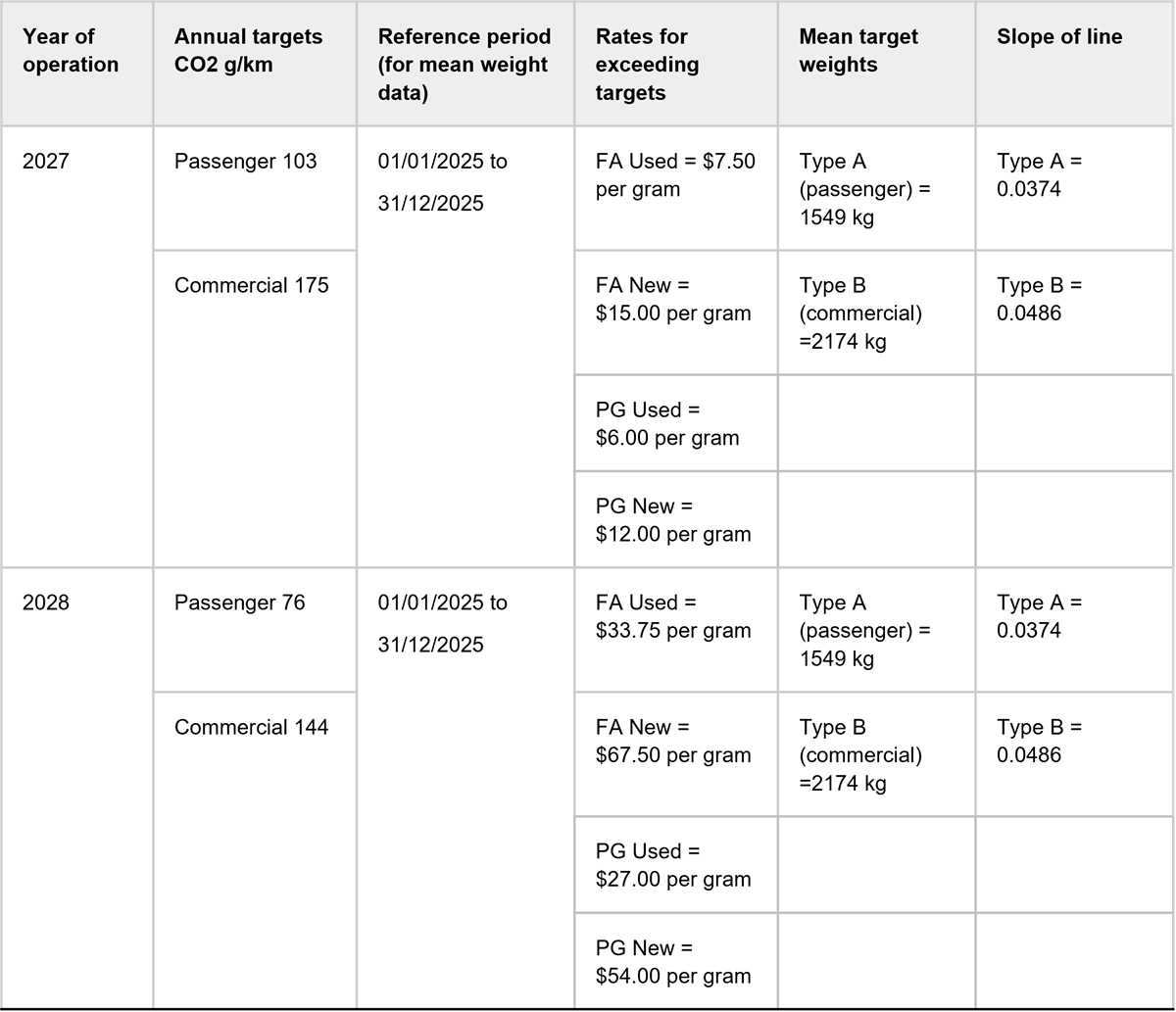
The new reference data shows annual CO2 targets for passenger vehicles in 2027 will be 103g/km under the current settings and 175g/km for commercial models. They are set to drop to 76g/km and 144g/km respectively in 2028.
This year’s targets are 108gCo2/km for passenger units and 207gCO2/km for commercials.
Mean target weights have also been updated by the NZTA. For type A or passenger vehicles they will shift from 1,482kg in 2026 to 1,549kg for the next two years.
The figures for type B or commercial vehicles move from 2,098kg to 2,174kg over the same timeframe.
As for the slope of line figures, these have been set at 0.0343 for type A and 0.0526 for type B this year. In the updated reference data these move to 0.0374 and 0.0486 respectively for 2027 and 2028.
The NZTA’s website explains the CVS works on the principle that each light vehicle in an importer’s account will have a calculated CO2 value.
This value will be positive, which can earn account holders a credit, or negative, which may result in a charge. Credits can be used to offset charges or transferred to other importers.
Values are calculated using a formula that considers the vehicle’s three-phase worldwide harmonised light vehicle test procedure (3pWLTP) CO2 score, its tare weight and whether it is a passenger or commercial unit.
Using this information and reference data, which is set in legislation or weight data from the motor vehicle register fleet, the calculated CO2 value is derived.
“The CO2 value is important but so is the ratio to the weight of the vehicle, and the annual target. If the vehicle has a low CO2 value for its weight it is more likely to get a credit,” adds the NZTA.
Updated reference data