


Shareholders back new board
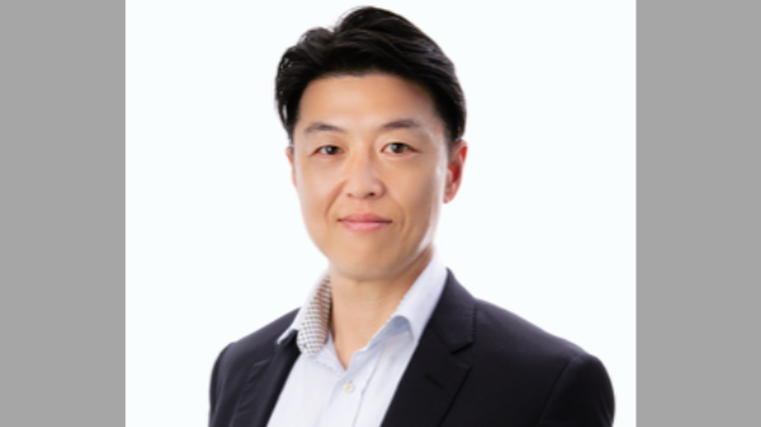
A co-founder of NZ Automotive Investments (NZAI) says he has confidence in the company’s new board but declined to comment to shareholders when asked about the recent mass resignations that have led to the changes.
David Sena, who is the majority shareholder of the parent company of 2 Cheap Cars, responded to questions during NZAI’s annual shareholder’s meeting in Auckland on September 2.
He brought in a new set of directors last month following the resignation of three independent directors and executive director and fellow co-founder Eugene Williams.
Michael Stiassny, Gordon Shaw and Samantha Sharif were elected as directors of the board at the meeting and say they aim to stabilise the company as quickly as possible.
NZAI has had a turbulent time of late and besides the changes at board level, its chief executive and external auditor have also resigned and its bank says it is unable to provide assurance of support for the company’s trade and motor finance facilities beyond their current expiry dates.
Sena, pictured, has been appointed as interim chief operating officer and was asked by shareholders about the recent departures from the company, reports the NBR.
“I do not wish to comment. I respect and have confidence in the new board to work together effectively,” he said.
Sena was also asked during the meeting if he would resign if the company’s performance did not improve in 12 months but did not comment on that specifically and repeated his confidence in the new set of directors.
The board’s newcomers resigned their positions at the start of the meeting before being voted back into their positions by shareholders.
Shaw was named interim chief executive officer of NZAI last month and says ensuring the company has a strong team is critical to the future success of the business, along with its operational strategy and delivery.
Stiassny, a former chairman of Waka Kotahi NZ Transport Agency, is chairman of the board and told shareholders the board understood NZAI has underperformed and “this must be remedied for the benefit of all shareholders”.
“We are moving at pace. Gordon’s immediate focus is on ensuring the fundamentals are right: Low costs and high volumes that generate healthy margins are the drivers that made NZAI a successful business in the first place,” he told the meeting.
“I can assure you that your new board is absolutely committed to strong governance, full transparency and providing timely updates as and when any changes in strategy are forthcoming.
“We’re committed to re-positioning the business for sustainable growth and turning the profitability tide in the shortest time frame possible.”
Cost efficiencies
Shaw explained to shareholders that Sena will be chief operating officer for six months and will be “instrumental in reviewing supplier arrangements that are currently outsourced in order to drive performance, reduce rework and consequent after sale quality claims”.
He added the board and management was examining and recalibrating the core business in an effort to improve financial performance and rebuild shareholder value.
“We have already identified measures that we believe will lead to improved cost efficiencies including: reconfiguring the work flow within the [vehicle hub facility], further reducing outsourcing and expanding vehicle preparation activities undertaken at the hub to make it a one-stop-shop prior to sale; and strengthening our existing key supplier partnerships and expanding our networks,” he said.
“With regard to improving F&I performance, we recognise that market conditions and access to credit has tightened. Strengthening partnerships with our F&I providers and ensuring our branch network is sufficiently trained to maximise sales in this area is a critical first step.”
The board will continue to review the direction of one of its other businesses, NZ Motor Finance, and is looking at its management and organisational structure, Shaw noted.
Discussions have been held with a potential new auditor and he expected an update for the market this month and the search for a permanent chief executive has begun.
The directors have also had a meeting with the company’s bankers and will continue to engage with them prior to the current financial facilities maturing.
‘Difficult year’
Haydn Marks, NZAI’s chief financial officer, presented the company’s results for the 2022 financial year to the meeting along with an update on its performance since the start of April this year.
“The company had a difficult year, navigating through Covid trading restrictions and dealing with the impact of changes to lending regulation under the Credit Contracts and Consumer Finance Act [CCCFA],” he said.
Revenue and income was slightly down against the 2021 financial year at $66 million, driven by inflationary factors and lower sales volumes. The company’s statutory net profit after tax (NPAT), which included a one-off gain on the rearrangement of leases associated with the move to its new hub, was $2.6m, down $600,000 on the previous year.
Excluding the gain, the underlying NPAT for the 2022 financial year was $1.7m, down 55. 7 per cent from $3.8m a year earlier.
“Over the first four months of the new financial year, our estimated market share of used vehicle sales has increased to 7.4 per cent, up from 6.9 per cent against the same period last year,” explained Marks.
“The operating environment has been challenging with inflationary pressure, economic uncertainty, and rising interest rates. As noted earlier, the business has also been impacted by changes to lending regulation under the CCCFA, with finance and insurance penetration falling by 19 per cent for the period.
“While revenue and income is up 10 per cent to $27.7m, this is largely on the back of inflationary price increases on vehicles. The contribution margin is down $500,000 due to the impact of changes to lending regulation under the CCCFA and slightly lower vehicle sale volumes.
“The underlying NPAT is $800,000, a slight improvement on the preceding four months but down $500,000 on the same period last year.”