


Seven challenges for Japan
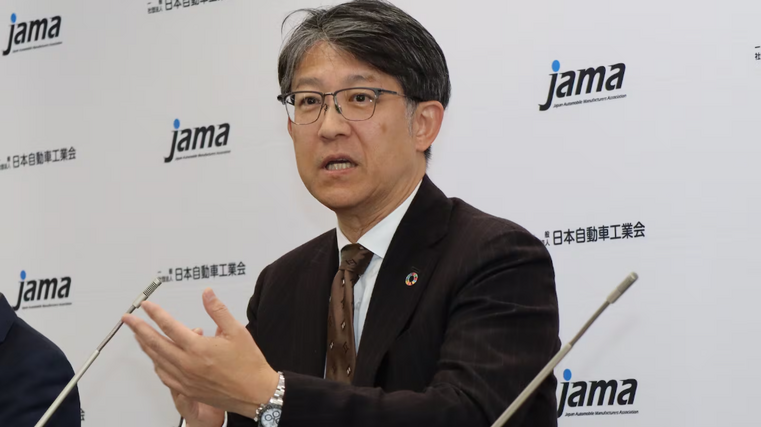
The chairman of the Japan Automobile Manufacturers Association (JAMA) has outlined seven issues to overcome to ensure global survival of the country’s motor-vehicle industry.
Koji Sato, who is also Toyota’s chief executive officer, has taken over at JAMA’s helm and says the organisation’s focus for 2026 will be on “international competitiveness”.
He says its members need to leverage, via artificial intelligence, the vast amount of data and experience accumulated by the industry, and that Japan also needs to capitalise on its expertise in logistics and supply-chain management.
Sato, pictured, notes unprecedented upheaval in trade relations, technology trends and green policies will force Japanese marques to rethink longtime strategies that have made them household names.
“The question is how we can identify Japan’s winning strategies. To survive the difficult environment and grow as a mobility industry, it’s essential for the automotive sector to unite and enhance our competitiveness.”
JAMA is recommending a plan of action for its members this year and will make policy proposals it wants Japan’s government to act on. Marques in Japan have identified seven challenges to overcome.
Resources and components
Japan is trade-reliant and poor when it comes to natural resources, especially the rare-earth elements and lithium ores needed for electrified cars and their batteries.
Its car industry also depends on stable trade to support its global supply chain.
The industry there has to grapple with Chinese moves to limit exports of key rare-earth elements and semiconductors, as well as adjust its business in regard to trade uncertainty created by US tariffs.
Integrating automated driving
Japan – with its plethora of regulations and safety-first mindset – has long been slow to move into higher levels of more fully automated driving. This has led to players from Silicon Valley and China gaining worldwide advantages.
JAMA now wants to get serious about building a better domestic infrastructure for developing and commercialising such technologies. It wants to promote a cross-industry appeal to the Japanese government to set up a framework for safe testing with a timeline for introduction.
Reforming car-related taxes
The transportation tax system in Japan has long been the scourge of its carmakers. Heavy taxes, which span across six categories applied to vehicles, can amount to up to ¥1.9 million, or around NZ$20,000, for a car owner over the 13-year lifespan of a vehicle costing ¥3.08m – or about NZ$32,900.
JAMA adds this stifles sales in its members’ domestic market and relieving this burden will be prioritised in 2026.
Competitive supply chains
With corporate consolidation and low-cost competition from China, carmakers need to boost supply-chain efficiency through common components and mass scale.
For example, recent problems in semiconductor supply illustrate Japan’s vulnerabilities.
JAMA says the country’s marques need more standardisation of engine parts, computer chips and logistics among themselves to improve the resilience of their supply chains.
Achieving carbon neutrality
Car manufacturers in Japan were latecomers to the global industry’s entry into fully electric vehicles. Now, their go-slow approach of focusing on petrol-electric hybrids and other technologies is looking more well played as regulation rollbacks create headwinds for EV demand.
That said, they still face pushback on some multi-pathway initiatives, including their promotion of hydrogen and carbon-neutral fuels. Winning international adherents to that is a work in progress.
Circular-economy mechanisms
To build a cleaner, more sustainable motor-vehicle manufacturing sector, Japan’s marques need to have a cross-industry network for linking data and tracing components.
Many experts believe that to be a massive undertaking, especially given the international nature of supply chains.
Strengthening human resources
The future of automotive industry growth has become more linked to software and silicon, rather than engine blocks and sheet metal.
However, Japanese carmakers struggle to cultivate homegrown talent to program software-defined vehicles of the future and have problems attracting overseas experts to Japan.
Identifying the cause of this, and promoting work styles and pay structures that support cutting-edge expertise, is likely to be critical to keep Japan’s brands front and centre.
Role in global car landscape
“It’s crucial to focus on how we can revitalise Japan’s automotive industry while building a sustainable business model,” says Sato. “I will strive to ensure Japan’s industry can play a solid role in the global landscape.”
It is Sato’s first time at the association’s helm. His appointment returns influence to Toyota, the country’s and world’s biggest carmaker. Company chairman Akio Toyoda served a record four terms as JAMA’s boss, setting its priorities in recent years.
Toyoda was first appointed chairman of JAMA in 2012, three years after taking over as head of Toyota. He took on the chairman’s role again in 2018 and assumed an unprecedented fourth two-year term from May 2022. His final JAMA stint ended five months in December 2023.
Masanori Katayama, Isuzu Motors’ chairman, took over on January 1, 2024. That appointment broke with the usual rotation between the heads of Toyota, Honda and Nissan. Katayama was also the first JAMA boss from a commercial-vehicle maker, reports Automotive News.
Some industry watchers in Japan believe Toyota hadn’t given up that much influence at JAMA after Katayama’s appointment with the company holding a five per cent stake in Isuzu.