

Marques go head-to-head in emissions table
Australia’s peak automotive industry body has released a “scorecard” of carbon dioxide (CO2) emissions from cars imported into the country last year.
The report from the Federal Chamber of Automotive Industries (FCAI) breaks down average CO2 emissions by carmaker and the number of sales in 2020 to show how they compare to the target set under the industry’s voluntary standard.
Toyota, Lexus and Jaguar were among the best-performing brands for passenger vehicles and light SUVs, while luxury brands Maserati, Lamborghini and Ferrari were at the bottom end of the scale.
Only 12 marques out of 39 listed achieved lower emissions than the voluntary target of 154 grams of CO2 per kilometre set by the Australian industry for 2020.
Meanwhile, just 10 carmakers at this stage have lower average emissions than the 2021 goal of 148g CO2/km.
Top-10 marques across the ditch, such as Mazda, Hyundai, Kia, Ford, Nissan, Mitsubishi and Subaru, all fell below the industry average.
Of the luxury brands, Lexus led the way mostly due to Toyota’s hybrid system, while Audi, BMW, Mercedes-Benz, and Porsche were among the big emitters.
The results show how far behind vehicle emissions in Australia are when compared to standards in other parts of the world.
Australia’s new-car industry has set a target for cars of 100g of CO2 per kilometre by 2030. The current standard in Europe is 95g CO2/km.
Carmakers in Europe are fined if they fail to hit average emissions targets, which has helped boost the development of electric vehicles (EVs), but Australia has no such penalties mandated by government.
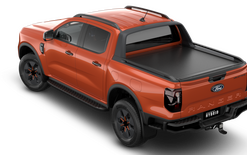
For light commercials and heavy SUVs, the industry set a 2020 emissions goal of 197g CO2/km. Only eight out of 25 manufacturers sat below that figure and the industry average was 218g CO2/km.
The FCAI wants the voluntary limit for this section of the market to be under 145g CO2/km by 2030.
Long-term plan
Tony Weber, chief executive of the FCAI, says the study will form the “baseline” for a long-term plan by marques to cut passenger car emissions by four per cent a year until 2030.
The ambition is to reduce CO2 emissions from light commercials and large SUVs by three per cent annually.
Weber says industry is setting its own goals due to a lack of government action on the matter.
“This puts a line in the sand,” he adds. “We put that out for transparency. What we’re doing is saying here is a target in 2030 that we’re going to aim for.
“We have two issues in Australia. We don’t have a [CO2 emissions] target and we have the lowest quality fuel in the OECD. Marry those together and it’s really hard to get the best quality drivetrain technology into the market.”
He explains the 10-year timeframe was chosen to give manufacturers a chance to make adjustments over the model cycle of different vehicles.
To read the FCAI’s full report, click here.