


Car goes further with solar
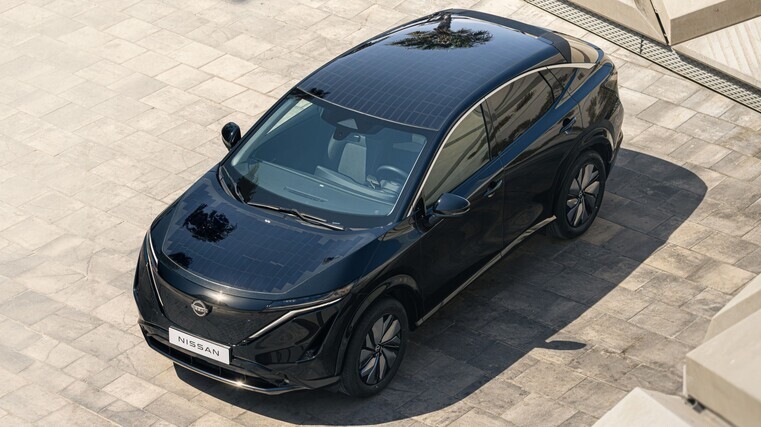
Nissan says its solar-powered Ariya concept is an exploration of how future electric vehicles could harness the world’s most abundant renewable energy source, the sun.
Developed by engineers from its advanced product planning team in Dubai and powertrain planning team in Barcelona, the car features 3.8sq m of high efficiency photovoltaic panels integrated into the bonnet, roof and tailgate.
These polymer and glass-based solar panels convert sunlight into DC power, managed through an advanced controller designed to optimise energy use, and reduce reliance on external charging infrastructure.
Real-world testing reveals the transformative potential of the system. One is that in ideal conditions, the system can deliver up to 23km of additional range per day. Others are:
• In cities with high solar exposure, the vehicle can generate an average of 17.6km of daily solar driving range.
• Year-round averages show significant gains globally, such as 10.2km/day in London, 18.9km/day in New Delhi and 21.2km/day in Dubai.
• Drivers can reduce their charging frequency by 35-65 per cent depending on usage.
• A two-hour, 80km journey can produce 0.5kWh of clean energy, adding up to 3km of free, zero emissions range.
Such performance has implications for regions with limited charging infrastructure. Drivers could enjoy longer intervals between charges, greater autonomy and lower cost of ownership simply by parking or driving in the sun.
The project began with a simple question – what if EVs could charge themselves? That sparked a partnership with Dutch solar mobility innovator Lightyear, which supplied the next-generation panel technology brought to life by Nissan’s engineering teams.
Initial long-distance testing, including a 1,550 km journey between the Netherlands and Barcelona, demonstrated solar integration could cut annual charging visits for a 6,000km per-year commuter from 23 to eight.
“The solar-powered Ariya concept embodies Nissan’s belief that innovation and sustainability must move forward hand in hand,” says Shunsuke Shigemoto, vice-president of e-powertrain and internal combustion engine powertrain.
“By exploring how vehicles can generate their own renewable energy, we’re opening the door to new opportunities for customers – greater freedom, reduced charging dependency and a cleaner future.
“This concept is not just a technical milestone. It’s a vision of how Nissan intends to lead the next phase of electric mobility.”
He adds by exploring solar charging as an integrated EV solution, the company continues to innovate towards its global ambition of achieving carbon neutrality across the life cycle of its products and operations by 2050