


Transmission Gully to open at last
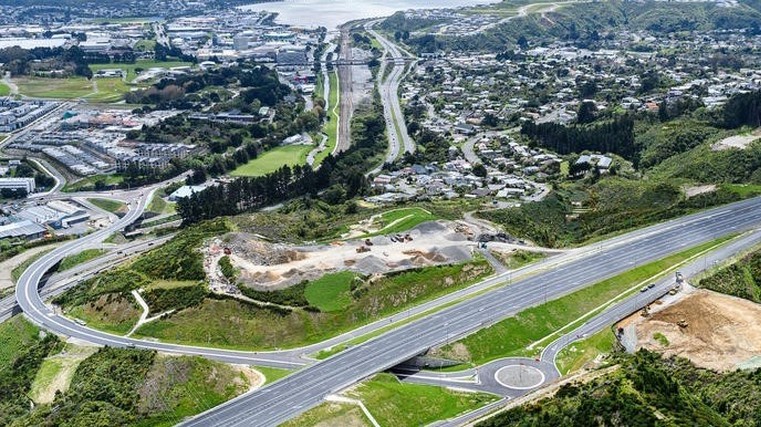
Waka Kotahi says the completion of a massive amount of work on Transmission Gully over the summer has brought the motorway to a stage where it is confident it’s safe for public use, and it has instructed the contractor to open it to traffic before the end of this month.
To support the road opening sooner than would otherwise be possible, the transport agency has agreed to defer some quality-assurance tests required under the contract, instead allowing them to be completed post-opening.
Waka Kotahi insists none of the deferred tests will compromise public safety because they relate to ensuring the motorway’s long-term quality.
Board chairman Sir Brian Roche says the decision to formally instruct Wellington Gateway Partnership (WGP) to open Transmission Gully to traffic by March 31 reflects the considered approach the agency has taken in talks with contracted parties.
“Waka Kotahi has been committed to finding a pragmatic solution that ensures we’re doing everything we can to open a safe motorway while meeting public expectations for it to be open for use as soon as possible and to ensure we safeguard good use of public money.”
Brett Gliddon, the agency’s general manager of transport services, says complex negotiations are continuing with parties contracted to build, manage and maintain the road.
“However, we are confident the motorway is now in a fit state to open, which is why we have issued this instruction while we continue negotiations,” he explains.
“We haven’t been prepared to compromise on safety. However, all critical tests have been completed to a standard that gives us confidence it will be a safe, reliable route for motorists between
Wellington and the rest of the North Island. It wasn’t ready in December ahead of the busy holiday season, which was disappointing.
“While there are still quality-assurance tests in the original contract that haven’t been finished and there’s paperwork to be completed, we don’t believe they are critical factors that should prevent traffic using the road.
“Now we have deferred these requirements, we believe there’s nothing substantial that can’t be finished by the end of March. We have told WGP we expect the road to be opened as soon as possible and that responsibility now sits with them.”
Under the public-private partnership (PPP) the contractor, WGP, is responsible for determining when Transmission Gully can open.
Since August’s Covid-19 outbreak, Waka Kotahi, WGP, CPB HEB and Ventia have been negotiating an early-access arrangement for motorists to use it before all road-opening completion requirements in the contract have been met.
As agreement hasn’t been reached, Waka Kotahi has formally directed WGP to allow the public to use the motorway before month’s end. Several key requirements will need to be met for the road then, including a final pre-opening safety inspection.
The transport agency adds it is working hard with all parties, including Greater Wellington Regional Council and territorial authorities, so remaining resource consent tasks are resolved before the opening.
While pavement and road-surface tests are among the tests that haven’t been met, Gliddon says expert advice is the road is safe for use and there are benefits to allowing traffic to bed in its surface before winter. CPB HEB will address any road-surface issues over the next year as the chip-seal continues to settle.
Waka Kotahi will not be announcing a specific opening time for the road to prevent any queuing that could cause safety and congestion issues.
As the PPP contractor, WGP has sub-contracted CPB HEB to undertake the motorway’s design and construction, and Ventia to operate and maintain it for 25 years after which it will be handed over to the transport agency at an agreed standard.
Facts about Transmission Gully
Twenty-seven kilometres of motorway and four new interchanges have been built through geologically and geotechnically challenging terrain with constrained and difficult access, requiring the construction of 25 major structures, such as bridges and large culverts.
All structures have been built to withstand a one-in-2,500-year earthquake. The largest structure, Te Ara a Toa – bridge number 20 – is 230m long and 60m high.
Cuts of up to 70m were made through Wainui Saddle, which also has the Ohariu fault line running through it. Pouawha Wainui Saddle has been lowered to a final crest height of 253m above sea level.
More than 11 million cubic metres of earth has been moved, the largest volume undertaken on a roading project in New Zealand. With more than half of the catchment draining into the ecologically significant Porirua Harbour, the earthworks required extensive environmental controls including more than 100 sediment retention ponds.
The road runs through valleys criss-crossed with streams. About seven kilometres of them have had to be diverted and around 27km of watercourses are being restored.
The project includes one of the largest native-planting programmes undertaken in this country, with more than 550 hectares of ecological mitigation areas being retired from grazing or revegetated.