

Petrol car sales drop
Australia’s new-vehicle market recorded 87,092 sales in January for an increase of 288 units and by 0.3 per cent when compared with the same month of last year.
Tony Weber, chief executive of the Federal Chamber of Automotive Industries, says the statistics point to a steady start to 2026 with demand broadly consistent across key segments.
“January’s figures show a market that’s stable with Australians continuing to purchase vehicles to meet their needs for work, family and lifestyle,” he adds.
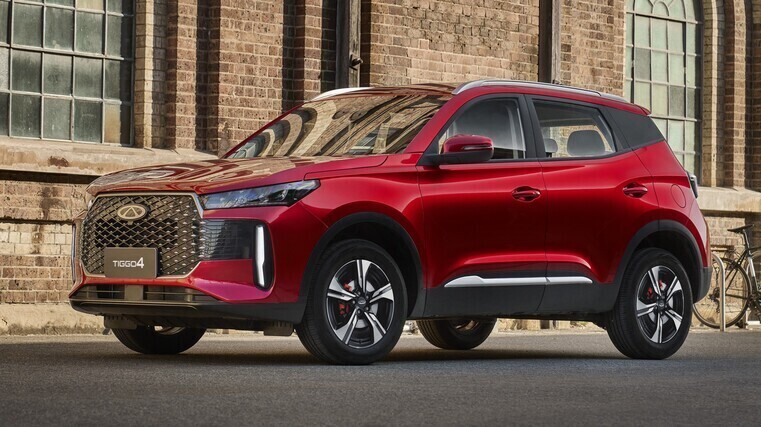
The best-selling models were Ford’s Ranger with 3,403 registrations, Toyota’s Hilux with 2,800, Mazda’s CX 5 on 2,289, the Chery Tiggo 4 Pro, pictured, with 2,234 and Mitsubishi Outlander on 1,975.
Toyota topped January’s marques’ ladder with 14,310 units. It was followed by Mazda on 7,692, Kia with 6,600, Ford on 6,116 and Hyundai with 5,856.
A decline in petrol vehicles of 14 per cent in January’s sales highlighted a gradual shift in buyer preference towards electrified technologies, particularly hybrids and plug in hybrids (PHEVs).
Some 5,161 PHEVs were sold across the Tasman last month, which was 5.9 per cent of all sales and a 170.5 per cent increase on January 2025. Hybrids made up 17.4 per cent of sales and battery electric vehicles (BEVs) 8.4 per cent.
Weber says: “We are seeing fewer petrol vehicles sold and rapid growth in PHEVs, while uptake of hybrids and BEVs is more stable.”
The figures show China is now firmly established as the second-largest source of vehicles behind Japan, with imports from the former growing by 68.6 per cent over the past year.