

Omicron to disrupt port
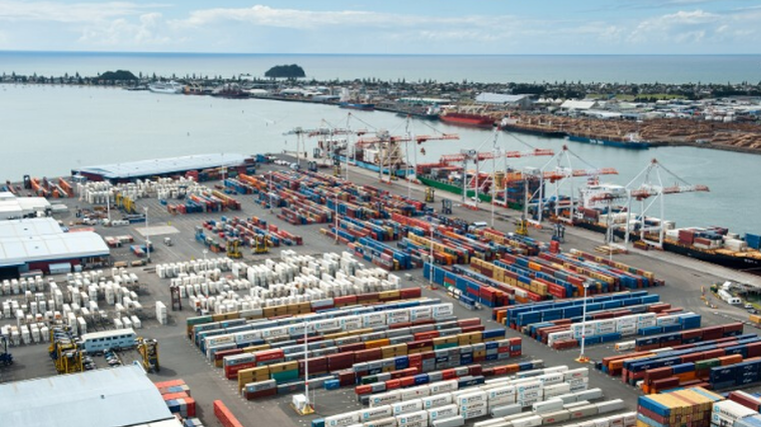
Port of Tauranga is still experiencing disruption across the supply chain and this will be exacerbated by the omicron outbreak, warns chairman David Pilkington.
He says the company’s half-year financial results reflect the resilience offered by the port’s diverse portfolio of cargo, varied income streams and changes to container mix.
“With the support of our service providers and business partners, we’ve managed to keep congestion to a minimum and keep cargo moving through this challenging period,” adds Pilkington. “Unreliable shipping schedules, constrained capacity in the system and labour shortages continue to be commonplace.”
He says current supply-chain challenges made it even more important to build future resilience for New Zealand.
Port of Tauranga has applied for resource consent to increase capacity by extending its container berths to the south of the existing wharves.
Detailed planning and consultation for the project began in 2019. “It was disappointing the project was declined for the government’s shovel-ready and fast-track resource consent programmes in 2020 and 2021 despite no funding being sought from government. Subsequently, we have sought direct referral to the Environment Court. The case is now waiting for a court date.”
Pilkington says the glacial pace of the regulatory process is extremely frustrating. “The Resource Management Act processes fail to recognise the critical nature of this infrastructure project and the government’s unwillingness to expedite the resource consent is disappointing.”
Tauranga’s profit after tax for the six months to December 31 was $56.3 million up from $48.7m in the comparable period. Total operating revenue increased by 16.7 per cent to $186m, with the increase put down to changes in container mix and higher per-container revenue.
Increased rail, labour, fuel, and electricity saw operating expenses rise by 17.5 per cent. Cargo volumes remained steady at 13m tonnes as container numbers increased by 1.5 per cent in volume.
Visits from ships increased by 3.5 per cent to 684 vessels. However, transhipment rates continue to be suppressed due to limited shipping options, changes to vessel rotations, delays and congestion. Import demand remains elevated with the number of containers transferred by rail, to and from Auckland increasing by nearly 21 per cent.
When it comes to cargo backlog, Leonard Sampson, chief executive, estimates this at about three to four months’ worth currently waiting on boats. Delays aren’t as pronounced as months ago, but only 40 per cent of ships have been able to meet their agreed berth windows.
Alongside potentially easing supply-chain disruption, the reopening of borders means the prospect of cruise-ship income, which the company hasn’t benefitted from in earnest since the first half of its 2020 financial year, is back on the cards.
Sampson hopes cruise ships will begin arriving at the end of the calendar year. “We’re seeing some preliminary bookings, but it really does depend on the opening up of the border restrictions.”
The company expects full-year earnings to be in the range of $103- $110m compared with $102.4m in the 2021 financial year.
“We believe we have done everything we can to prepare for the inevitable disruption of a large covid outbreak,” Sampson. “However, the upheaval of widespread illness and employee isolation requirements is being felt worldwide, not just in New Zealand.”
The port will pay a fully imputed first-half dividend of 6.5 cents a share – an 8.3 per cent increase on the previous corresponding period.