

Fleet sell-off continues
Tourism Holdings has posted a $4.4 million loss for the six months to December 31 with revenue tumbling by $30.9m, or 15 per cent, from the prior interim result to come in at $175m.
Within that, rental revenue dropped by $16.1m while sales declined by $12.4m. EBIT dropped by $2.9m to total a loss of $1.1m, which included $2.1m in transaction costs relating to its proposed merger with Apollo.
The previous period’s result had a non-recurring gain of $1.2m from ending the lease on the company’s branch in Mangere, south Auckland.
No dividend was declared for the half-year and the company says that’s unlikely to change for the full year when it anticipates another loss, albeit a smaller one than last year’s $14.5m.
Tourism Holdings chairman, Rob Campbell, says the interim loss is reflective of another period during which the company has been hit by the coronavirus pandemic.
He adds: “Without a doubt, the most significant event in the period was the agreement for the proposed merger with Apollo. We are highly engaged with various regulators. Based on current information, we expect to have greater clarity on the next steps in early April.
“The proposed merger is expected to provide both sets of shareholders with the benefits of material cost synergies that aren’t available to either party without the merger. In doing so, it positions us to be a more resilient company that can regrow with greater efficiency as the fleet is rebuilt in-line with tourism activity.”
Tourism Holdings’ paydown of debt was positive news during the half-year with about $30m paid down from last year to now total $18.7m, strengthening its equity ratio. This is now 53.7 per cent and was formerly 57.5 per cent.
One of the reasons the company has been able to do this is because margins on the sale of vehicles have been at historic highs and – in some cases – more than doubling in the year since the previous interim result.
Chief executive Grant Webster notes some of that was down to selling ex-rental vehicles purchased at lower rates, general vehicle-cost inflation and a shortage of vehicles meaning less of a need for discounting. Margins were expected to normalise over time, while the number of vehicles offered for sale is also related to supply-chain issues.
The company’s total fleet dropped by 812 units across the business to 3,430 with 426 sold in New Zealand during the half-year compared with 727 in the prior comparative period. However, margins rose from an average of $11,900 to $23,300 per sale.
Tourism Holdings’ Australia and New Zealand divisions saw their EBIT performances improve on the prior comparative period.
This is attributed to good cost management and ongoing vehicle sales performance. New Zealand’s situation remains challenging, given its borders were closed, while domestic border restrictions across the Tasman also depressed business.
Manufacturing is a growing division of the business. Tourism Holdings’ specialist vehicle subsidiary Action Manufacturing intends to acquire semi-trailer manufacturer MaxiTrans for the net value of its assets – currently $5.7m. This is contingent on a decision from the Commerce Commission.
The business, also comprising heavy-transport solutions provider Fairfax and freight manufacturers MaxiCube and Freighter, recorded $2.5m in EBIT in the six-month period, up $1.8m from during the previous period.
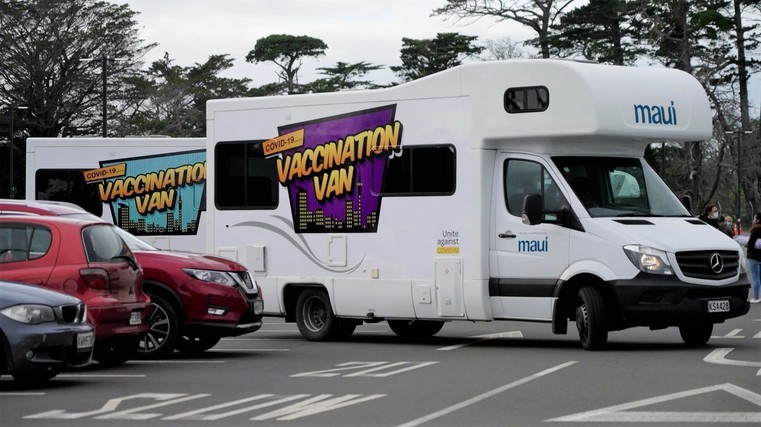
It makes specialised commercial vehicles for customers including St John Ambulance, the NZ Defence Force and NZ Police. In the period under review, it modified vehicles to serve as emergency housing in disasters, rural project accommodation, and mobile vaccination and testing clinics, pictured.