

Electric car not so quiet
When Hayden Paddon’s electric rally car made its race debut, researchers from the University of Auckland were hanging onto every sound coming from under its bonnet.
“The vehicle sounded great,” says Dr Andrew Hall, of the acoustic research centre based in the faculty of engineering.
Hall and technologist Gian Schmid, also from the centre, were listening to noises produced by a mechanical device they have developed based on an original idea from Paddon’s team to bring the loud engine roar associated with a high-power petrol rally car to the normally hushed EV.
“It definitely had volume,” enthuses Hall. “We received great feedback from people at the event and heard the car live.
The device, still at prototype stage, was used on four of Paddon’s six runs at the Waimate 50 Hill Climb in south Canterbury last month.
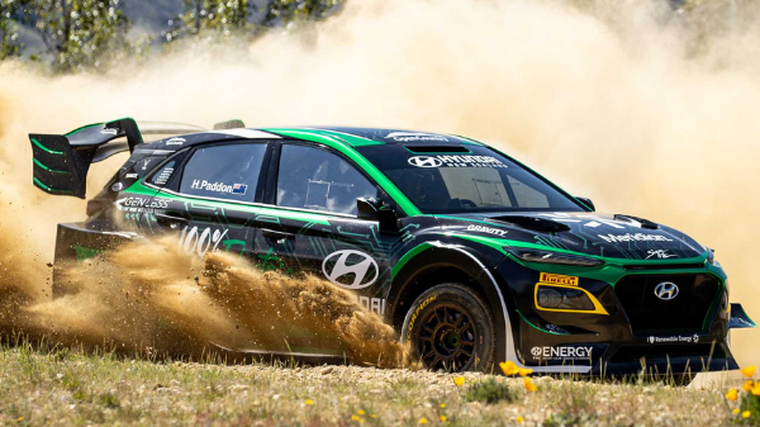
It was removed for the remaining two to test if it had any effect on performance of the Hyundai Kona, pictured. Feedback so far indicates it made minimal difference.
“Those four runs were at full speed, so we were relieved the device passed the reliability test in such a tough environment,” says Schmid. “Now it’s a case of refining and modifying so its fits exactly with what Hayden wants.”
Paddon has pioneered bringing EVs into rallying and has worked on the concept with his team at Cromwell-based Paddon Rallysport Group since 2018.
Creating a spectator-satisfying sound for the car was always going to be crucial with acoustic experts Hall and Schmid becoming involved in the project earlier this year.
“Sound is essential to the excitement of racing,” says Hall. “Spectators want to hear the car echo through the forests, building the anticipation.
“But it must sound real and natural, and relate to the vehicle’s acceleration and energy. That’s why a mechanical system was chosen – to bring that real sound component.”
Sound is also important for safety. “When cars are going through forests, up hills and around blind crests with spectators close by, you need sound and volume so they can be heard,” explains Hall.
Schmid and Hall recognise that motorsport enthusiasts are a tough audience. There are limitations on what an acoustic mechanical system can produce and it won’t be for everyone.
However, they understand spectators will be more likely to accept a transition to EVs in motorsports if the sound they make is acceptable and natural.
“It’s the future,” says Hall. “We know we can achieve volume and resilience, so our development programme now is about enhancing the sound so it reflects momentum and speed, and improve on its projection.”