


Fuel supplies ‘secure’
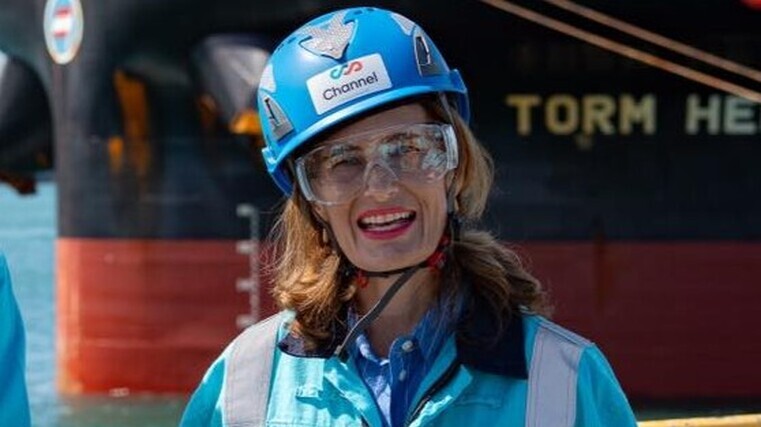
The government says New Zealand has at least seven weeks of fuel in storage with petrol breaking through $4 a litre in some parts of Auckland.
Nicola Willis, the Minister of Finance, visited Marsden Point near Whangarei on March 22 for the arrival of one of the largest fuel tanker vessels that can dock here.
“Ships like these regularly come to New Zealand,” says Willis, pictured. “That remains something we’re confident of.
“As we look to the future, we can expect fuel-importing companies will continue to secure orders for more fuel for the months ahead. Were they to face delays in arrivals or disruptions, they would try to source fuel from elsewhere to meet demand here.”
Prime Minister Christopher Luxon describes New Zealand’s fuel supply as being “in quite good shape”.
He is aiming to speak to his counterpart in Singapore and fuel importers have reassured the government they have good supply, confirming it exceeds the 49 days of fuel currently in stock.
Refineries in South Korea and Singapore are trying to secure supply from the US and other sources.
Amid soaring fuel prices, Auckland recorded its busiest day on public transport in seven years on March 17. There were 7,000 more trips than the previous busiest day, which was two weeks ago.
The first week of this month was the busiest period on the transport network this year, with 2.217 million trips taken on buses, trains and ferry services.
Marques track supply chain
The escalating conflict involving Iran threatens to disrupt German carmakers’ operations in Middle Eastern markets where wealthy buyers are key customers for high-priced models from brands such as BMW, Bentley and Lamborghini.
BMW and the Volkswagen Group recently viewed the region as promising for growth. The immediate operational impact remains limited but prolonged instability could disrupt trade routes, dampen demand and disrupt supply chains.
Volkswagen Group’s supply chains are still stable, says chief executive officer Oliver Blume. However, the war could weigh on demand in Gulf markets including Saudi Arabia, the United Arab Emirates, Qatar and Kuwait. The region is particularly important for Audi, Porsche, Bentley and Lamborghini.
Audi is seeing an impact on sales in the Middle East. CEO Gernot Doellner says: “We expect a temporary dent.” The Audi group also includes Lamborghini and Bentley.
VW’s affordable brand, Skoda, is also being impacted. Chief executive Klaus Zellmer says: “We are watching the market with a certain degree of nervousness.”
He adds demand could stabilise quickly if the conflict subsides. Skoda is among the leading brands in Israel and also sells in the UAE, which has been drawn into the tensions. The marque expanded its presence in the region last year by launching in Saudi Arabia.
The Middle East was VW Group’s second-fastest-growing region after South America last year with revenue rising more than 10 per cent.
Key automotive suppliers are also monitoring developments. Stefan Hartung, chief executive at Robert Bosch, expects the situation to stabilise over time. Operational disruptions to Bosch’s activities in the UAE have so far been limited, although air-freight volumes to the region have declined.
Klaus Rosenfeld, CEO of Schaeffler, warns the situation could become more serious if shipping routes are affected. “It becomes critical if military action disrupts shipping through the Suez Canal,” he says. Schaeffler has no production facilities in the region but has a logistics warehouse in Dubai.
Transport ‘pretty resilient’
The NZ Trucking Association reports fuel has now overtaken labour as the highest cost for its members. It says fuel now accounts for 30 per cent of operating costs, which are up by around eight to 10 per cent since the conflict started.
“It’s pretty tough out there,” says David Boyce, the association’s chief executive officer. “It will be the straw that breaks the back, so to speak. But it’s a pretty resilient industry. There will be plenty that will hang on and hope this is only a short-lived blip.”
Following major fluctuations in price, with diesel jumping by about 35 per cent last week, Boyce believes it will not take long for cost increases to reach consumers. He explains there isn’t much wriggle room for transport operators to absorb costs
Boyce is confident New Zealand will not run out of diesel. “Assuming the supply that’s coming here is not interrupted or compromised, we’ll be covered. But if some of those ships get redirected or some untoward act happens, things could change quickly.”
Extra costs with shipping
The conflict in the Middle East has all but closed the Strait of Hormuz. It’s a critical shipping corridor for global trade and the situation will further increase logistics costs for carmakers.
S&P Global says the cost of insuring vessels using the area and their cargo have jumped, while Hormuz is a major water route for raw materials such as aluminium and petrochemical products from around the Persian Gulf, as well as oil and liquified petroleum gas.
Vessels seeking to enter the strait are taking alternate routes, increasing transit time or preventing cargo from reaching its intended destinations, affecting scheduling and contracts, reports S&P. Last year, about 20 million barrels of oil passed through Hormuz daily.
Logistics costs have risen 25-30 per cent since 2019, driven by high energy prices and labour costs, according to the Association of European Vehicle Logistics.
In the short term, higher energy costs give logistics companies little room to manoeuvre. Fuel clauses – price adjustments linked to such costs – are standard in contracts, but typically apply retroactively, creating cash-flow pressure for logistics companies when fuel prices spike. The sharp rise in energy prices is also drive up the costs of air freight and road transport.
The Middle East conflict adds to a growing list of headaches for carmakers already navigating tariffs, geopolitical tensions and supply-chain disruptions. Experts say their options are to cut costs, diversify suppliers or accept lower margins.
To ease their burden, car companies may try to pass on increased costs to suppliers, but this will prove difficult under their existing contracts. They could also seek out new suppliers closer to their plants.
Consumers may be asked to bear the costs, but marques would struggle to raise prices given reduced global demand and sluggish economies.
Ultimately, the potential impact of the war on the global economy and car industry depends on its severity and duration.
S&P Mobility is maintaining a “base-case presumption of a short-term conflict for vehicle production and sales forecasts,” but said if “commodity price increases spread across the economy and supply chain, they would increasingly impact household budgets and create a knock-on effect of lower vehicle sales”.