


Call for Japanese marques to unite
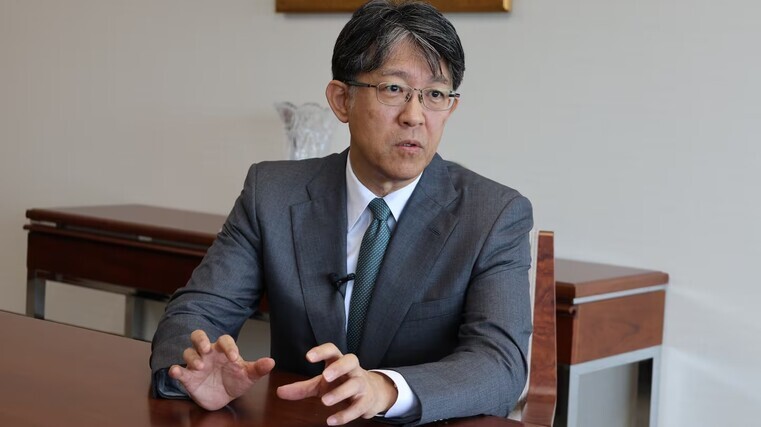
The chairman of the Japan Automobile Manufacturers Association (JAMA) is urging car manufacturers to standardise commodity components – from steel grades and plastics to wire harnesses and more.
Koji Sato says doing so will save time and money, which can be channelled into new technologies, advanced factories and better productivity.
The envisioned list of newly “Japan standard” parts could expand to cover those made by suppliers at home and abroad, feeding the country’s marques globally.
The standardisation of wire harnesses alone could boost productivity tenfold, estimates Sato, who is also vice-chairman of Toyota Motor Corporation.
The efficiency drive is one of the most ambitious attempts yet to reshape the supply base spanning Toyota, Nissan, Honda, Subaru, Mazda, Mitsubishi and Suzuki.
Sato, pictured, says: “Right now, the most important theme facing the Japanese automotive industry is improving international competitiveness. We aim to strategically create areas of co-operation to improve efficiency, thereby accelerating co-existence in the essential areas of competition.”
Even if Sato could convince Japan’s carmakers to get on board, such an industrywide initiative could be too little, too late to compete with the speed of China’s expansion.
But Ivan Espinosa, chief executive officer of Nissan Motor Co, says: “We are really talking about what we can do together because we do see other industries in other countries are better organised than us. We will see a lot more collaboration among Japanese OEMs.”
The parts standardisation push is one of seven priority “challenges” JAMA is tackling to ensure the country’s carmakers survive current industry storms.
Other areas include commonising logistics, simplifying Japan’s complex automobile taxes, redesigning the country’s infrastructure for autonomous driving, securing access to critical raw materials, commercialising a circular recycling economy and improving talent recruitment.
Europe’s automotive crisis illustrates the pressure spurring Japan to boost productivity. The Volkswagen Group’s efforts to cut jobs and model variation is an example of the pressures brands face from China’s inroads, and the need to invest in electrification, software and other technologies.
Chinese brands collectively outsold the Japanese in Europe for the first time in May and are decreasing Japan’s market share in South-east Asia and Australia.
Sato, who is also Toyota’s chief industry officer, says: “We have a strong sense of crisis that the Japanese industry is in. Now is exactly the time to further develop and evolve with the challenges and reform initiatives the industry as a whole must face.”
He rejects the notion that China’s rise has triggered JAMA’s shift but adds Japanese carmakers must learn from China’s engineering speed and adoption of advanced technologies.
Japan must also improve efficiencies to free resources for its carmakers to invest in new technologies that enhance their own brand values, he adds.
For example, customers no longer want multiple interior layouts. They want new software interfaces, advanced driver-assist technology, faster-charging batteries and diverse powertrain options. “These are major drivers that will spur the evolution of the automobile.”
Standardising parts customers don’t see allows carmakers to improve brand value in areas they do. It also enables them to fund the multi-pathway approach to offering different drivetrains.
Currently, suppliers produce 70,000 wire-harness variants to satisfy car companies’ requirements, making large-scale automation difficult. If the industry can standardise basic architectures, suppliers can automate manual assembly, boosting productivity by more than tenfold, says Sato.
While JAMA has yet to establish formal deadlines, it aims to make progress on standardising the first batch of components or materials within the next year or two, reports Automotive News.
The association’s officials are also studying common standards for steel tolerances and resin materials. Different marques often specify slightly different steel tolerances or plastic formulations, complicating supplier manufacturing processes and efforts to recycle components.
Many Japanese parts, including electronic control units, tyres, seat belts, bearings and fasteners, already have much industry-wide standardisation. China’s automotive sector, meanwhile, is vertically integrated to deliver high standardisation within giant automotive groups, if not between companies.
Japan’s suppliers increasingly operate independently after decades of moving away from the country’s long-standing “keiretsu” system, which forced its suppliers to deliver parts in different specifications for different customers. It all means getting wide alignment may be a challenge.