


All-new from bottom up
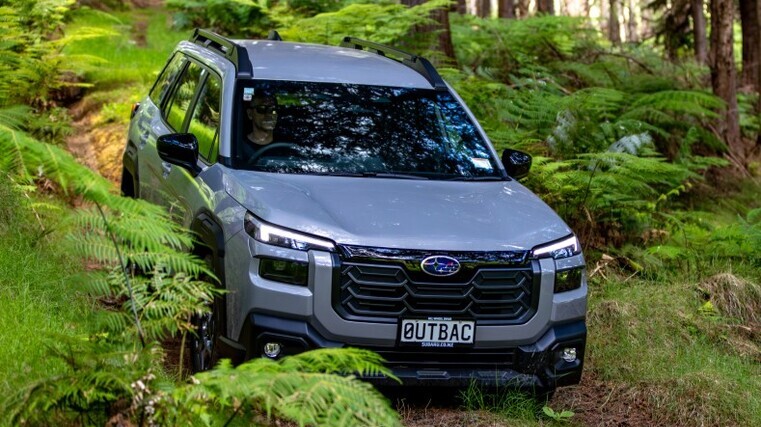
Subaru says its seventh-generation Outback has been redesigned from the wheels up to stand taller and look tougher.
The all-new SUV boasts 240mm of ground clearance, greater approach and departure angles. It’s powered by a 2.4-litre turbocharged Boxer engine and its suspension tuning with electronically controlled dampers helps keep the chassis composed when the road runs out.
The fresh design adopts more traditional SUV-style proportions with a more upright front end and bolder surfaces. Redesigned LED headlamps and tail-lamps improve visibility, and there’s an expanded exterior colour palette.
The interior introduces an all-new 12.1-inch horizontal infotainment touchscreen, which replaces the previous vertical display, with up to 2.5 times faster processing to enhance usability, widget layout and customisation.
A new 12.3-inch digital instrument cluster is now standard across the range, offering multiple viewing modes including classic, calm and Eyesight, while map and projection modes are available for variants with in-built satellite navigation.
Essential controls such as air-conditioning and automatic vehicle hold are now tactile hardware switches for safe, intuitive use. For those wanting an elevated in-car audio experience, a Harman Kardon 12-speaker premium system is available on higher-grade variants.
Redesigned seats feature new structures that better support the lumbar and pelvis areas while reducing vibration. Durable, easy-care seat materials are used across the range. On the AWD Touring, premium nappa leather-accented seat trim is featured.
Wilderness variants feature hard-wearing, easy-to-clean hydrophobic synthetic leather with an anti-slip embossed finish. Across the range, both rows benefit from increased headroom.
Practicality has taken a step up with a cargo opening now 50mm higher to make loading and unloading easier. High-strength ladder-style roof rails have been adopted with static load capacity increased from 318kg to 363kg.
A contractible surface material and magnetised rear-most fixing point make it easier to manage luggage along with an extra eight litres of cargo space and anchor tie-down points retained.
The all-new Outback is available with two direct-injection Boxer engines. The refined 2.5-litre naturally aspirated one delivers more useable torque, less noise and smoother performance. The Wilderness gets the more powerful 2.4-litre turbocharged for 194kW of power and 382Nm of torque.
Both engines are paired with an enhanced lineartronic CVT with eight-speed manual mode. A new dual-pinion electric power-steering system adds extra precision and confident control.
In Wilderness variants, the high-torque-capable transmission adopts a revised final reduction ratio calibrated to maximise off-road capability by making the most of the increased low-rev output.
X-mode remains standard across the range, while Subaru’s symmetrical all-wheel-drive system now features improved active-torque split control for more precise delivery.
Naturally aspirated variants benefit from increased minimum ground clearance of 220mm, up from 213mm in the previous generation. In the Wilderness, capability is elevated again through exclusive suspension tuning, even higher ground clearance and electronically controlled dampers linked with x-mode.
All variants have the latest generation EyeSight driver-assist system now featuring a wide-angle monocular camera for greater recognition of cyclists, pedestrians and complex intersections. Driver monitoring is standard, using a camera-based system to help detect signs of fatigue or distraction and prompt the motorist to refocus.
New functions, such as emergency driving stop and acceleration override assist, together with active lane-change assist on higher-spec variants, build on existing technologies including front pre-collision braking, front and side-alert assist and emergency lane-keep assist.
Vision assist has been enhanced with front-side radar available. For the first time, selected variants have a new panoramic 360-degree view monitor with side-view monitor, which delivers extra visibility with more camera angles and improved low-light performance.
Underneath, a stronger body structure with increased use of high-tensile steel, together with nine SRS airbags, provides better passive protection. Together, these advances support Subaru’s long-term vision to achieve zero fatal accidents in its vehicle by 2030.
Extra sound-insulating materials, improved aerodynamics and strategic structural enhancements reduce wind, road and vibration noise.
With the debut of the Outback Wilderness, Subaru says it’s entering a new era by “introducing a hero – one designed for customers who want genuine, ready-for-anything adventures straight from the showroom”.
Jerry Delaney, general manager of Inchcape NZ, says: “The Outback has been a Kiwi favourite for more than 30 years, earning it the top spot as Subaru NZ’s number one selling model.
“As a SUV built for New Zealand and four seasons in one day, it has taken its drivers safely from city to surf. Now the new Wilderness model takes all this core capability and cranks it up a notch.”
“It is truly the perfect fit for New Zealand’s roads with our highways giving way to 40 per cent unsealed gravel byways.”
The next-generation Subaru Outback, including the Wilderness, is available to order now. Test drives will be offered from May for the Outback with the Wilderness following in July. The range starts at $54,990 for the Outback AWD and tops out with the Outback AWD Wilderness Apex from $74,990, including GST and excluding on-road costs.