

VW Group plans big cuts
The Volkswagen Group plans to slash product complexity by as much as 75 per cent and cut its global model line-up by up to 50 per cent by 2030 as it intensifies efforts to restore profitability.
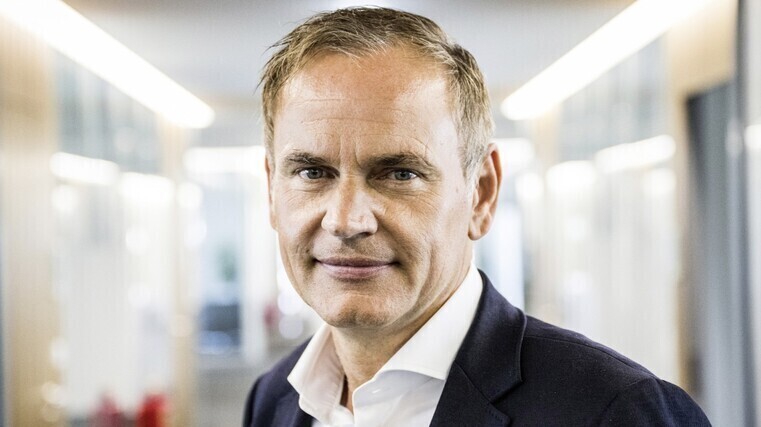
Reducing product complexity, such as the number of powertrains, trims and specifications, is viewed by chief executive Oliver Blume, pictured, as one of the fastest ways to lower costs and lift margins back towards its long-term target of eight to 10 per cent.
The company has yet to identify which vehicles it’s reviewing, but the strategy points to a gradual cull of low-volume niche products, overlapping models and expensive derivatives.
Europe will account for part of the rationalisation, although other regions will contribute to halving a global portfolio of about 150 models.
Volkswagen’s future investment is expected to centre on big sellers including the Golf, Tiguan, T-Roc and Passat, as well as the marque’s important electric models.
Products with limited incremental sales appear most vulnerable. Production of the Touran compact minivan has ended, while the T-Roc Cabriolet looks set be discontinued next year.
The ID5 electric SUV is also expected to exit the line-up after failing to match sales of the closely related ID4 SUV. The Taigo could face a similar fate because of its overlap with the T-Cross and T-Roc, which makes the extra engineering and manufacturing complexity problematic to justify.
Audi has already phased out the A1 hatchback and Q2 crossover, two entry-level models that generate comparatively low margins. It’s also expected to review its range of body styles.
The premium brand could eliminate selected derivatives and focus more on defined core model lines. The impending launch of the Q9 will increase Audi’s SUV line-up to seven models, raising questions about every nameplate remaining in the portfolio.
While Cupra has become one of the VW Group’s fastest growing brands, Seat has been dropping off. Executives say Seat has a future, but keeping two marque with overlapping products could become harder to justify if the company follows through on plans to halve its model range.
Skoda appears less likely to face sweeping cuts. The Czech brand has a relatively streamlined range that’s delivering good returns. Its core models, the Fabia, Octavia, Kamiq, Karoq, Kodiaq and Enyaq, cover key volume segments.
The longer-term future of combustion-powered models, such as the Fabia, Scala and Kamiq, remains uncertain once their current life cycles end, reports Automotive News. For now, Skoda is more likely to simplify engines, trim levels and regional variants.
The focus at Porsche is expected to fall less on model families than on its many variants. For example, the 911 alone comes in Carrera, Turbo, GTS and GT3 guise.
The 911, Cayenne and Macan remain central to the brand’s strategy, while it still expects to launch the delayed electric 718 Cayman-Boxster line. The future of the Taycan electric sedan and Panamera ICE sedan is less clear.
The bigger prize for the VW Group lies in reducing complexity rather than canning nameplates. Costs associated with vehicle programmes increasingly stem from the proliferation of engines, batteries, software versions, driver-assistance systems, interior configurations and optional extras.
For customers, that could translate into fewer choices of colours, materials and options. For the company, it promises faster development cycles, lower manufacturing costs and higher production volumes for each remaining configuration.