

VIA needs to be ‘well-resourced’
The used-imports industry will have a range of issues to tackle in the future. That’s the view of the chief executive of the Imported Motor Vehicle Industry Association (VIA) in his last annual report as its chief executive.
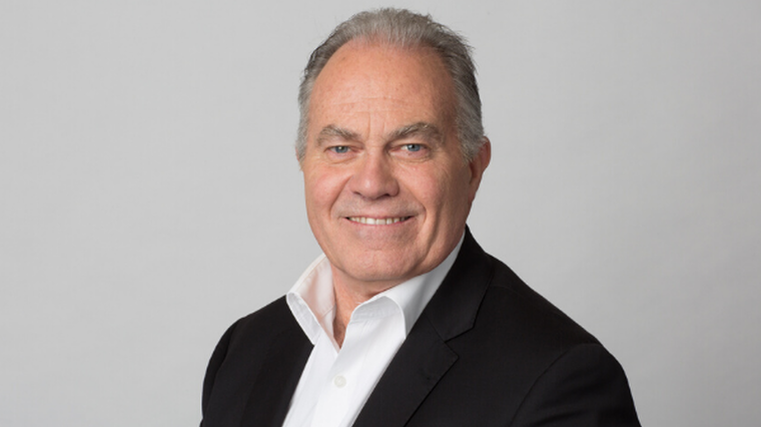
David Vinsen, who is retiring this year after leading the organisation for 20 years, says it needs to be well-resourced to fulfil its “core goal” of keeping the door open for used imports.
“VIA has been in existence in some form for 35 years. New Zealand and international government policies and proposals mean the industry will have a succession of difficult issues to deal with, some of them existential, such as phasing out internal combustion engines.”
Looking back on the performance of the industry in 2022/23, he says: “Good numbers of vehicles, new and used, continued to be imported over the past year despite external influences, such as the after-effects of Covid-19 and the slowing economy.
“Apart from our core functions, two issues have dominated VIA’s attention and activities this year – the implementation and adjustments of the clean-car legislation, and the government’s proposal to move to Euro 5 and Euro 6 standards.”
The main issues
Emissions and fuel-economy standards have taken centre stage over the past year, with the clean-car policies having been the key issue, and they will “continue to affect us for the foreseeable future”. The programme has two elements:
• The clean car discount (CCD) with incentives and penalties applied at first registration to influence demand.
• The clean car standard (CCS), which is applied at the time of import to influence the range of vehicles supplied by industry to the market.
“After the government unexpectedly implemented the incentive phase of the CCD scheme in mid-2021, the penalty phase was introduced in early 2022,” explains Vinsen in his annual report.
“Once both penalties and incentives were implemented, it quickly became obvious the CCD scheme would run at a loss. The original intention was that it would be fiscally neutral in that penalties received would cover incentives paid out. As a result, the financial parameters for the CCD had to be adjusted.
“The CCS has now been implemented. This has further influenced the market, in effect doubling the CCD – both penalties and incentives.”
As part of VIA’s work on the CCD and CCS, Vinsen has continued to be a member of the clean-car sector leadership group overseen by the Minister of Transport (MoT). Monthly meetings are held with the minister, senior officials and industry. This has been an “important channel” for VIA to have regular access to the minister.
Vinsen adds: “VIA and its stakeholder group have been working with the NZTA and MoT officials on developing the procedure for implementation and to improve the accuracy and comprehensiveness of information used to calculate incentives and penalties.
“VIA continues to advocate for a fleet-management strategy to improve the overall fleet over time rather than just trying to control imports.”
For some years, government officials have talked about amending the vehicle exhaust emissions rule to implement Euro 5 and Euro 6 standards. The formal proposal was released in May with VIA making a “substantive submission”.
“It is intended that used vehicles would be subject to Euro 5 from the beginning of 2024 with Euro 6 to follow in 2028,” says Vinsen.
“VIA accepts the standards are going to be introduced, but we have serious concerns about the methodology the government is proposing to use to calculate equivalences between the Euro and Japanese standards.
“VIA’s submission is the best researched and presented that we’ve ever made, and we have received favourable comments on the fact it’s science-based and proposes a solution rather than just opposing a government initiative.”
As for electric vehicles (EVs), the association continues to be involved in consulting with officials on them and related issues.
“The minister’s clean-car sector leadership group deals with these issues, such as the development of standards, charging network, and the curriculum for training technicians and first responders. VIA’s technical manager Malcolm Yorston continues to work with Standards NZ on EV charging standards.
Vinsen represents the used-vehicle industry as a trustee and director of Auto Stewardship NZ, which is involved with a stewardship scheme for end-of-life tyres.
Automobile tyres are now a priority product under the provisions of the Waste Minimisation Act. This declaration requires that an accredited product stewardship scheme be implemented and VIA has been involved in its development.
“The reason for VIA’s involvement is that levies are to be charged on every tyre imported – loose or fitted to a vehicle, new or used – and we want to ensure the levies are fair and easily administered,” says Vinsen.
“This initiative is the culmination of more than 18 years’ work by various governments and industry groups, but it was not until the government mandated tyres as a priority product that it came to fruition.
“As well as tyres, it’s likely other automotive components will be included in product stewardship over time, such as batteries, greenhouse gases and even whole vehicles.”
In addition to these issues, VIA is continuing to deal with the aftermath of coronavirus restrictions. Also, Biosecurity NZ and the Ministry for Primary Industries (MPI) are undergoing another review of its functions. The association is engaged in consulting on the review and represents the industry as required on biosecurity issues.
“VIA continues to be involved in research, consultations and submissions on all issues affecting the used-vehicle import industry,” says Vinsen.
“We have a policy of making a submission on all vehicle-related legislation. In particular, we dealt with product stewardship – EV batteries, tyres, batteries, greenhouse gases, vehicles and oil.”
Others have been the use of the 760MHz bandwidth, which has included liaising with officials from the Ministry of Business, Innovation and Employment (MBIE) and Waka Kotahi, vehicle-type approvals, the industry’s training restructure, entry certification, right to repair, repair certificates, safety ratings, and researching data from the Ministry of Land, Infrastructure, Transport and Tourism in Japan for fuel-economy standards.
Core activities
In his report for 2022/23, Vinsen explains the association’s activities can be considered to cover three distinct areas.
The first is current, such as providing technical advice and support to the industry, and dealing with urgent issues as they arise, such as biosecurity and Covid-19 lockdown responses.
In the medium term, there’s political advocacy and consultation on proposed legislation to ensure the industry is properly represented, while the “future” involves monitoring and researching trends and changes likely to affect the industry.
In the technical space, VIA provides a range of services. These include applications to Waka Kotahi for exemptions for a range of compliance issues, assistance with documents for imports, liaison with the transport agency and MoT, and advice and help with entry-certification issues.
Then there’s participation in consultative and working groups on issues relating to vehicles and road transport, liaison and consultation with the MPI and Biosecurity NZ, liaising with manufacturers for technical information and research into international standards.
When it comes to political advocacy, VIA continues to deal with ministers, opposition spokespeople and government officials. Its policy is to ensure people from all parties are briefed on industry matters.
While the association continues close liaison with trade media, its continued policy is to not promote VIA to the public. Its policy is to confine communications activities to members and the trade unless there are specific issues of public interest when it gives comments and interviews as required.
Strategic relationships
VIA liaises with and maintains ongoing relationships with a wide range of organisations.
They include Waka Kotahi, the MoT, NZ Customs Service, MBIE, MPI, Biosecurity NZ, the Ministry of Economic Development and the National Enforcement Unit, Ministry for the Environment, Commerce Commission, and the Energy Efficiency and Conservation Authority (EECA).
Then there’s MITO, the Employers’ and Manufacturers’ Association, the Motor Trade Association and Motor Industry Association with collaboration on common industry issues, I-CAR NZ for collision-repair standards and training, port companies on logistics matters, Inland Revenue for liaison on unregistered traders, the Justice Department, Standards NZ and the Low Volume Vehicle Technical Association.
In particular, VIA has “excellent relationships” with Waka Kotahi, the MoT, MPI, Customs, EECA and other relevant government departments and agencies, and is involved in consultation on all initiatives that might affect its members and industry.
How VIA works
The restructured association has been in effect for almost three years. The board of directors is responsible for governance and finance. Its council comprises representatives from all tiers of members and has responsibility for industry issues.
“The council has met on a number of occasions in person and with video access,” says Vinsen. “Council meetings have consisted of reports and discussions on industry issues, with guest speakers on occasion.”
As for management, the chief executive formally reports to the board chairman and has responsibility for implementing VIA policies and managing its operations.
The association’s staff currently consists of Malcolm Yorston, part-time technical services manager, and Kit Wilkerson, policy analyst and statistician. All staff work from home. They meet in person on a weekly basis when possible and by using video conferencing as necessary.
Vinsen says: “Formal and informal council meetings have been well-attended with a range of relevant speakers and good debate. VIA will continue to use regular council meetings as a format for the exchange of information and opinions.
“Surveys of members’ opinions on various industry and political issues have proved useful in determining VIA’s policy positions.
“VIA runs a series of webinars, open to the industry, on the second Tuesday of every month. We cover current industry issues with a presentation and question-and-answer session. The webinars continue to attract more participants every month.”