


Used exporters face havoc
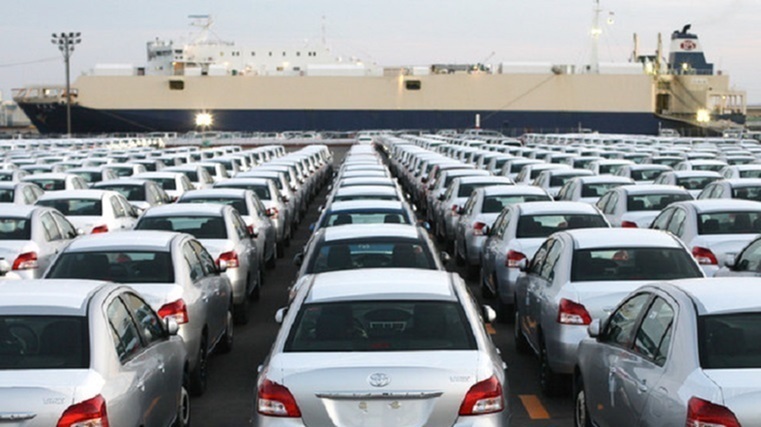
The Middle East conflict and near-closure of the Strait of Hormuz are causing havoc for businesses in Japan and South Korea exporting used vehicles to the region.
American and Israeli strikes on Iran have disrupted global shipping routes and port operations.
One of the affected companies is owned by Umar Ali Hyder Ali, who has lived in Japan for two decades, and exports used cars to South Asia, the Middle East and Africa.
Days after the war broke out, he found out one of his shipments of more than 500 cars was stuck at sea because the vessel was unable to get into Sri Lanka because the port had filled up with cargo diverted from Dubai. The vehicles were eventually offloaded at Hambantota last week, some 10 days late.
Hyder Ali says congestion has sparked “panic” among some Japanese shipping companies with some shipments being cancelled and others diverted to ports Pakistan or China. He adds some of his vehicles may end up being returned to Japan.
His Yokohama-based company, Kobe Motor, ships around 18,000 units per annum mainly to his native Sri Lanka where compact Toyotas and Hondas are popular.
He also has around 50 second-hand luxury vehicles, including Rolls-Royces, Lamborghinis and Ferraris, offloaded in Sri Lanka and China because vessels were unable to get to Dubai and buyers in the Middle East. Air freight could be an option for some clients, says Hyder Ali, but the high cost only makes it possible for the wealthiest.
Japan and South Korea exported a combined US$19 billion – or NZ$32.71b – worth of used cars last year with Japan accounting for a little more than half of that. More than one-third of the 883,000 used cars South Korea exported last year went to the Middle East.
The United Arab Emirates was Japan’s biggest destination for used cars last year, accounting for 224,000 units, or about 15 per cent of total used-car export volumes, according to finance ministry data.
In South Korea, the conflict has halted shipments during what’s usually the busiest season for used-car dealers. Demand usually peaks in March to September because of travel and construction activity in the Middle East and elsewhere.
Activity has slowed at a storage complex in Incheon, where about 80 per cent of cars are normally bound for the Middle East, shipping company official Kang Tae-yang told Reuters.
More than 70 per cent of his vehicles are stuck in storage, while some vessels already at sea are pausing or diverting voyages instead of going to original destinations. Cars parked at storage facilities in Incheon have been unable to move due to transport disruptions. Those already loaded onto ships have yet to reach their destinations.
Some ships plan to unload cargo at alternative locations in the Middle East or further afield to avoid the Strait of Hormuz. Dealer says this is largely a decision made by shipping lines with car exporters in discussions to understand contingency measures.