

‘Turbulent’ times for market

Colonial Motor Company’s chief executive says too many new brands are converging on the New Zealand market at once as the new-vehicle sector undergoes unprecedented change.
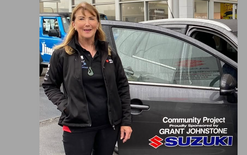
Alex Gibbons, pictured, describes the level of competition among light vehicles as unsustainable and predicts it will lead to brands having to merge as market share dilutes.
His comments come in Colonial’s annual report, released before the company’s annual meeting in November, in which he notes there has been a “continued and unrelenting wave of new brands entering the Australasian market”.
“All of these new brands have aggressive market share aspirations and for the most part, have or are imminently bringing with them a complete range of models,” he explains.
“The new vehicle market was already considered a competitive environment to operate in. It would be fair to say this added multi-layer of competition has taken the market to an unsustainable level that will result in brand consolidation for a small market like New Zealand.
“To put this in perspective, more than a dozen new Chinese automotive brands have entered the local market in the past two years.”
Gibbons says Colonial is not immune to the impact of these changes and to remain long-term players in the market, “we must navigate these current turbulent times by both rolling up our sleeves and adapting”.
Besides the arrival of more brands, he observes two other factors are putting pressure on the industry. One is a pivot towards new energy vehicles (NEVs), especially in the passenger and SUV segments.
“The growth in NEV models is not a new phenomenon, although it had seen only modest growth until recently and that was often driven up or down by changes in government policy,” he adds.
“The Middle East conflict changed that narrative and has acted as the catalyst for the recent accelerated adoption of NEVs in our region.
“While an NEV may not be the best vehicle for every application, they are playing an increasing part in the evolution of the market.”
Another key dynamic he identifies in his report is the continued improvement in battery technology and, with it, the increasing strength of Chinese automotive manufacturing.
Gibbons says these factors are challenging the value equation at a global level. “Affordable small to mid-sized passenger vehicles have become ground zero where price relativity and range anxiety are not the barriers they once were. In the light commercial vehicle range, the acceptance of NEVs in the urban environment is also on the rise, albeit at a much more modest pace.”
He tells shareholders these various market dynamics mean Colonial is taking a pragmatic and balanced approach to change.
“The impact of China’s growth and capability in automotive manufacturing cannot be underestimated, as is plainly obvious in today’s market. That does not mean Chinese brands will simply dominate the entire market, as some headlines might suggest.
“This is where established brands with comprehensive dealer networks bring reputational advantage. This comes with the proviso that they can only continue catering to their customer base by evolving their model range to meet changing consumer preferences.
“In our view there are far too many new brands converging on the market at once that are not created equal and it must be a daunting prospect for new vehicle buyers to decide where to place their investment.”
To that end, Gibbons notes it is pleasing Mazda is leveraging its long-standing “Changan Mazda” joint venture to deliver a new generation of battery EVs, the Mazda 6e and CX-6e, with both expected to be in showrooms before Christmas.
Colonial’s “long and proud history” with the Ford Motor Company, dating back to 1908, is also flagged as a core pillar of its business in 2026.
Gibbons says the Ford model range is proven to be resilient and the marque plans to refresh and expand its New Zealand light vehicle model range by 2030.
“We can see the first stage of this strategy playing out through Ford leveraging global partnerships to bring the Transit City Electric Van and Bronco Basecamp to dealerships in 2027, both vehicles firmly sitting in the NEV space.
“We have faith that Ford Motor Company will, as they have done in the past, continue to deliver ‘great to drive’ new models to their stable that align with quickly evolving market trends.”
The need to forge new alliances, a situation similar to the rise of the Japanese automotive industry in the 1960s and 70s, is highlighted. This includes Colonial’s increased representation of the BYD brand and its small and mid-sized NEVs, which “is expected to strengthen our position in these important market segments”.
Group’s performance
As announced last month, Colonial’s revenue of $1.07 billion for the year ended June 30, 2026, was up from the previous year’s $1b. Its trading profit after tax came in at $18.7 million and bettered the $17.8m for the 2025 financial year.
The company’s report, released to the NZX on September 21, notes the performance reflects a subdued final quarter affected by the US-Iran conflict and related disruptions to fuel supplies.
Gibbons says the automotive retail market has been challenging to navigate over recent years, with disruption and uncertainty as everyday norms.
“It would be hard to find many other industries of equal scale and global complexity that have undergone the same level of government interference, technology change and global supply chain disruption.
“When considering the added disruption in the second half of the year created by the Middle East conflict and resulting oil shock, this made the result for the 2026 financial year a particularly satisfying outcome.”
With the added pressure of market competition from the arrival of new brands, he adds Colonial’s dealers need to react and adapt, “as they always have”, in realigning their operations to drive productivity and efficiency to meet demand.
People
Key personnel changes at the group include Stuart Reid replacing Paul Fiebiger as dealer principal at Southern Lakes Motors in Queenstown, which represents Mitsubishi and Nissan.
Chris Damsteegt has been named dealer principal of BYD operations for Colonial as it expands its representation of the brand. Damsteegt was previously chief financial officer for Colonial’s Christchurch-wide, Nelson and Timaru businesses.
Gibbons notes the company’s chair, Ash Waugh, will retire at the conclusion of November’s annual meeting.
“Ash joined the board in 2015 and was elected chair in 2021,” he says. “From a personal perspective, Ash has been more than just a sounding board. Without fail he has been there with sage advice and given me and the management team his full support and always with good humour – he will be missed.”
Used vehicles
Sales of used vehicles in the first three quarters of the 2026 financial year continued to be an area of growth and prosperity for Colonial’s dealerships.
“Unsurprisingly, the impacts of the Middle East conflict disrupted this momentum and significantly impacted used vehicle demand, particularly for large diesel vehicles,” comments Gibbons.
“The impact on margins was swift and the decision was made early to revalue inventory to meet the market, a painful but necessary exercise.
“Despite this short-term pain, the growth potential and fundamentals of our used vehicle operations remain an important strategic initiative for the group.”
Property
In terms of new capital investments, the company has acquired property in Hornby, Christchurch, to be the home of the Adventure Motor Group subsidiary and its associated BYD operations.
A nearby facility, which was previously the Mahindra and JAC dealership in Sockburn, will provide a temporary base for operations in the meantime.
“Being an NEV brand, BYD will have a purpose-built solar-powered dealership which will be carefully monitored to determine if the business case applied there justifies future solar investment at other company-owned facilities,” adds Gibbons.
Other supporting BYD facilities associated with Adventure Motor Group are being progressed, for the most part on CMC-owned properties.
Elsewhere, the company’s Ford facilities in Rangiora and Botany, East Auckland, will be the first to deploy Ford’s latest “Signature 2.0” design in New Zealand, and a property on Vickerman St, Nelson, is in the final stages of renovation to become MS Motors’ new home for its Kia business.
Strategic direction
Gibbons says the challenge for the 2027 financial year is focusing on what is within the leadership team’s ability to control at the dealership and group levels, “rather than trying to deal with the complexity of all that is happening around us”.
He explains this means targeting best practice and aligning operations and business cost structures with market realities.
“More than ever, winning in the current environment needs a strong relationship between the dealer and their franchisor. Our dealership teams need to continue delivering a first-class customer experience in order to compete effectively in the market.
“The company continues to stand behind and support its long-term brand partnerships while at the same time balancing the need for strategic diversification.”
Outlook
“The current market conditions will make for a challenging first half,” opines Gibbons.
“The light-vehicle markets, both new and used, are a big part of our group’s operations and margins are expected to come under continued pressure due to price volatility and the sheer volume of vehicles coming to the New Zealand market. While the Middle East conflict remains unresolved, the negative impacts will linger.
“Signs of life are appearing in the light and heavy-duty truck markets, with fleets looking to replace assets when the economic climate and with it, confidence starts to build.
“The short-term outlook will have speed bumps but the medium-term looks to be one of improved economic growth for New Zealand. This bodes well for the company, which is in a sound financial position.”