


Trade training ‘heavy priority’
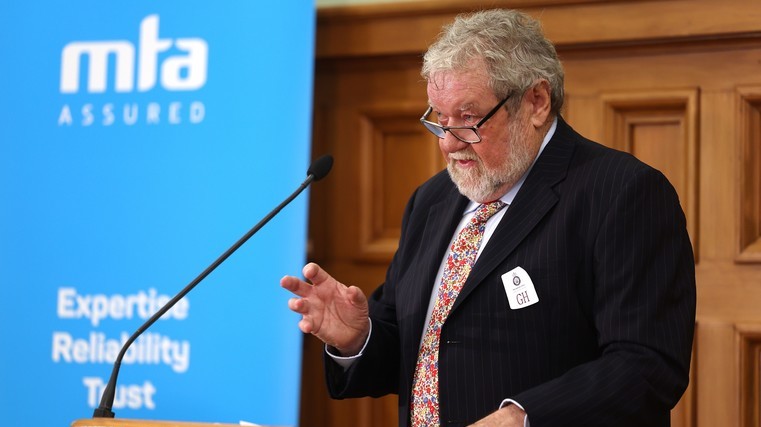
Members of the Motor Trade Association (MTA) are increasingly anxious about the training for staff looking to enter the automotive industry after losing “direct influence” in helping shape the courses on offer.
President Bob Boniface has outlined four key areas where the MTA is seeking policy support from the next government in order to address issues around employers being able to secure enough workers with the right knowledge.
He recently told politicians and members of the industry gathered in Wellington that skills supply is the subject that 75 per cent of the association’s members say keeps them awake at night.
“The nation relies on some 4.5 million vehicles to go about our commerce and private lives. Our lifestyle and values are intrinsically linked to mobility and freedom of movement and, as a nation, we sure get ratty if that’s compromised,” he said.
“Our skill supply is at the mercy of competing boom-and-bust sectors, and the ebbs and flows of migration.
“At present with more than 2,000 vacancies in the sector at trade level we need to super-charge skills supply.”
The first area where the MTA is seeking support from decision-makers is around training mechanisms.
Boniface, pictured, discussed the impacts of a review of vocational education and the establishment of Te Pukenga, which has been formed from a merger of the country’s 16 institutes of technology and polytechnics.
He said these “have so far done little to clarify how the future will evolve positively, but what it has done is significantly deteriorated employers’ input to guiding future training”.
Industry training organisation MITO, which is now a division of Te Pukenga, “was not broken” and supplied automotive businesses with an ever-growing stream of appropriately qualified apprentices.
“Our industry used to have around four of the seven board seats on MITO, guiding the training agenda monthly. Now we have no direct influence,” continued Boniface.
“We have been lucky that MITO has so far continued on its trajectory with momentum.
“We say trade training must be a heavy priority, and industry and employers must have an effective and commanding voice on training content.”
The MTA also wants more emphasis on the value of trades as it battles a “gradient of assumption” from teachers, career advisers and parents that trades careers are not necessarily worthy.
Countering such assumptions is seen as essential to provide stability of capacity, as well as helping to evolve technology skills.
Boniface said: “We say the policy narrative should positively emphasise the value of trades in our society.”
He also raised the subject of funding partnerships for apprentices, noting the risk an employer takes in commencing an apprenticeship is significant because they are committing to a non-productive employee for a significant period, diverting management and senior staff to training, and risking an early exit.
“The Apprentice Boost scheme shared the risk a little and apprentice numbers as well as employer commitment received a boost – good stuff but untargeted.
“We observe the federal scheme recently introduced in Australia, where automotive, among 111 targeted critical trades, are subsidised to the tune of $15,000 per year for the employer and $5,000 for the trainee, truly sharing the risk.
“We say such a targeted solution would be ideal for New Zealand’s automotive sector.”
Immigration process
The final area that needs addressing to improve the skilled labour situation is immigration, Boniface told guests on May 9 as the MTA launched its call to action for whoever is in power after October’s general election.
While the green list and accredited-employer schemes are considered sound ideas, he said both are currently compromised by ineffective processing machinery and difficulty with skills and qualification equivalence.
He delivered an anecdote about how he previously brought 16 people into New Zealand and through to residency under the government’s old scheme.
“When the new scheme came in in mid-2022, I was onto it the same day,” he said. “I got accreditation promptly, and then job checks for two trades, and got eight tokens.
“Then, from August onwards, battled to bring potential workers through the employee check. In February I got one through and had the seven other tickets cancelled, so I had to start again.
“This is definitely not a slippery tube process, and no one can plan a business on this basis.”
The MTA says any immigration policy should:
• Put trades on the green list when there is evidence a substantial long-term shortage of skills exists.
• Set aggressive requirements for immigration processing so the output is vastly improved.
• Set immigration skill thresholds that match the skills shortage. The capacity gap is in the main at lower trades level, not super-qualified techs.
As part of its plea to politicians, the MTA is offering to build a capability to undertake fit-for-purpose equivalency and minimum standards assessment of applicants if that helps the process.
Emissions testing
Boniface said the MTA believes in-service emissions testing is the “biggest bang-for-buck opportunity for an incoming government”.
There are more than 4.4 million internal combustion engine vehicles in the fleet, with an average age of 15 years and transport emissions are the largest contributor to premature deaths due to atmospheric pollution at 2,250 per year, according to official figures.
He explained it’s globally accepted that fuel consumption deteriorates around four per cent on average per annum without scheduled maintenance, but can be 10-30 per cent for unmaintained vehicles.
“The purpose of in-service emissions testing is to drive a maintenance habit and is in place in most OECD countries. Methods of testing are well-developed, and equipment is plentiful and inexpensive,” said Boniface.
He admitted making such a change “is a journey”, citing Germany’s experience as an example. The programme there has continued building a maintenance habit in the population with fails on presentation falling from 9.9 per cent in 2001 to 2.9 per cent in 2021.
It has also been reported internationally that 80 per cent of the worst scores, especially for particulates, are produced by around 20 per cent of vehicles.
In 2022, the MTA carried out New Zealand’s first empirical test on vehicles more than eight years old when presented for normal scheduled services. Emissions were measured on arrival and after service with 284 data pairs measured.
“The result was a surprising 29 per cent average reduction in tailpipe organic carbons – that’s to say, unburnt fuel,” added Boniface.
“These were vehicles booked for a normal service, not sick or broken cars. Since there is no compulsion to service in New Zealand, we suspect the population average is considerably worse.
“Our argument is biannual emissions testing of vehicles will identify major polluters and enshrine habits of servicing to OEM standards.”
The MTA claims the benefits of comprehensive in-service testing are:
• Saving in burning non-renewable fuels. If that came in at four per cent, that could be $400 million per annum across the full fleet.
• Reduction in greenhouse emissions of about circa four per cent proportional to fuel used.
• Reduction in long-term premature deaths of at least 120 per year.
• Average consumer payback of a $50 test and service, if required, is likely to be short through fuel savings.
The MTA suggests the cost to government for such a regime would be between zero and whatever contribution is felt necessary to bring low-income households into the programme.
For example, the MTA could produce dedicated emission test vouchers for welfare agencies to distribute to beneficiaries. Some households may also need assistance with servicing costs.
“Comprehensive in-service emissions testing could move our carbon-footprint equivalent to taking four per cent of the fleet off the road, or alternatively, equivalent to putting 160,000 EVs on the road,” explained Boniface.
“We say this conversation must be a priority for the incoming government, their ministries, the MTA and other sector representatives.”
Clean-car policies
The MTA supports lower emissions, safe and maintained vehicles, improved health outcomes, and more efficient transport outcomes to recover and increase business and personal mobility.
It says these factors, which it collectively describes as “safe cars, safe air and safe roads”, underpin productivity and New Zealand’s standard of living.
Boniface noted the government’s clean car discount has done its job as an, “albeit expensive”, prompt to move thinking toward electric and low-emissions vehicles.
However, he said the MTA thinks the recent announcement of an adjustment to the settings of the feebates scheme, which will come into effect from July 1, is unfortunate.
“It has prioritised balancing of the accounts at the cost of abandoning meaty middle-ground incentives, which were working for modest everyday purchasers.
“We say pull the penalties when there isn’t a cleaner choice, spend whatever the government can afford on incentives for anything under 150g [of carbon dioxide per kilometre] to move the average and focus on the segment where ordinary people can make wiser choices. Top-end EVs don’t need incentives.”
With regards to the clean car standard (CCS), he said New Zealand is a taker of available technologies and supply. This means policies should aim to make sure the country remains a market where OEMs find it easy and rewarding to participate.
“If our standards move faster than available tech, it will likely mean we suffer permanent changes in participation, and potentially miss out on access to the next winning OEMs in the ebb and flow of technical dominance,” warned Boniface.
“We say hold the CCS at the current level for two further years, and observe and watch tech advances.
“Work with the MTA and others to plan new and used supply standards to effect a reasonable pace of improvement without becoming a problematic market that mainstream players chose to avoid.”