

Supercar ramps up power
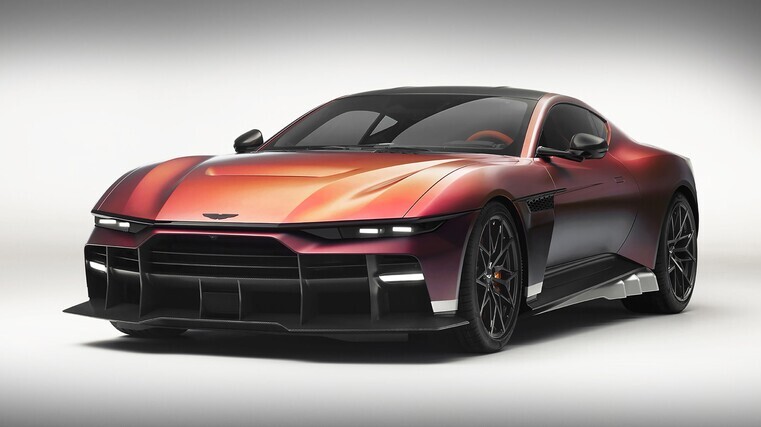
Aston Martin has unveiled the Valen, which it says is the world’s most powerful front-engined car from a manufacturer and the most powerful front-engined V12 supercar in the company’s 113-year history.
The 12-cylinder supercar is limited to 150 units worldwide and has been created by the marque’s bespoke service, Q by Aston Martin. First deliveries are scheduled for the second quarter of 2027.
The Valen has a carbon fibre body and is powered by the brand’s most powerful version of its 5.2-litre twin-turbocharged V12 engine with 850PS and 1000Nm of torque from 2500rpm.
It boasts an eight-speed ZF transmission, which uses race-proven shift strategies developed for Aston Martin’s Vantage GT4 race programme, and can complete the 0-100kph sprint in three seconds. Top speed is electronically limited to 344kph.
Engineers paid close attention to the Valen’s throttle mapping, which changes according to drive mode. In Sport and Sport+ modes, the throttle pedal uses a shorter map to deliver more throttle earlier in its travel, while Track mode trades that urgency for a longer and more progressive delivery.
The Valen’s commitment to performance extends to a weight saving of up to 110kg over the core V12 platform. This is achieved through the use of lightweight motorsport-inspired materials including carbon fibre, aluminium, titanium and magnesium.
An optional lightweight pack featuring machined-from-solid aluminium suspension arms, knuckles and titanium chassis bolts makes a 16.9kg weight saving alone.
New lightweight magnesium wheels are fitted as standard, minimising unsprung mass to improve steering response. The wheels are shod with Aston Martin-tuned Pirelli P Zero R (275/35 ZR21 front, 325/30 ZR21 rear) and or P Zero Winter 2 tyres (275/35 R21 front, 325/30 R21 rear) developed specifically for Valen.
The Valen also adopts Pirelli’s latest Cyber Tyre technology, a blend of hardware and software technology that shares share real-time tyre data with the vehicle’s dynamic control systems.
Developed in conjunction with Bosch Engineering, the system is fully integrated into the car’s digital architecture, allowing the ESP, ABS and traction control systems to adapt their thresholds continuously to optimise control and safety.
Steering efforts have been tuned for response, allowing the Valen to behave like a shorter and lighter car, and the car also employs a solid-mounted rear subframe together with model-specific springs, helper springs and Bilstein DTX semi-active dampers.
Featuring a new lightweight titanium exhaust system, Aston Martin says Valen has a soundtrack to match its performance.
The system has been developed specifically for Valen and features new micro mufflers ensuring compliance with homologation regulations, while saving weight and enhancing the sound quality.
As for its appearance, there are recessed slimline headlamps, a bold geometric mesh grille and an acutely angled front splitter.
The bonnet itself features a single top vent with perforations at the trailing edge. On each side, the traditional side strake has been sharpened and elongated and is now incorporated into a large functional vent that extracts air from the wheel arch.
Saw-tooth vortex generators positioned on the trailing edge of the sills pull high-speed airflow from beneath the car to reduce lift and generate downforce.
The Valen’s rear-design treatment includes a solid tailgate that opens onto a 170-litre boot, and a full-width light bar beneath the upswept tail, which acts as a Gurney flap to generate downforce while incurring minimal drag.
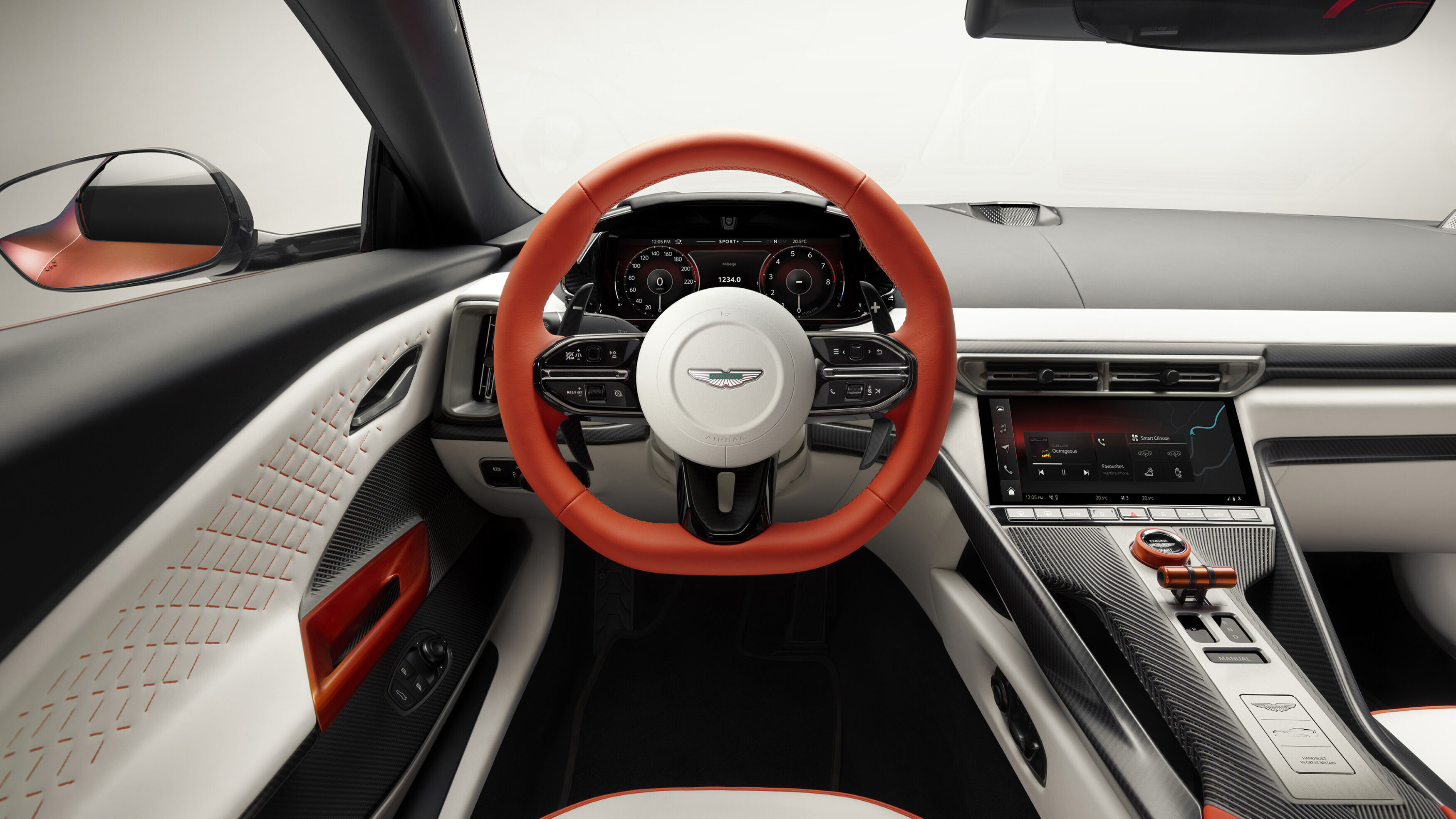
The interior boasts a slim centre console, enabled by advanced 3D-printed components and incorporating the performance-focused switchpack introduced on the Valhalla.
The cabin offers a choice of newly developed Sports Plus seats, designed to combine support with long-distance comfort, or lightweight carbon fibre performance seats for a more focused driving experience.
As for trim levels, customers can choose between a combination of semi-aniline leather and alcantara or full semi-aniline leather, before then selecting from five material splits (monotone, duotone, light duotone, tritone and driver focused).