


‘Strong interest’ for EVs
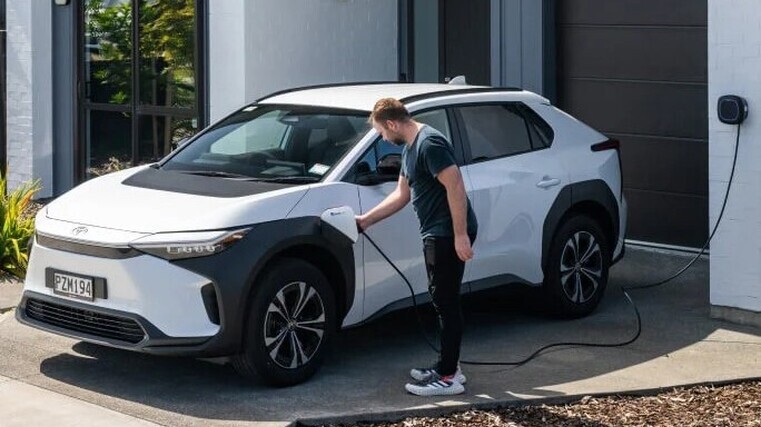
Spiralling fuel prices caused by conflict in the Middle East are driving a spike in interest in Toyota’s electrified vehicles, with its dealerships reporting increased enquiries and test drives across its hybrids, plug-in hybrid (PHEVs) and battery electric vehicles (BEVs).
The company says the crisis highlights how quickly global events can influence people’s thinking about running costs and model choice.
It adds fuel-conscious customers are visiting its stores and searching online for more information on hybrid and EV performance. The brand is also advising motorists to check their tyre pressures to ensure optimum performance and efficiency.
Andrew Davis, Toyota NZ’s chief strategic officer, says: “Whenever fuel prices rise sharply, Kiwis start doing the maths. What we’re seeing is strong interest across our electrified line-up from hybrids to plug-in hybrids, including the introduction of the RAV4 PHEV and our new-generation fully electric bZ4X.
“What’s different this time is how many customers are already familiar with electrified vehicles and are ready to take the next step.”
Toyota’s electrified strategy is already “well established” in New Zealand with more than 80 per cent of its passenger vehicles sold now electrified, primarily through hybrid technology.
Charging easier than expected
For many customers making the move to a BEV, the reality of living with one can prove simpler than anticipated. Anna Young and her husband, of Wellington, bought a bZ4X from Rutherford & Bond and King Toyota about two years ago on the spur of the moment and are happy with their decision, especially as fuel prices bite.
“Petrol prices weren’t so high at the time, but that was a factor in our decision because it was about future-proofing,” she says. “That has worked out well for us.
“We weren’t even in the market for a new vehicle, but saw it on the lot, took it for a test drive and bought it on the spot. With everything going on globally, it’s reassuring knowing most of my driving is powered from electricity at home rather than imported fuel.”
Electricity retailers are helping make the transition more affordable. Some utilities, including Genesis Energy, now offer plans with electricity used between 9pm and 7am being up to 50 per cent cheaper.
Davis adds: “When people realise they can charge overnight at a significantly lower electricity rate, the economics start to make real sense.
“On top of this, the government announcement that more than 2,500 public EV chargers will be rolled out across New Zealand is a boost for drivers considering the shift to electrified vehicles. Expanding the network helps remove a key barrier for customers.
“This level of national investment strengthens the EV ecosystem and supports the growing interest we’re seeing from Kiwis looking to reduce fuel costs and future-proof their mobility.”
Offering fuel security
Customers are choosing EVs to avoid fossil fuels altogether or are considering a PHEV for their ability to drive significant distances on battery power alone, says Davis.
Otago Community Hospice operates 15 hybrid Corollas and RAV4s to visit patients across its district. It’s making the move to diversify its fleet by adding the bZ4X and RAV4 PHEVs.
Chief executive Ginny Green says the hospice’s doctors and nurses can travel up to four hours to reach patients. A national fuel shortage and higher prices put more pressure on the service.
“Even though we are an essential service, we need to minimise risk if there’s a shortage in the future and try to save funds where we can,” says Green. “We’re now looking to mix up our fleet and swap out one-third of our older hybrids into long-range EVs.”
Green is working with Cooke Howlison Toyota in Dunedin on the cost-benefit analysis and acquisition of the new vehicles.
Multi-powertrain strategy
Davis says real-world experiences reinforce Toyota’s long-standing multi-powertrain strategy, which recognises different technologies suit different drivers and regions.
“New Zealand is geographically diverse and people use their vehicles in different ways,” he says. “That’s why we believe offering hybrids, PHEVs and BEVs alongside efficient petrol and diesel models gives customers the flexibility to choose what works best for them. Self-charging hybrids have been popular as they don’t require any change in driving behaviour or lifestyle.”
Hybrids make up 95 per cent of the marque’s car sales with the RAV4 Hybrid leading the charge as the country’s top model in 2025 with 11,295 units. Counting all models, Toyota has sold more than 100,000 hybrids here.
The company has been offering fuel-efficient hybrids since the introduction of the Prius in 1997. Since then, it has been adding hybrid as a power option to other models. It’s also working on hydrogen technology and has partnered with companies to develop hydrogen powertrains for boats and trucks.
Davis says the latest spike in interest shows how rapidly consumer sentiment can shift when fuel prices rise.
“Events on the other side of the world can quickly translate into higher prices at the pump here as we are seeing on a near-enough daily basis,” he adds.
“Electrified vehicles give customers more control over running costs while reducing emissions. That combination is resonating with Kiwis.
“We’ve been taking the same approach with our involvement in motorsport by introducing a synthetic biofuel supplier for the 2026 Castrol Toyota Formula Regional Oceania Trophy.”