


Strait to reopen under new deal
The US and Iran have agreed to strike a deal to end their conflict with US President Donald Trump saying the Strait of Hormuz will also reopen.
Pakistan’s Prime Minister Shehbaz Sharif, whose nation has been mediating, says both sides have declared “the immediate and permanent termination of military operations on all fronts, including in Lebanon”.
The pact will extend a ceasefire for another 60 days, during which the sides will negotiate details of a final agreement.
“I am very happy to say it’s signed, the deal is all signed,” Trump said during a meeting with French President Emmanuel Macron on June 16.
His comments came after senior US administration officials said the agreement was signed electronically by Trump, vice-president JD Vance and Iranian Parliament Speaker Mohammad Bagher Ghalibaf.
An official signing ceremony is slated to take place on June 19 in Switzerland and talks will continue afterwards to find a permanent agreement.
On June 15, Trump said he had ordered the immediate removal of a US naval blockade of Iranian ports and added the Strait of Hormuz will open when the initial agreement is signed.
Kazem Gharibabadi, Iran’s deputy foreign minister, confirmed the end of military operations in a phone call on state television.
Responding to news of the deal and the prospect of the maritime route reopening, New Zealand’s Foreign Minister Winston Peters says the move should help restore confidence in supply chains for Pacific economies.
“This pivotal, constructive deal is a step towards reducing tensions and promoting stability in a region that is critical to global economic security,” adds Peters.
“The disruption to the Strait of Hormuz has had serious impacts on New Zealand’s economy, as well as on our Pacific partners.
“We welcome steps that will enable the safe reopening of this vital maritime route and restore confidence in key supply chains.
“Dialogue and diplomacy remain the most effective means of resolving longstanding issues. This is a good first step and we hope the parties now seize the opportunity to resolve the tensions in the region.”
Shipping uncertainty
How quickly shipping returns to normal through the strait remains to be seen after announcements saying the waterway was open in recent months have rapidly unravelled. Any faltering in the talks could lead to Iran seeking to reassert its position in Hormuz.
Although a ceasefire has been in place since April 8, sporadic attacks on shipping have continued. There will also be a fear of mines in the waterway itself.
The immediate priority for shipping companies will be the safe exit of about 1,000 ships and 20,000 seafarers that remain stranded in the Arabian Gulf.
The shipping industry’s caution when it comes to security is illustrated by the situation in the Red Sea with the Houthi in Yemen since last 2023.
Many major shipping companies have remained wary of returning to the Red Sea despite many months since the last attack on commercial shipping. However, unlike the Red Sea there is no alternative route for ships to divert from Hormuz.
Even in the uncertain security environment that has prevailed in the strait recently, some companies have been willing to risk transits either via US or Iranian routes. However, traffic levels have remained at single-digit percentage levels compared with pre-conflict levels of an average 138 transits per day.
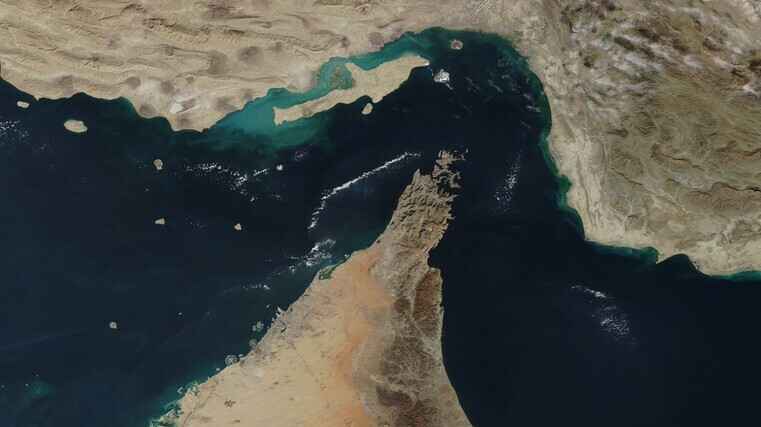
The Strait of Hormuz, through which 20 per cent of the world’s oil and natural gas travels, has been effectively closed by Iran since the war began on February 28, driving up fuel prices worldwide.
Meanwhile, Israeli politicians have pushed back on the peace deal. Defence Minister Israel Katz says his government opposes a withdrawal from the roughly five per cent of Lebanese territory it has occupied and pledged that if Iran attacked Israel due to events in Lebanon, it would strike “with full force”.