

Split approach to CVS welcome

Industry associations and other stakeholders are preparing to start talks with government officials about overhauling the clean vehicle standard (CVS), with new targets and settings due to apply from the start of 2028.
The coalition has confirmed it will retain the scheme but plans to establish separate carbon dioxide (CO2) emissions targets for new and used-vehicle imports.
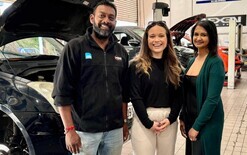
Autofile Online spoke to Greig Epps, pictured, chief executive of the Imported Motor Vehicle Industry Association (VIA), about the key things he wants officials to consider before delivering a report on the CVS to the government by the end of April next year.
Spotting the difference
“We could see that the CVS wasn’t working. Our biggest point of contention over the past year or so is the policy has been hitting different supply points and the regulations have affected them differently.
“New and used vehicles are essentially different products, so we’ve been regulating for two different things with one policy. That wasn’t working and that’s why we were happy to see the minister say, ‘let’s do a full review, and look at the policy and what’s going on’.
“We’re happy the recognition is there now that there’s a difference between new and used vehicles, especially in terms of what can be achieved with the clean-vehicle policy.
“One policy can’t do the same thing for two markets. It creates inequities and differences we need to address and that’s why we’re happy to see this split approach come in.”
Striking a balance
“The policy as it was developed had this concept that an importer would generate credits to offset penalties. It was meant to be fairly neutral. But if you take 2025 as an example, 70 per cent of used vehicles were penalised and, of those penalties, over 50 per cent of them were more than $1,000.
“You’ve got one segment of the market that’s simply being penalised because we didn’t have enough available EVs to create credits. After the clean car discount’s removal, EVs were hard to sell until we hit this year’s fuel crisis, and for used vehicle importers they were also hard to find and difficult to ship.
“We saw the new-car sector was able to accumulate a couple of million credits because in that side of the market EVs were coming in. But on our side, at the start of this year we had about 300,000 credits. If the policy is meant to balance credits and penalties, that’s a clear sign it isn’t working.
“The other part of the policy we had concerns around was the weight adjustment. This was because the used-import fleet was substantially lighter than new vehicles so when the weight adjustment was applied, more often than not we would end up with vehicles facing a harder target to achieve and more penalties.”
Separate sectors
“The product mix and type of vehicles being imported meant one policy across all of them wasn’t working and was creating differences. The rules have to be adjusted for the markets we’re dealing with.
“By keeping the used sector in the standard, we need to have our own settings and that’s essentially where we have now got to because the government has recognised one policy across two markets wasn’t working.
“The ultimate idea of let’s look at what we’re bringing in and how we can bring in the best in each of those markets is where we expect the conversation to now move to.
“This next phase is also going to be important because it will be saying, what does separate mean?
“What is the stage-two design process going to lead to? We want to ensure that conversation is going to be looking at the characteristics of the used market, what’s out there, what consumers want, what’s affordable and how do we make a workable system that gives us certainty into the future and is meeting whatever the goal the government is trying to achieve.”
Emissions figures
“The existing fleet has an emissions average of 170gCO2/km and this year used imports are coming in at 135gCO2/km.
“We can’t just state a new target for the changing policy. What we need to do is figure out how to get to a number.
“We need to sit down with officials and be looking at what’s out there, what people need and want, the price range of those vehicles and from there we can establish a number and decide what might be a reasonable progression from that for subsequent targets.
“We think there’s a lot of modelling to go into looking at what’s out there, what’s needed and what’s affordable. From that, we can understand the shape of the market and start putting some pressure on it.
“Even within that system, we might still need a weight adjustment and need to be open to saying is that something we still require in a used-only policy?
“We haven’t come up with a starting number yet. We hope the officials are doing some more nuanced work around trying to figure out how to come up with a target and not just looking at numbers on a spreadsheet.”
Scrappage credits
“When we determine the target, are we also going to need to consider a certain level of penalty?
“An issue with the original policy was we didn’t have a way of balancing out penalties and credits, so part of these discussions will need to be on how we create credits.
“It may be built into a set target or the sorts of vehicles classified, but we also have some ideas around other ways to look across the fleet and fleet-management approach to generate credits.
“Used imports are helping optimise the existing fleet and it’s more likely a used import that pushes a car out of the other end of the fleet than a new one coming in. We’re offering the replacement vehicle to someone who has that older one they want to get rid of.
“So how do we successfully pull vehicles from the fleet and is that an area where we can create credits and credit the industry for taking steps to shift a vehicle out of the fleet?
“We’re talking about vehicles we know we don’t need in the fleet and whether we can credit people for their verified permanent removal and how that might fit into the way a used clean vehicle standard model would work?
“We’re trying to improve the fleet. If we look at what’s coming in at the front end and tick a box, we may have done well there. But as we’ve seen in 2025, used-import volumes were in the mid-70,000s and down 30 per cent from historical levels, and the fleet’s age went up.
“We’re not replacing those older vehicles and still have about 20 per cent of the fleet older than 20 years old. We need to look at how we shift vehicles out.
“We’re hopeful we can have those conversations with officials and those will most likely start in October.
“We have gathered a lot of data and analysis about the fleet over the past year or so. That means we can go into those conversations with some ideas and thoughts early on rather than it being a completely fresh start.
“A scrappage credit scheme is one idea we can bring into the conversation.”
Political talks
“I think the opposition parties are probably happy the clean vehicle standard is still going to be there. I’m hopeful if there was a change of government [after the November election] then the incoming one would continue with this idea of a dual approach.
“I don’t think any political party is pushing back on the idea of a dual-market system and it will really come down to what the settings are.
“We have some hard negotiation to do around the settings whoever wins the election. But I’m optimistic that if there is a change of government we would continue to have the same conversation about a dual approach.
“I think if we can get some solid modelling done this side of Christmas it will be a case of just hammering out the details next year before a report to the economic committee in April and then consideration by cabinet.
“There’s still plenty of time for ongoing conversations. After that April deadline, there’s likely to be more conversation before the final regulations take shape and that should happen in a timeframe that gives us a good part of the end of 2027 to get our heads around what January 1, 2028, looks like.
“It’s a tight timeframe but we’re not starting fresh with no knowledge about what we think will work and those initial conversations in October should get off to a good start.”
Industry seeks certainty
“Ultimately, from January 1, 2028, we want some certainty for a good period into the future.
“We need to achieve certainty. From there, the industry can carry on and try to hit those targets. We also need to be aiming for longer-term outcomes rather than putting a lot of short-term pain on the industry and creating uncertainty.
“The idea is we continue to improve the fleet with every vehicle rather than letting perfection be the enemy of improvement.
“When it comes to setting targets, they have to be numbers that recognise the existing supply chain and push from there. If we’re importing vehicles with an average of 135gCO2/km now, then what does ‘better look like?
“The starting point needs to be realistic and improve from that rather than being crazy low and unachievable, which will only lead to us quibbling over how bad we’re going to fail. That doesn’t help anyone.”
To read more about the CVS overhaul and the reaction of other industry associations, check out the September issue of Autofile magazine.