

Push for port to stay put
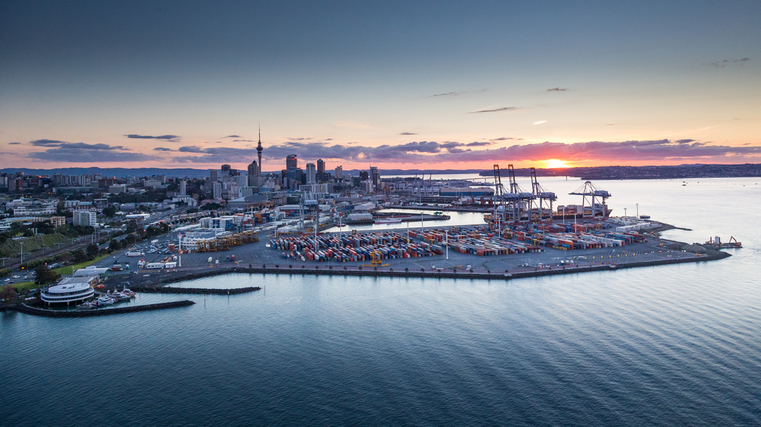
Shifting port operations away from Auckland’s city centre will have more adverse environmental effects than allowing it to expand.
That’s the warning issued by Alistair Kirk, general manager of infrastructure and property Ports of Auckland Ltd (POAL), when he appeared before the environment select committee.
The group of MPs is now considering submissions on the exposure draft for the Natural and Built Environments Act (NBA).
It’s the first piece of legislation that will replace the Resource Management Act. The other two – the Strategic Planning Bill and Climate Adaptation Bill – will be introduced at some time in the future.
POAL says in its submission on the exposure draft that existing facilities need stronger protection in the NBA to avoid the environmental cost of relocating infrastructure.
It states: “Relocating a port due to the growth of incompatible uses would likely result in extremely significant environmental effects.”
Kirk told the committee last month via Zoom that there is continued debate about shifting POAL.
The idea was strongly advocated by NZ First in the previous term of government, with Prime Minister Jacinda Ardern stating in December 2019 that it was a matter of when – not if – it moved.
However, Kirk said it made no sense to develop a new port in a pristine environment when the existing facilities could continue to operate and expand in an area where environmental sacrifices had already been made.
He added that applied to all ports in this country, and nothing should be done to limit their functions or capacity.
For POAL, it is a crucial matter with the company operating under at least 40 resource consents. While infrastructure outcomes are included in the exposure draft “we actually think it’s not given enough weighting”.
Kirk said that written infrastructural outcomes under the draft couldn’t compete with natural-world outcomes, which could lead to tensions in the planning system.
“If there are hard bottom lines, it would be difficult if not impossible to renew consents.”
In its submission, POAL said language in the exposure draft about the “protection and sustainable use of the marine environment” was problematic. “This outcome requires clarification. Softening of the term ‘protection’ may assist.”
As for being a noisy neighbour, particularly with night-time operations, POAL says “not all these conflicts can be avoided or fully mitigated by the design of infrastructure services.
“We are, therefore, concerned the exposure draft fails to adequately consider and address how conflicts will be managed and passes this issue to the national planning framework with inadequate direction.”
POAL is calling for several changes to substantially improve the exposure draft of the proposed legislation.
Infrastructure outcomes need to be strengthened and better provided for, the definitions for infrastructure and infrastructure service must include ports, and there should be a clear transition framework from the existing RMA to the new system.
“This must integrate with existing reforms and legislation which will continue alongside the NBA and other new acts,” says the port’s submission.
“This must be released as soon as possible to allow large-scale companies and infrastructure providers to adequately plan and invest in future development.”
The submission said ports inevitably had an environmental effect. Dredging and storm water outfalls were, for example, an unavoidable outcome of port activities.
“Until details are provided of clear consenting pathways for infrastructure through the limits or a nuanced approach for setting limits that recognises the different needs of different environments and activities, we cannot be certain in our support for the NBA.”
POAL’s submission says a clause could be added to acknowledge environmental limits could be set with specific exceptions or different standards for certain kinds of activities.
It should also allow key infrastructure providers to be involved in setting clean and workable environmental limits that don’t result in unintended or perverse outcomes.
Once consideration of the exposure draft is completed, the government will make changes and formally introduce the bill to parliament.
The NBR reports it will then go through a full select committee process, giving the POAL and other submitters the opportunity to make second submissions.