

Premium SUV enters third generation
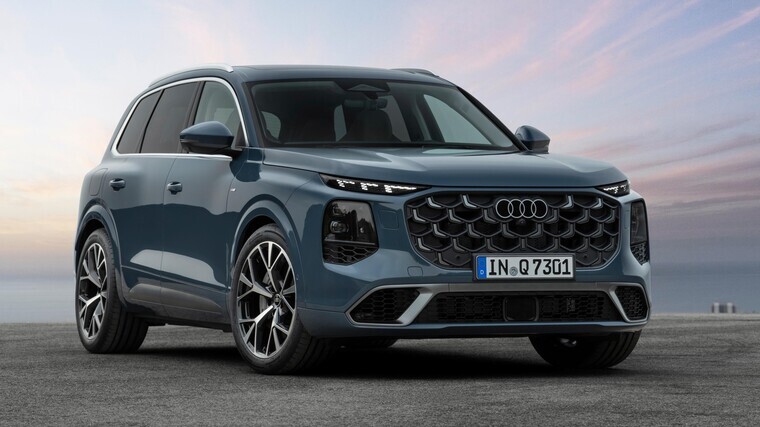
Audi has announced the third generation of its Q7 will be available in New Zealand with seven seats and “delivers maximum versatility and everyday usability”.
A highlight of the new model is an illuminated panoramic sunroof with switchable transparency, while power comes from a 3.0-litre V6 diesel engine with MHEV plus technology.
Greg Leet, general manager of Audi New Zealand, says: “We’ve seen strong momentum locally with the latest Audi Q3 and Q5 models, reflecting a growing appetite for premium SUVs that combine practicality with performance, and we expect the new Q7 to build on that success at the top of the range.
“It brings together refined capability, advanced technology and the space Kiwi families need, all while delivering the premium quality and confidence expected from Audi.”
The Q7 first appeared in 2005 and the official launch of the latest version of the large premium SUV is planned for the end of 2026.
Gernot Dollner, Audi chief executive officer, says: “For more than 20 years, the Audi Q7 has represented the perfect premium SUV.
“With its new generation, we carry this mission forward. It combines a sporty, powerful design with a highly versatile interior, first-class materials, and a wide range of technologies.
“The flexible seating with up to seven seats, the large panoramic sunroof for a spacious feel, and high-quality, harmoniously co-ordinated materials underscore its premium status.
“Its confident performance, powered by a robust drivetrain featuring MHEV plus technology and quattro all-wheel drive, makes the new Q7 a versatile all-rounder for business, family, and leisure.”
The new Q7 will come standard with seven electrically adjustable seats in New Zealand, allowing for the installation of three child seats.
For the first time globally, two individual seats are also available as an option in the second row. Together with two seats in the third row, they transform the Q7 into a six-seater. This configuration is yet to be confirmed for the New Zealand market.
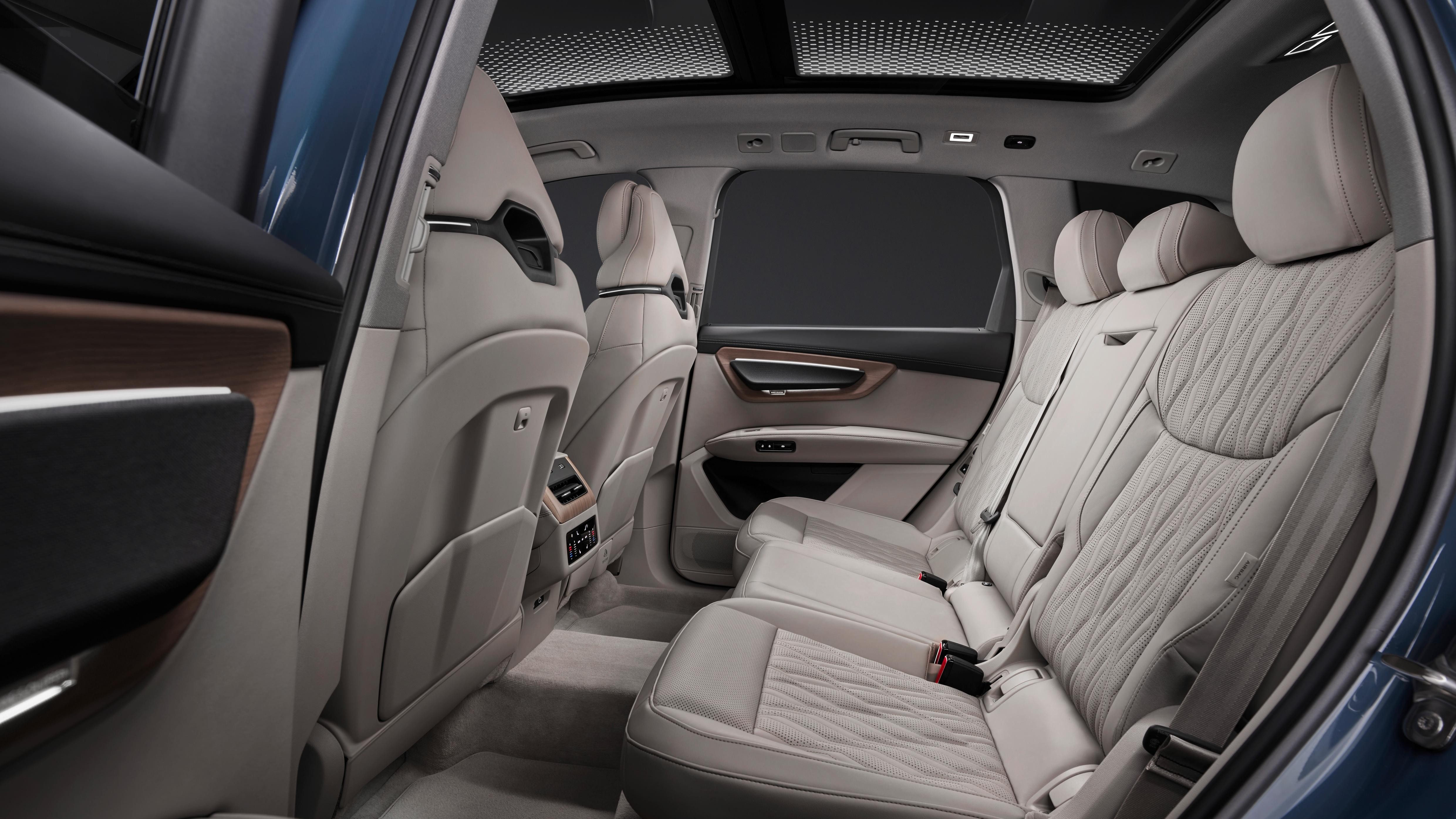
Storage compartments in the doors and in the new centre console add to the Q7’s practicality. The centre console provides space to wirelessly charge two smartphones to Qi2.2 standard, along with extra-large cup holders.
The seven-seater offers 581 litres of luggage space behind the second row and a maximum volume of 1,980 litres behind the first row.
Optional digital Matrix LED headlights with micro-LED modules are built on technology that can directly project high-resolution light patterns.
At the rear, third-generation digital OLED rear lights feature communication lighting and an active digital light signature. The Q7 offers up to eight digital light signatures for the rear lights and headlights.
Another feature is that when the driver’s and front passenger’s doors are opened, a white rhombus unfurls, welcoming the passengers and lighting the path to the vehicle.
Lighting functions are also integrated with driver assistance features. When using the lane-guidance or orientation lights, important information from the assistance systems is displayed directly in the driver’s field of view ahead of the vehicle with a direct visual reference to the surroundings.
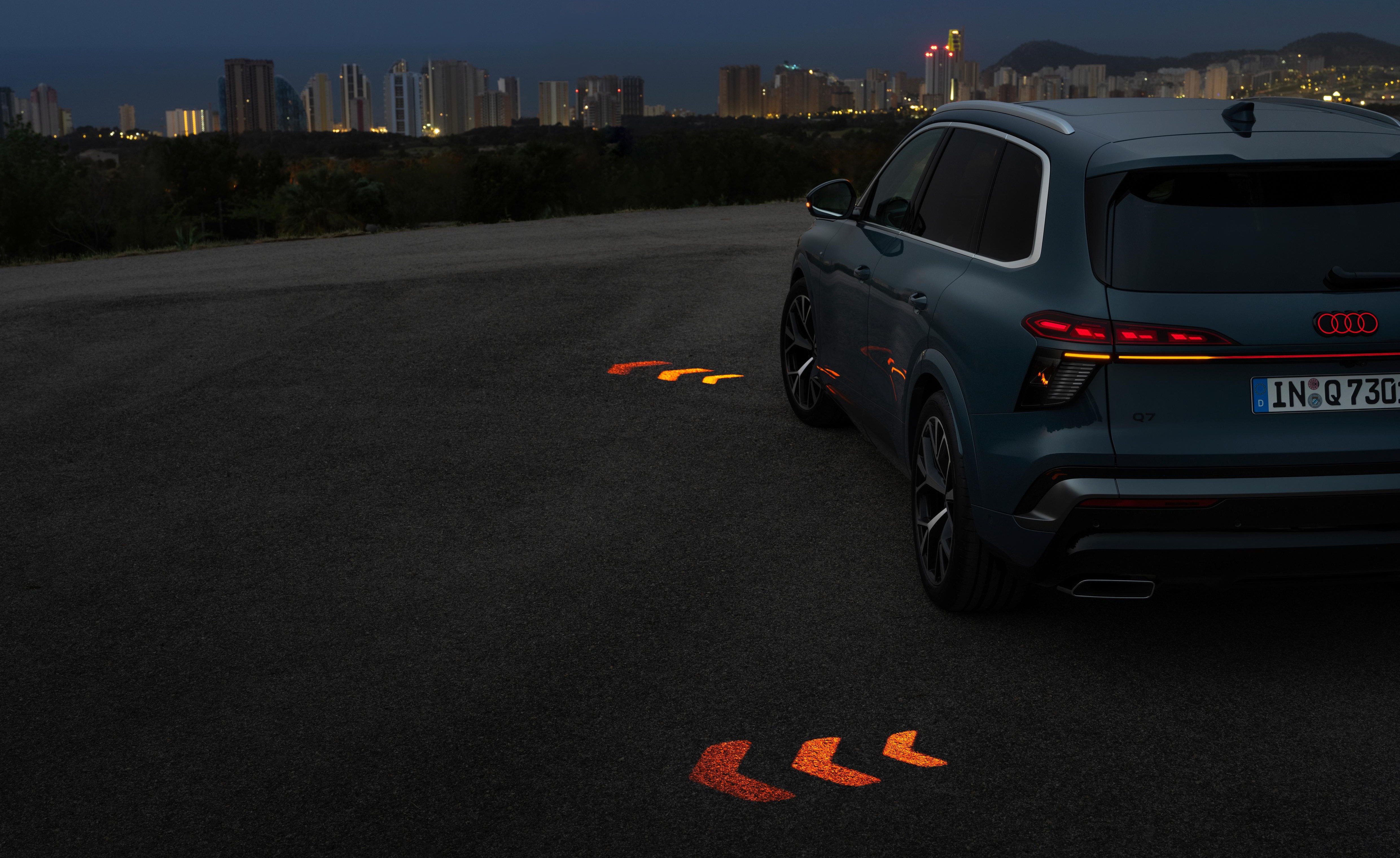
Meanwhile, advanced turn signals are the first of their kind. At night, a stylised turn signal is projected onto the ground in sync with the dynamic signals at the front and rear. This alerts other road users, such as cyclists, to a lane change or turn.
Other driving assistance functions include adaptive driving assistant plus, which supports the driver with acceleration, braking, speed and distance maintenance, and lane keeping.
The new Q7 will be available with a three-litre V6 diesel engine delivering 220kW and 630Nm of torque or 180kW and 500Nm – the engine type is yet to be decided for the New Zealand market.
The three-litre V6 diesel engine with MHEV plus technology features an electric-powered compressor for direct throttle response.
The MHEV plus technology, including a next-generation powertrain generator, supports the drivetrain with up to 18kW of extra power.
As standard, the Q7 is equipped with an eight-speed tiptronic and quattro permanent all-wheel drive with the new limited-slip centre differential with preload.
Steel-spring suspension is standard, and there is the option for adaptive air suspension or adaptive air suspension sport with controlled damping to make the Q7 more agile and versatile.
The new model is being built in Bratislava, with pricing and specifications to be released later.