


Port shelves automation plan
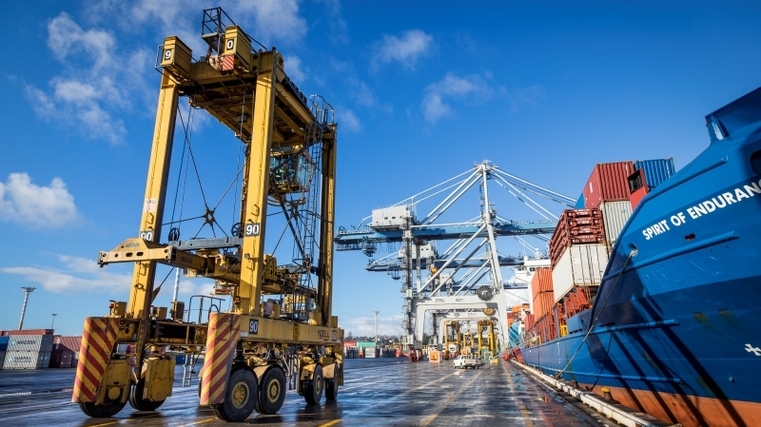
Ports of Auckland Ltd (POAL) has decided to end the automation of its Fergusson Container Terminal.
It says the announcement has been made in the best interests of the company, its stakeholders and New Zealand’s supply chain.
“We have made this decision after careful consideration of the current status of the project, advice from independent experts and work required to achieve full terminal automation,” says Jan Dawson, who chairs POAL’s board.
“Our review indicated that despite the best efforts of our team and supplier, the project is experiencing continuing delays to full terminal roll-out, the system is not performing to expectations and we don’t have confidence in the projected timeline or cost to completion.
“With these uncertainties and the need to transform the port’s performance, the board has determined the best course of action is to cease automation of the container terminal.”
Chief executive Roger Gray adds: “This is a positive decision which will come as a relief to many at Ports of Auckland and in the wider supply chain.
“It gives us certainty about the future and allows us to focus on our core job – safely providing a great service to importers and exporters. It will also help us get the business back to the level of profitability we have delivered in the past.”
Gray says the end of automation does not mean the loss of all the investment and work that has gone into the project.
“The new infrastructure built – for example, the new wharf and cranes – provides extra capacity essential for future growth.
“We will, however, have to write-off approximately $65 million in investments that will no longer be used, mainly the automation software and guidance system.
“POAL attempted automation for the right reasons – to lift capacity, productivity and profitability without further expansion or reclamation. I’m confident we can still meet those aims. We will just take a different path.
“It was a bold and innovative project but one that, despite the hard work of many, was unable to be delivered. I would like to thank the board for making this decision, as it lays the foundation for the long-term success of our business.”
The capacity and automation project at POAL got under way in 2016 with the goal of future-proofing the port’s capacity. The targeted delivery date for the infrastructure and automation projects was late 2019 to early 2020.
The work included automation of some of the straddle operations to upgrade capacity. This involved complex integration involving multiple vendors, equipment and software applications to design and implement an operation with targeted productivity levels, and system safety assurance.
The infrastructure capacity upgrade work was delivered as planned. This included the new Fergusson North wharf and cranes, major pavement upgrades, a new truck-loading area, refrigerated container capacity and other improvements.
The automation project is now two years over the initial delivery date. It has now been canned because it continued to miss operational targets.
As part of its review of automation, the port’s board of directors commissioned two independent assessments from qualified experts.
Both advised that a lot more money and time was needed to make the system fit for purpose, although neither could say with confidence how long or how much investment that would take. In addition, there was an expectation of ongoing disruption to customers during this development and implementation period.
Based on the analysis and options available, the board has determined it is in the best interests of the company, its people, customers, and shareholders to discontinue the current automation project and return the Fergusson Container Terminal to a fully manual operation.