


Plug-ins power up homes
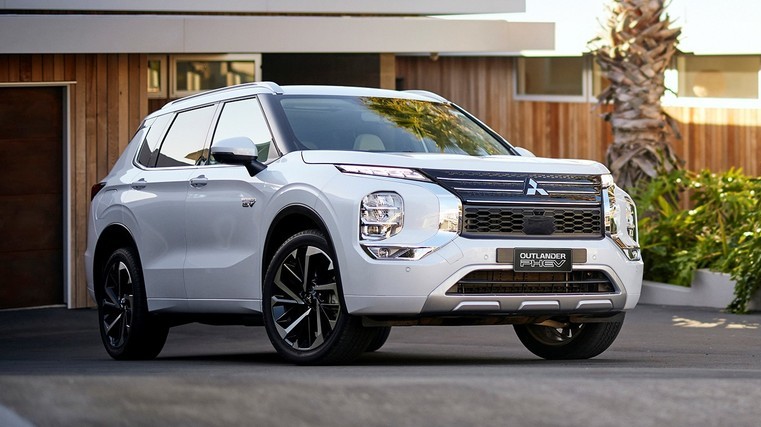
Mitsubishi Motors NZ (MMNZ) is claiming a first on the electric vehicle (EV) scene.
It has installed and is operating a vehicle-to-house (V2H) unit that allows electricity stored in an EV’s battery to be supplied into a building’s power network.
The company had previously installed solar arrays on the roof of its headquarters at Todd Park, Porirua, to charge its fleet of plug-in hybrids (PHEVs).
By installing the Wallbox Quasar V2H module, it can now use the solar-generated charge stored in PHEV batteries to power electric hoists in its parts operation and other appliances on-site.
Lloyd Robinson, MMNZ’s technical services manager, says the company has been keeping an eye on the development of the technology for some time and, as the country’s largest seller of new PHEVs, it has been encouraging its Japanese parent Mitsubishi Motors Corporation to fast-track V2H in its cars.
“We have been aware that V2H modules would eventually land here and so have been able to ensure that all our current-generation Outlander and Eclipse Cross PHEVs, and our previous generation Outlander PHEVs, with CHAdeMO DC fast charge connections are V2H ready,” he explains.
While still in its infancy here, the technology has the potential to provide stored energy resilience to New Zealand’s power grid by helping to buffer peak demand.
It can also assist in circumstances where properties may either lose connection to the grid or are permanently off it and have alternative sources of power generation – such as solar – to recharge the batteries.
Depending on the model, a battery in an Outlander PHEV, pictured, has a total power capacity of up to 20kWh, which is about the daily consumption of an average Kiwi household with two adults and two children.
“V2H is an exciting development,” says Robinson. “While there are still some regulatory considerations to be worked through, I think we’ll start to see consumers looking at their cars in a new way.”
Currently, the V2H modules can only be connected to properties with three-phase power networks and can only be active during normal operation of the power grid.
“The system can’t currently be used during a power outage because there’s no fool-proof way to ensure the power from the battery doesn’t flow back into the grid and place electrical workers in danger.
“However, those types of hurdles will be overcome as uptake of the technology grows. The units themselves are also quite expensive. Again, this will change as demand grows.”
In the meantime, late-model Mitsubishi PHEV owners who have properties or businesses with three-phase power, and who charge vehicles on night rates or via alternative generation sources, can now store that cheap power in their vehicle’s battery and pass it back into their premises when electricity prices are higher.
Glenn Inkster, Wallbox distributor TransNet’s e-mobility division manager, says: “MMNZ is the pioneer of V2H in New Zealand. Its PHEVs are among only a handful of NZ-new models that have V2H capability.
“It’s exciting times for this technology and we anticipate significant interest from PHEV owners. It adds a new dimension to thinking about what EV to buy and the potential it has."