

Official statistics beaten
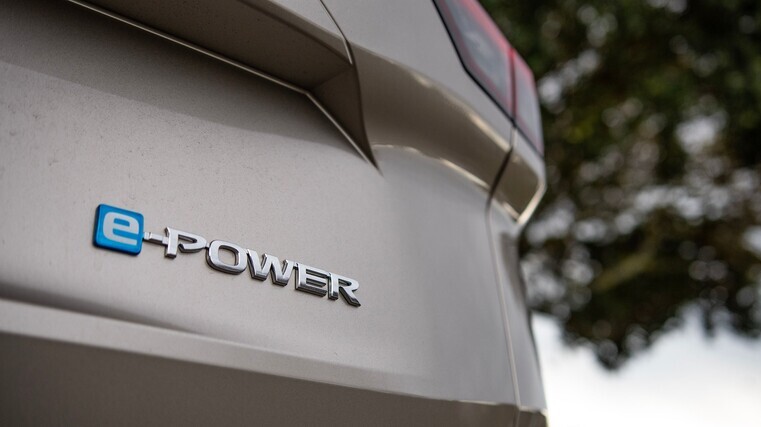
A real-world efficiency challenge has been commissioned by Nissan NZ across its range – from the e-Power hybrid Qashqai and X-Trail through to the V8 Patrol and Navara.
Perhaps unsurprisingly, it was the X-Trail which stole the spotlight by proving an “electric-like drive” is possible without ever plugging in.
Each model was independently driven along a “real world” route under different conditions with e-Power showcasing how it delivers “impressive” efficiency.
The challenge was to drive efficiently over the course, measure fuel consumption and compare it against the official sticker figure with the greatest percentage improvement winning.
The project saw the four models driven for 100km with fuel-efficiency numbers recorded before and after.
“This experience was a chance to show what’s possible on a long drive on the shortest day of the year,” says Sri Padmanabhan, country head of Nissan NZ.
“The results of the unscientific but interesting challenge show almost all vehicles were able to better their official fuel-consumption ratings. This demonstrates it’s possible to drive efficiently and achieve improvements over the official figures, regardless of the model.
“The Patrol posted a 35 per cent improvement over its official combined figure on the day – a great result for a V8 capable of towing up to 3.5 tonnes. However, the standout was the X-Trail e-Power ST-L, which achieved a remarkable 37 per cent improvement.”
With Nissan e-Power’s hybrid system, the petrol engine acts solely as a generator while an electric motor drives the wheels to deliver an electric-like experience without the need to plug in.
Unlike traditional hybrids, when the internal combustion engine can directly drive the wheels, e-Power uses the petrol engine only to generate electricity. This electricity charges a small high-voltage battery or powers the electric motor, the sole source of propulsion for the wheels. The system also uses regenerative braking to convert kinetic energy into electricity to recharge the battery.
Nissan says its e-Power battery is smaller than in typical hybrids, focusing on efficiency rather than extended electric-only range. The petrol engine is decoupled from the wheels and can operate at RPMs closer to its most efficient operating range. Engine speed varies according to power demand, battery state of charge, speed and operating conditions.