


Boost for numbers at frontline
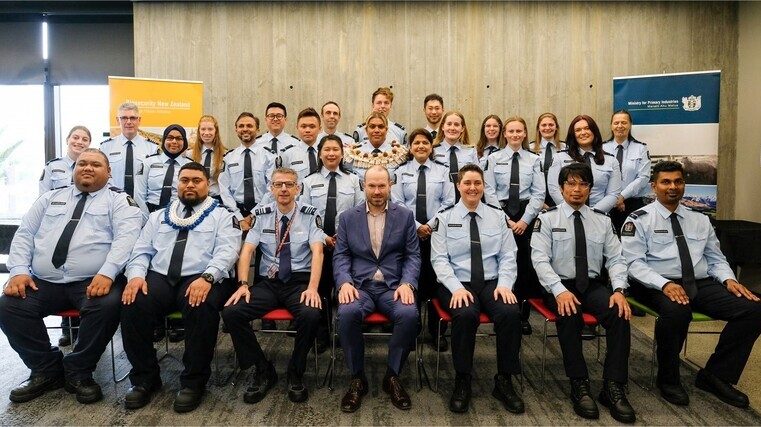
Biosecurity New Zealand has signed up 23 new quarantine officers and four extra detector dog handlers to bolster our frontline protection against pests and diseases.
The recruitment drive comes in time for the pre-Christmas mail rush and the peak international visitor season. The quarantine officers, pictured above, have graduated in Auckland after completing a 12-week training programme.
Michael Inglis, Biosecurity NZ’s northern regional commissioner, says: “The training gives the officers a comprehensive understanding of threats to our environment and primary industries, and skills they need to inspect and make clearance decisions.”
All the new quarantine officers will initially be deployed at Auckland International Airport. To bolster ranks across the motu, 19 more officers – eight in Christchurch, seven in Wellington and four in Queenstown – graduate in early December.
The new detector dog handlers have now joined Biosecurity NZ’s border team after completing their own 12-week training programme.
“The new officers and handlers will play a critical part in protecting our economy and precious natural environment from potentially harmful pests and diseases,” adds Inglis.
In addition to future-proofing its two-legged border team, Biosecurity NZ is delighted to announce the arrival a new litter of detection recruits.
Mistral has delivered four healthy pups – three girls and a boy. All are progressing well and, as they grow, will gradually be introduced to the environments and disciplines that will make them top-class pest and disease detectors.
This summer, a key focus for Biosecurity NZ’s frontline staff is keeping out pests and diseases that could have a devastating impact on our economy and environment, such as exotic fruit flies and brown marmorated stink bugs.
Inglis says: “These potential intruders are especially active in summer and pose a threat to our hard-working growers and farmers. We urge all travellers entering the country to be vigilant and follow all biosecurity instructions.”