


Making sense of tariffs chaos
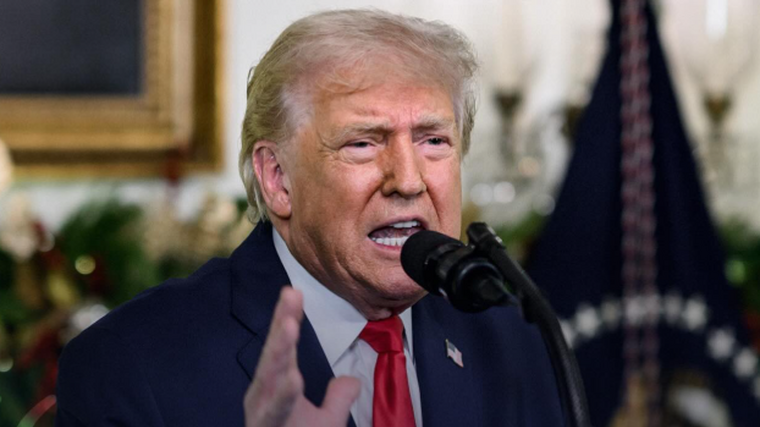
The car industry continues to face elevated tariffs and uncertainty despite the Supreme Court’s decision to strike down many of Donald Trump’s global duties.
That’s because it doesn’t affect automotive and parts tariffs imposed under different federal laws, and the president has vowed to enact fresh import taxes.
On February 20, the Supreme Court ruled the nation-specific “reciprocal” tariffs Trump slapped on trading partners was unconstitutional. These ranged from 10-50 per cent. He hit back by saying he would implement a worldwide 15 per cent tariff under a different authority.
Trump’s administration adds it will start investigations into alleged unfair trade practices by other countries, which could well result in new tariffs over coming months.
Between the results of those investigations, a lack of clarity surrounding tariff refunds and geopolitical ramifications that threaten deals Trump made with trading partners to lower automotive tariffs, the global supply chain again lacks certainty.
The court’s decision doesn’t directly impact the bulk of tariffs the car industry pays. The ruling only relates those Trump issued under the International Emergency Economic Powers Act 1977, including reciprocal tariffs and duties on Canadian, Mexican and Chinese goods.
Tariffs on vehicles and wide-ranging list of parts are unaffected because those were implemented under Section 232 of the Trade Expansion Act 1962. The same is true for 50 per cent tariffs on steel and aluminium imports.
While those tariffs comprise most duties the car industry pays, they don’t account for all. According to PwC, the automotive industry paid about $8.6 billion – about $114.1b – in now-illegal tariffs under emergency powers law through to October. Those were paid on parts not subject to the automotive tariff and on imports of industrial machinery and robotics, among other products.
Trump said on February 21 he would impose a new 15 per cent global tariff under a different authority on products covered under now-invalid duties.
A day earlier, he signed an executive order implementing a 10 per cent global tariff effective from February 24. He had yet to formally approve raising the tariff to 15 per cent as of February 23.
The new tariff comes under Section 122 of the Trade Act 1974, which enables the president to issue a global duty of up to 15 per cent to address “serious US balance-of-payments deficits”. It can only remain in place for 150 days unless Congress votes to extend it.
Imports of vehicles, automotive parts, steel and aluminium are exempt from this, as are goods compliant with the US-Mexico-Canada Agreement (USMCA).
The Trump administration appears to view Section 122 as a bridge until it can impose more permanent tariffs, including from Section 301 of the Trade Act. Trump on February 20 said the White House will utilise Section 301 to launch investigations into unfair trade practices by trading partners.
The administration will continue ongoing investigations into sectors relevant to the car industry, including semiconductors, robotics and industrial machinery, so those goods could become subject to new tariffs.
The future of many deals Trump struck with trading partners to lower tariffs, including motor-vehicle duties, in exchange for investments and other concessions appears unclear.
European Union officials, for example, have said they would pause work to implement the deal they reached with the US last year as it sorts out what the Supreme Court ruling and Trump’s response will mean for the EU.
Among other provisions, the deal included a commitment from America to lower automotive tariffs on European imports from 25 to 15 per cent, reports Automotive News.
Similar agreements were reached with Japan and South Korea, while a deal with the UK lowered automotive tariffs to 10 per cent on the first 100,000 vehicles shipped from the country annually. It appears such deals should be considered as “on pause” or dead in the water.
The Supreme Court, meanwhile, has said nothing about the federal government refunding businesses for tariffs paid under the emergency-powers law, but suppliers looking to recoup duties should expect the process to be long and complicated.
There may also be ramifications for an upcoming review of the USMCA, the trade agreement that underpins North American car-making.
The process appears likely to become a full renegotiation. Trump has floated the idea of America exiting the agreement, and pursuing bilateral deals with Canada and Mexico. The car industry has urged the US to retain the USMCA, saying the agreement keeps the region globally competitive.