


Greens’ views on transport cuts
The Green Party has claimed Labour’s second round of spending cuts announced on March 13, which include axeing the trial of a car scrappage scheme, will make New Zealand’s climate targets tougher to achieve.
Several policies have been cut, “refocused” or delayed by Prime Minister Chris Hipkins as part of the government’s aim to reduce the cost-of-living crisis.
James Shaw, the Minister for Climate Change and co-leader of the Greens, says he would have argued against cutting back on climate actions that would help low-income families.
He adds: “The clean car upgrade would have provided households with more low-emissions choices about how to get around. This doesn’t sit well on top of the previous extension to fossil-fuel subsidies, which we know benefits the highest earners most.”
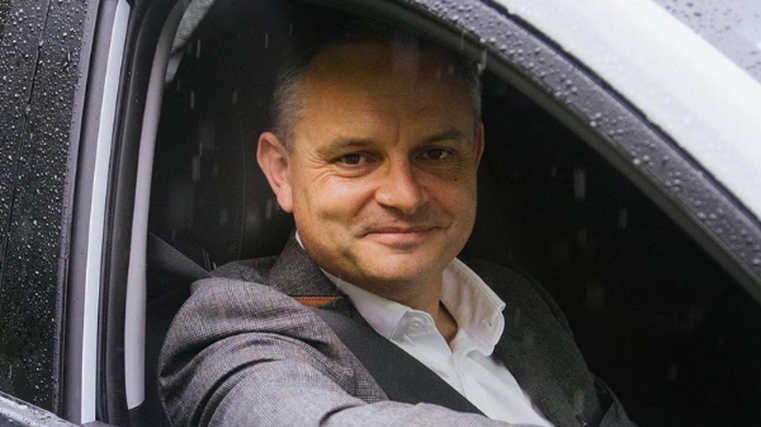
Shaw, pictured, adds climate action is a “bread-and-butter issue” for many Kiwis, especially those impacted by Cyclone Gabrielle. “Every time we kick climate action into the future, we make it harder for ourselves to meet those targets.”
It was in May 2022 that Autofile Online reported on the government announcing $569 million for clean-car upgrades and scrappage.
At the time, Shaw said: “The clean car discount has been successful in supporting the uptake of electric and hybrid vehicles. However, for many families, the cost of transitioning to cleaner vehicles can be too expensive.”
Kicking off with a trial of up to 2,500 vehicles, the clean car upgrade was set to target lower and middle-income households to shift to low-emissions models in exchange for scrapping their old vehicles.
The scheme was unveiled among other initiatives announced on May 17 last year as part of the emissions reduction plan (ERP) to put Aotearoa on the path to net zero.
“The package signifies a huge step in making sure people have clean, green, affordable ways of getting about,” added Shaw back then. “We’ve long known there are some huge wins to be had in decarbonising transport sector it has formed a key part of action we have taken to date, including the clean vehicle discount.
“Just like many other aspects of the ERP, tackling climate change by reducing transport emissions comes with the happy coincidence of making people’s lives better. Families who trade in vehicles will receive support for the purchase of EVs, PHEVs [plug-in hybrids] and hybrids.
“By taking advantage of the clean car upgrade, families will not only benefit from lower transport costs, but will also be able to replace high-emitting older vehicles with safe and sustainable alternatives.
“Switching to a low or zero-emissions vehicle will reduce costs for families in the long term due to their lower running costs. For EVs charged at home, during off-peak hours the cost would be equivalent to buying petrol at around 40c/litre.”
Shaw highlighted that a similar scheme in the US had seen more than 10,000 Californians scrap their “old, dirty cars” and replace them with cleaner alternatives.
“For some families owning a vehicle is a luxury, which is why we’re also trialling a social-leasing scheme to support low-income families to lease a safe, low-emissions vehicle from a community organisation.”
That trial was expected to operate from early 2023 in three communities to test its effectiveness. However, this was also canned by Hipkins in his spending cuts of March 13.
Its aim was to “provide a leg-up” to those who wouldn’t otherwise be able to afford to shift to low-emissions vehicles and help cut their living costs.
Michael Wood, Minister of Transport, was also full of praise for the scrappage scheme when it was unveiled in May 2022. He said: “Through supporting the uptake of cleaner vehicles, we’re not only helping families do their bit for our planet, but also protecting them and our economy from future economic shocks and high fuel prices.
“Transport is one of our largest sources of emissions and accounts for 17 per cent or one-sixth of total greenhouse gas emissions. Every positive change in habit helps us as a nation move a step closer to achieving our required carbon reductions.
“That’s why we’re investing $1.2 billion into transport as part of the climate-emergency response fund package. This is expected to reduce carbon emissions equivalent to taking 181,000 cars off the road between now and 2035.
“The package includes $350m to support Kiwis to make cleaner transport choices. Investment will also help to make public transport easier to use through bus-priority improvements in more than 40 locations.
“This investment builds on the government’s record investment in transport services and infrastructure. We know it will take time to reduce transport emissions, but today is a meaningful step forward that will result in real change.”
Political reaction
So what do National and Act have to say about Hipkins swinging his axe on March 13 to save $1 billion in government spending for reallocation to support New Zealanders during the cost-of-living crisis? And where do the main parties sit in the polls?
Nicola Willis, National’s deputy leader, says: “It turns out there’s a lot of fat in the system. They [the government] have found a lot of money down the back of the couch, so it’s time to get its priorities straight and reduce tax New Zealanders pay.
“What we need to see is reductions in wasteful spending elsewhere, so that we can prioritise money to the places where it counts.”
National leader Christopher Luxon adds: “My message to Chris Hipkins is to stop spending and cut taxes. The moves are no more than a rounding error – pocket change in Labour’s grand scheme to spend with nothing to show for it except Kiwis struggling to feed their families with food prices spiralling.”
Act leader David Seymour believes “New Zealanders need real change. Hipkins u-turning on a tiny handful of policies isn’t fooling anyone”. He adds: “The prime minister deserves no credit for fixing messes Labour made. He’s like a kid who messes up his room and wants a reward for tidying it.”
The latest 1New-Kanstar poll published on March 13 resulted in Hipkins rising four percentage points to 27 per cent as preferred PM, while Luxon dropped five to 17 per cent – his lowest since becoming National’s leader at the end of 2021.
Labour dropped two points to 36 per cent while National fell by three to 34 per cent. The Greens and Act were both on 11 per cent. Only the left could form a government on those numbers if supported by Te Pati Maori.