


FSF updates guidelines

The Financial Services Federation (FSF) has relaunched its credit-related insurance code.
The guidelines, which were originally published in 2019, set out consumers’ rights, what they should expect from responsible insurance provider and both parties’ responsibilities.
The revised version of the code adds mechanical breakdown insurance (MBI), a product that includes 24/7 access to roadside assistance.
There’s also an emphasis on the requirements of the conduct regime to ensure fair customer outcomes and the document uses plainer language to ensure it’s accessible to all. The updated code has been reviewed by FinCap, and both the financial and insurance ombudsmen.
The FSF says credit-related insurance is designed to help protect consumers when something goes wrong. Products include credit contract indemnity and payment protection insurance, guaranteed asset protection, MBI and motor-vehicle insurance.
Insurance payments are included in loan repayments offering an easy one payment option that ensures the customer’s lifestyle and vehicle are protected for the term of the loan.
“All FSF members who provide credit-related insurance must adhere to the code,” says executive director Lyn McMorran, pictured.
“These members have reviewed the code and updated it to demonstrate how they go above and beyond what’s required of them in law to ensure fair outcomes for their customers.”
Members providing credit-related insurance are committed to ensuring consumers are aware of not only the product they are purchasing, but also their rights and the responsibilities of insurers.
The code clearly states this information, that this will be shared with people at time of purchase and mandates a cooling-off period of at least 14 days to allow the customers to change their mind.
It is being made publicly available on FSF members’ websites and will be distributed through the financial-mentor networks of FinCap, the national umbrella organisation for financial mentors in New Zealand.
The guidelines were launched at a function in Auckland on April 23 attended by FSF members, and representatives from the Financial Services Complaints Limited and Financial Markets Authority. Click here to read the code.
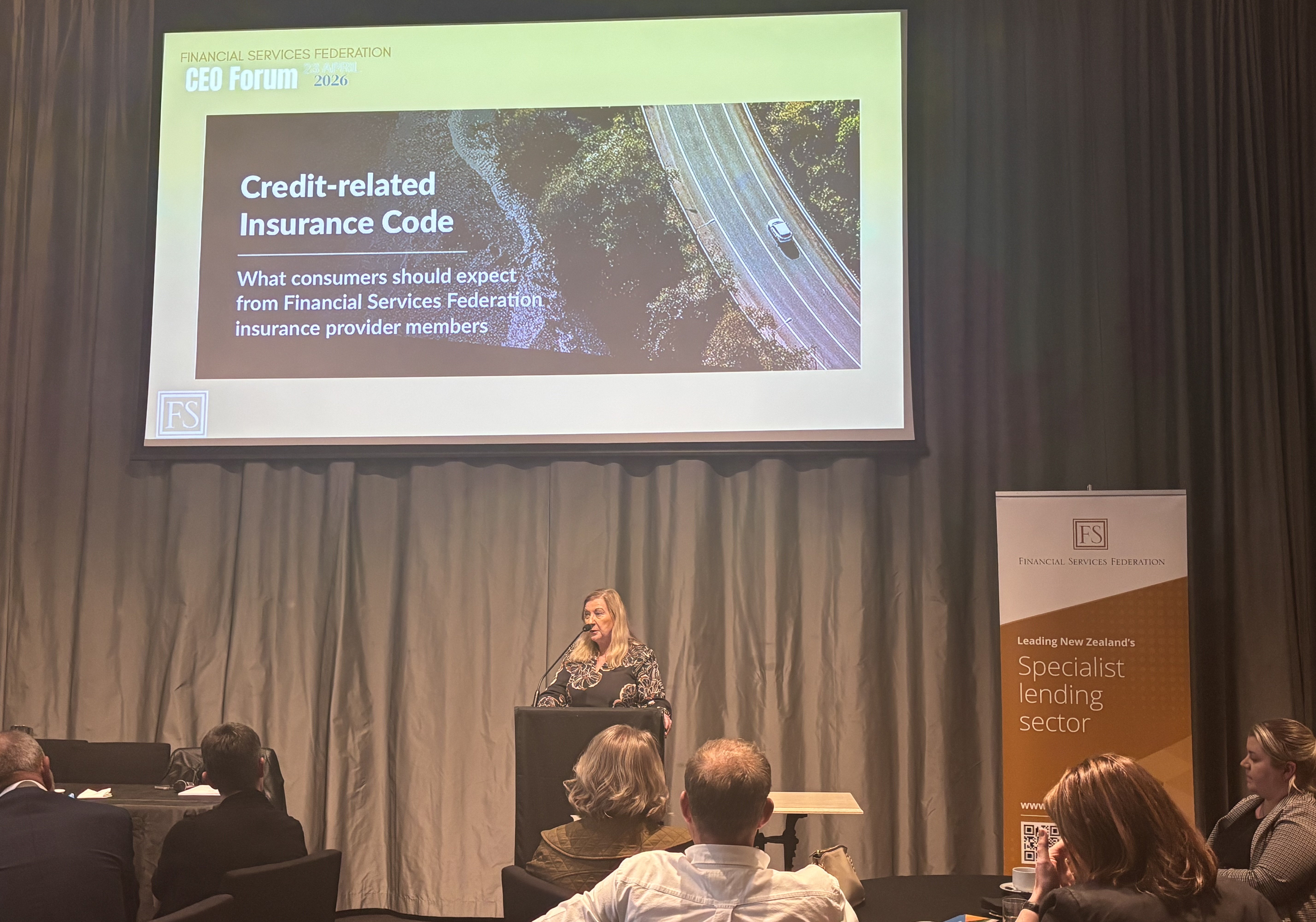
FSF executive director Lyn McMorran explains the new guidelines in Auckland
Case study: PPI benefits
In January 2024, John (name changed) purchased a new car and decided to include payment protection insurance (PPI) as part of the loan for it.
The policy would cover the repayments if something unexpected happened that caused him to be off work, such as an illness, accident or redundancy. John thought this was good cover as it would protect not only himself but his family.
After taking the insurance, a blood test returned an abnormal result that led to John needing to have an urgent bone-marrow biopsy, which confirmed he had leukaemia. This was a devastating blow to John and his family. He had to immediately stop work to focus on his treatment.
When his next loan payment was made, he remembered his PPI cover and contacted his insurer, which responded by covering the monthly loan repayments. This allowed John to have one less thing to worry about at a difficult time.
Some months later, John’s leukaemia was more serious than originally expected and his diagnosis was changed to terminal. He had been in regular contact with the insurer, shared this update with it and it then paid the remaining balance of the car loan.
John continues to get treatment and enjoys the peace of mind of having the finance cleared through his PPI, allowing him to focus on his health and quality of life. (supplied by FSF)

FSF’s executive director Lyn McMorran and chairman Todd Hunter at the launch