


Fresh funds for fuel
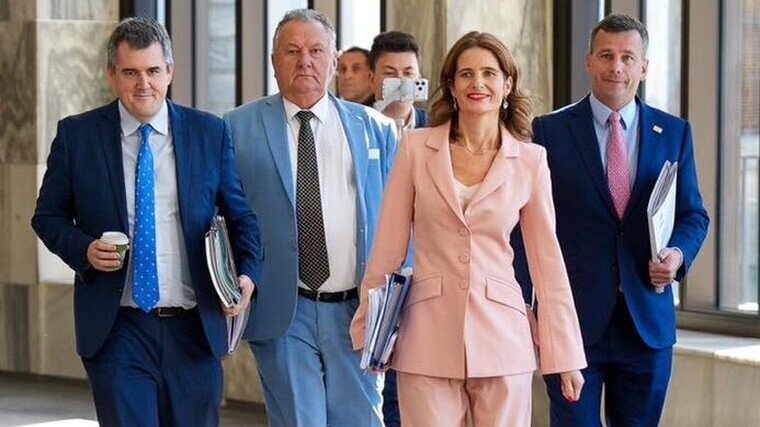
The government has committed hundreds of millions of dollars to its “prudent response” to the global fuel crisis as part of Budget 2026.
Nicola Willis, Minister of Finance, says the Budget will provide $150 million for additional strategic fuel reserves to firm up New Zealand’s fuel resilience and $450m is being set aside for additional temporary fuel-related measures, if conditions worsen.
“Since the outset of the conflict, our approach has been to stay ahead of risks to New Zealand’s fuel supply, keep the economy moving, and support those most affected by higher fuel prices with temporary, targeted and timely measures,” she adds.
“The situation in the Middle East remains uncertain, so it is prudent to be ready should fuel prices rise further and add more pressure to households and businesses.”
The In-Work Tax Credit is increasing by $50 a week for up to a year to help working families with increased fuel costs, and mileage rates will be temporarily lifted for support workers and people travelling for specialist treatment.
Extra funding is also being provided for Fire and Emergency, Corrections, police, Customs and education to maintain frontline operational activities in the face of sustained fuel price increases.
Details of the Budget were announced to parliament on May 28 and included capital investment of $7 billion targeting infrastructure projects, including $1.8b to build the Cambridge to Piarere Expressway, a road of national significance.
On the transport-related front, a further $400m will be poured into a package of state highway resilience upgrades, and $705m capital and $477m operating funding will help renew and upgrade New Zealand’s rail network.
The coalition is also simplifying fringe benefit tax rules for private motor vehicles by removing the requirement for detailed logbooks to reduce compliance costs
Simon Watts, Minister of revenue, says: “Changes in this area will simplify the rules by taking a ‘close enough is good enough’ approach. This will significantly reduce compliance costs for businesses.”
Trades training
The automotive industry may benefit from the government pledging $69m to double the number of Trades Academy places to 20,000 by 2030, which will provide free trades training to more year 11 to 13 students.
Some $15m will also enable industry skills boards to develop at least eight new industry-led secondary subjects, each focused on a specific industry. The government says this will support more students getting high-quality vocational education and training while at secondary school.
Erica Stanford, Minister of Education, explains: “These investments will enable New Zealand students to develop practical, job-ready skills, relevant to business and industry whilst at secondary school.
“This is good for innovation, entrepreneurship, reducing unemployment and ultimately economic growth.
“Industry skills boards are leading curriculum development to ensure the new vocational education pathways in school align closely with real-world labour market demands, reducing skills mismatches and building the workforce of the future.”
Financial levy
Budget 2026 introduces a new levy on banks, non bank deposit takers, insurers and other financial market participants to help cover the costs of services provided by the Reserve Bank.
“This mirrors the approach taken by the Financial Markets Authority and the Commerce Commission, which fund much of their activity through levies on financial market participants,” says Willis.
“It is also consistent with international practice in countries like Australia, Canada and the United Kingdom.
“This levy will ensure the cost of regulation and supervision is borne by financial market players rather than taxpayers.”
The levy is estimated to recover about $209m over the next four years. The Reserve Bank will conduct consultation with the financial sector and Cabinet hopes to make decisions early next year with a view to the measure being introduced mid-2027.
’Strengthening the economy’
Willis says at a time when many families and businesses are under pressure from higher living costs and global uncertainty, the Budget takes steps to support New Zealanders now while strengthening the economy for the years ahead.
“It will ensure New Zealanders can look forward to more jobs, higher incomes, stronger public services and a more affordable and secure country,” she told parliament.
“Thanks to this Government’s careful management of the public finances, New Zealand is digging its way out of the post-Covid fiscal and economic hole. Balanced books are now in sight.
“The Budget forecasts the economy to grow by an average of 2.7 per cent over the next four years, with unemployment falling from 5.5 to 4.3 per cent and wages continuing to rise faster than inflation.
“The Government’s books are forecast to return to surplus in 2028/29, a year earlier than previously forecast, with debt beginning to fall sooner as a share of the economy.
“This is a careful, measured Budget that continues the fiscal repair job begun three years ago while investing in the foundations of New Zealand’s future.”