


Fleet ready for cleaner fuel
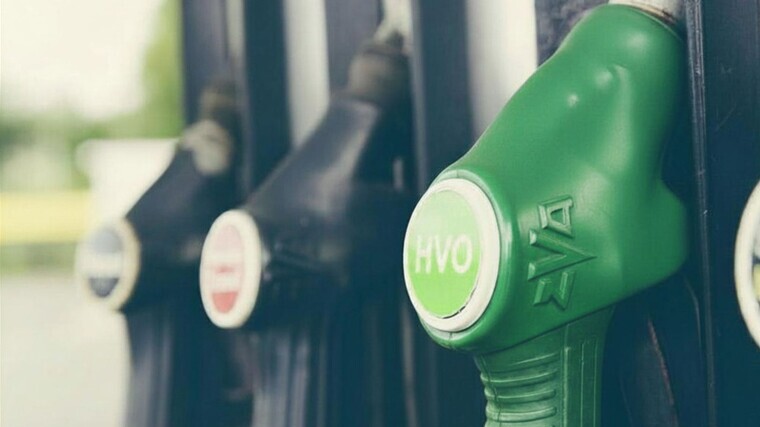
As fuel costs and environmental targets put pressure on many businesses, Ford is keen to point out that a number of its models in New Zealand and Australia are already compatible with renewable diesel.
Also known as hydro-treated vegetable oil (HVO), the fuel is not yet available at the local pump but it is moving to the forefront of the sustainability conversation.
The blue oval says it has seen a significant spike recently in interest from fleet operators for electrified options such as hybrids and all-electric powertrains.
Michael Elias, Ford-Pro Australia general manager, notes an electrified vehicle may not be the right tool for some businesses yet and the journey to net-zero will take some time.
That is why Ford is highlighting an existing capability within the current Ford range. The Next-Gen Ranger and Everest, from model year 2022, the Transit and Transit Custom, from model year 19.75 with Euro 6.2 emissions, and the Ranger Super Duty can all run on HVO.
“We engineered our core commercial vehicle line-up five years ago to support the choice to use HVO, meaning that when the fuel industry was ready, Ford customers would be ready too,” says Elias.
“[HVO] can reduce carbon dioxide [CO2] emissions and improve engine performance for fleets that use onsite bowsers or bulk fuel depots.
“Importantly, HVO offers a low-carbon alternative to conventional diesel in an increasingly volatile global landscape.”
What is HVO?
HVO is a second-generation renewable diesel, or hydrobiodiesel, made from waste products such as used cooking oils, animal fats and agricultural waste.
Unlike traditional fossil diesel, it is a paraffinic synthetic fuel that offers a much cleaner burn.
It can be used as a standalone product or blended with conventional diesel without engine modifications, allowing for the direct substitution of fossil diesel while reducing CO2 emissions.
Benefits for fleet managers
Reduced environmental impacts: HVO can reduce greenhouse gas emissions compared to traditional diesel, particularly if made from recycled raw materials.
Ready-to-go solution: There is no need to change engines, fuel tanks, or filters on compatible Ford models, which can operate on a mix of HVO and regular diesel in any proportion or run it at 100 per cent of renewable diesel.
Operational gains: It can reduce soot emissions from the engine and storage stability problems. It also offers better cold-start performance and a shelf life of up to 10 years.
HVO v biodiesel
There is often confusion between renewable diesel (HVO) and biodiesel (FAME), but they are not the same.
Traditional first-gen biodiesel has strict blend limits, usually capped at 20 per cent, and can sometimes require engine modifications.
HVO, however, is a pure hydrocarbon that is more stable, lasts longer, and is a superior product in terms of engine health and storage for modern diesel engines.