


Cops make gains from total losses
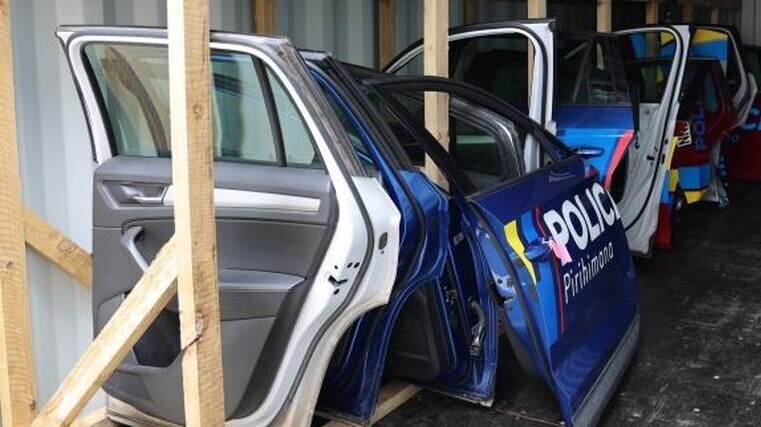
New Zealand Police are trying to save money and make the most of their resources by reusing parts from written-off police vehicles to repair others in the fleet.
Rather than sending total-loss units to the scrapyard, useable components such as engines, gearboxes, light bars and panels are being salvaged and stored so they can be fitted into operational vehicles around the country.
The initiative is cutting costs, reducing waste and keeping more police vehicles on the road.
In the last financial year, savings of more than $1.3 million were reported. So far this financial year, savings are put at more than $408,000 excluding GST.
Clive Turner, from First Rescue, manages the programme and came up with the concept after seeing police models deemed a total loss sent to damaged vehicle auctions.
“It frustrated me seeing so many unaffected vehicle parts go to waste,” he says.
“Adding salt to the wound was on other repairs, some second-hand parts purchased via wreckers turned out to be off total-loss New Zealand Police vehicles.”
He spoke to the fleet team at police national headquarters about his idea and a trial was launched in Waikato and Canterbury in 2019.
There are now donor storage locations in Whangarei, Auckland, Hamilton, Tauranga, Hastings, Palmerston North, Wellington and Christchurch.
All districts have access to donor parts, with First Rescue assessing each vehicle repair on its merit. Where donor parts are available, and it’s feasible, the parts are moved to the district where they are needed.
“The programme not only keeps police vehicles on the road at a fraction of the cost of normal repairs, it also significantly lowers time off the road as parts are easily accessible,” explains Turner.
Fleet Services manages the portfolio and communicates with Turner to authorise and request donor-related logistics. This includes identifying donor vehicles, opportunities to reduce repair quotes, moving donor vehicles between districts and expanding the programme.