


Calls aim to help sector ‘do better’
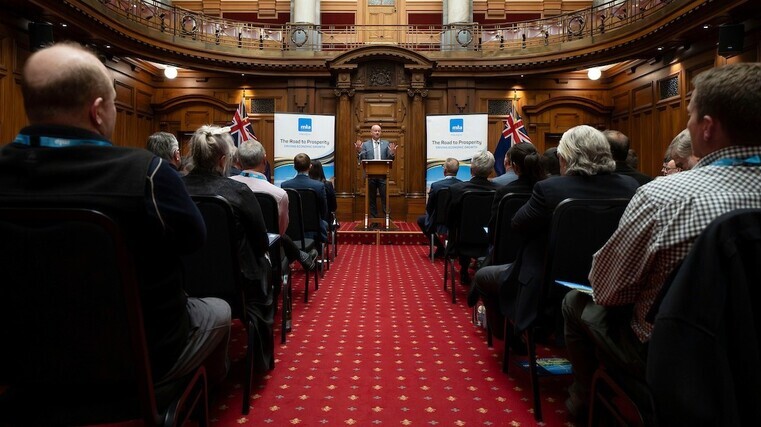
Major initiatives for the automotive industry have been laid out in the Motor Trade Association (MTA) election-year manifesto.
Called The Road to Prosperity, it contains 20 calls for the next government and the automotive industry to work together to create economic growth and progress.
These include $2,000 grants to get old cars off our roads, a national trades training fund, plans for end-of-life batteries, WOFs and EVs, changes to the Consumer Guarantees Act and Motor Vehicle Disputes Tribunal, and action on crimes committed at service stations.
Autofile Online spoke to Lee Marshall, the MTA’s chief executive, with the document being launched in parliament’s legislative council chamber on July 1.
How manifesto came about
“The MTA isn’t the industry but we’re employed to represent it. We have 4,000 members and engage with them predominantly at a sector-based level through our eight expert advisory groups, which serve some sub-sectors of the industry.
“We have one dedicated to repairers, to collision, to new and used-vehicle dealerships, motorbikes, recyclers and automotive dismantlers… the list goes on. Our manifesto was formed in collaboration with them first and foremost.
“Then it was taken through our national panel, where we got the member-elected heads of each expert advisory groups together for a day to work with the MTA’s senior team and board to refine those calls.
“And finally it went through our industry leaders’ forum in April where we had the 30-something leaders of the largest automotive businesses in New Zealand in a room to run it by them.
“It’s very much the product of our members, what they’ve told us, and the feedback they’ve given us about what’s important and what they need to see change to do better.
“Some calls are more ambitious than others. But, by and large, our intention is for every one to be pragmatic, actionable and broadly supportable irrespective of where you sit on the political spectrum or which party’s colours you wear.”
Plans for scrappage scheme
“We’ve had a crack at the fleet the other way around with the clean car standard, while the clean car discount incentivised people who were well-off enough to buy new vehicles to help them make different choices about what they purchased
“But I don’t think subsidising those who can afford to buy $70,000 cars to purchase the same model for $65,000 is all that publicly palatable.
“When we compare New Zealand to other developed countries, one of the major things we think keeps the fleet old in our country is we don’t have any meaningful mechanism to see vehicles taken out of it.
“It’s too easy here to continue fixing and repairing cars forever. What we’re saying is maybe a more appropriate way to tackle the same problem – with some gateways to qualification that need to be determined – would be to give Kiwis an incentive to take the worst-performing vehicles off our roads, which would have the upstream benefit of creating demand further up.
“In some ways, it’s trying to address some of the same problems the clean car standard and discount did, but from vehicles at end-of-life rather than at the start. We feel that could be a better diversion of public funds and bring us in line with what many other countries do.
“It also ensures the money is going to people who most need it to help them make better decisions and end up in a car that’s cleaner, greener and safer than what they get rid of.
“I don’t know that a previous version of this scheme needed to be canned so early. It probably needed tweaking, not dynamiting, because the principle was sound.
“There are lots of car on our roads that shouldn’t be there and we have no means to get them off. They can carry on going forever. We don’t emissions test vehicle, which is the normal gateway through which vehicles reach end-of-life in Europe, for example.
“Here’s another way of saying, ‘your vehicle is worth less than $2,000, allow us to help you take it off of the road rather than have you incentivised to keep it going like you currently do, and let’s see if we can help you into a newer car that has all kinds of social benefits in terms of its performance, green credentials and safety’.
“We haven’t got too caught up on the exact numbers or specifics of such a scheme. However, we are saying let’s have this conversation as a way of getting the fleet renewed.
“We talk generally about the fleet’s age as being a proxy for safety on the basis that any new vehicle that replaces any old one probably comes with a host of benefits in terms of safety ratings and performance as well as its green credentials. What we’re suggesting is some of these issues can be tackled by proxy.”
Upskilling our workforce
“The government did commit at some point that it was going to divert some of the [scrapped final-year] fees-free funding towards investment into getting people into trades.
“What we’re saying is we essentially support that and, as a suggestion, using some of that money to help out employers of apprentices because there’s a financial impediment to taking them on.
“The government has talked a lot about the cost of the education system, but it hasn’t talked at all about the costs businesses incur in terms of training apprentices. This includes the full-time salaries for someone who’s maybe only negligibly productive at the beginning and who takes away the productivity of trained people supporting them.
“We’re not saying the government needs to step in and divert funding to make it free to train apprentices. What we are saying is cost is a barrier to people taking on and training the next generation.
“We also know that we only meet – as a country – about half of our annual needs via the education system. The other half comes across the border.
“I would say the idea for a national trades training fund is the most ambitious of all our asks. Equally, we’re not pretending we own the truth and saying this is the only way.
“What we are saying is let this be a start of a conversation and work with us because there are barriers to companies taking on apprentices. By rediverting some funding towards helping businesses take on apprentices, it can help industry outcomes.
“Immigration and education are two strands of the same bow with different purposes. Migration can solve the short-term problem and education the long-term one, so the more education performs the less you rely on migration.
“Skills shortages, particularly for trained tradespeople in automotive, isn’t new. It’s a 20 or 30-year problem. I don’t believe it’s any better or worse today than it has been on a long-run average.
“When we poll our members, the lack of ability to find skilled tradespeople is still the number-one issue they tell us constrains business performance.”
Switching to electric
“As a general principle, if there are low-cost or cost-free ways to see the fleet transfer to greener methods, then why wouldn’t you adopt those. The climate agenda is global and if there are more efficient technologies out there, why promote them.
“What we’re suggesting is that tax-deprecation rates for EVs could be changed. In the long run there’s no actual inherent saving, it’s simply cashflow. It’s a timing benefit.
But that type of thing helps businesses and factors in decision-making. If there’s no cost to it but a benefit, why not?
“It’s a light-touch way in that whichever department is maintaining tax-depreciation schedules could easily modify the rules in a way that doesn’t require heaps of consultation in government. It would have an almost immediate positive effect with no real negatives.”
Finally, the bigger picture
“This is the second manifesto we’ve put out. I’m proud of the process we’ve followed this time to create it in terms of it being almost totally member-led. Before, it was more led by us with members ratifying it.
“I’m pleased it touches on everything from commerce to transport, immigration education and crime. It’s as comprehensive as the issues our member businesses face. Many calls we make, if enacted, would create a more favourable legislative environment that would make it easier for our industry to thrive.
“If our aim is to represent the industry and try to create a favourable policy environment, then I hope the industry can agree we’re putting our best foot forward because that is what we’re here for.”