


Breakthrough for EV batteries
Researchers at the University of Auckland have developed a new battery material that could help electric vehicles go further on a single charge and extend the lifespan of batteries.
Professor Peng Cao, from the Department of Chemical and Materials Engineering, has spearheaded the breakthrough that has the potential to support cleaner, more sustainable energy technology.
The university project focuses on high-entropy oxide battery materials – a type of material that combines several different metals into one to create a stable structure that can store lithium more efficiently than conventional battery materials.
To make this material, the team used a “bottom-up” process, combining five metal elements and then heating them through a process called calcination.
The result is a new anode material, the part of a battery where lithium is stored, that can hold more energy and maintain performance over many charge cycles.
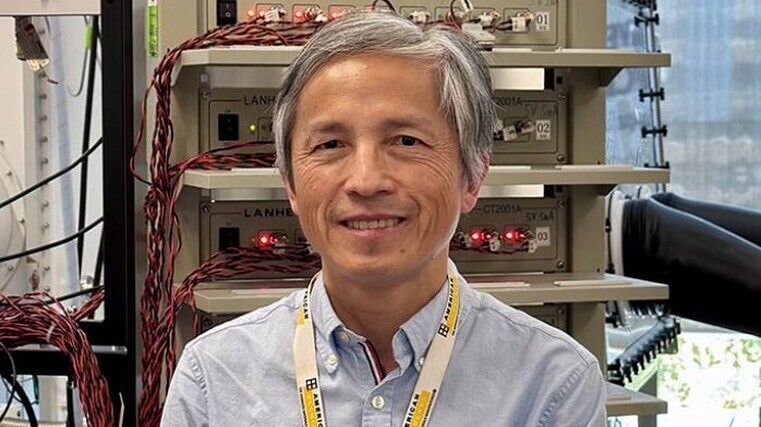
“Current lithium-ion batteries are reaching their limits,” says Cao, pictured.
“Our research shows that this new material could increase energy storage and improve battery lifespan. In practical terms, this means electric vehicles could drive further and their batteries would be more durable.”
If successful, the material could replace graphite, the standard anode in lithium-ion batteries. Lithium-ion batteries are central to EVs and clean energy storage, so improvements could also support carbon-neutral goals.
“We hope our work can directly replace existing battery materials and benefit both industry and communities,” adds Cao.
The project team includes co-inventor Dr Yuguang Pu, a University of Auckland alumnus now at Peking University in China, and Dr Kumar Jena from the Department of Chemical and Materials Engineering.
The technology is being commercialised through EntroPeak Ltd, a joint venture supported by Auckland UniServices and a commercial investor.