


Big jump in emissions cuts
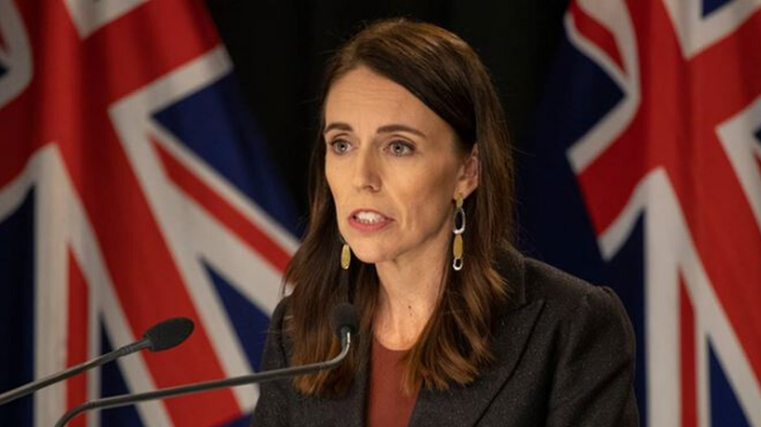
New Zealand will significantly increase its contribution to the global effort to tackle climate change by pledging to reduce net greenhouse emissions (GHGs) by 50 per cent by 2030.
The announcement was made by Prime Minister Jacinda Ardern and Climate Change Minister James Shaw on the eve of the United Nations’ climate conference in Glasgow.
Under the Paris Agreement, each country adopts an international target known as a nationally determined contribution (NDC).
This sets out the contribution the country will make towards the goals of the Paris Agreement.
The updated NDC announced on October 31 is expressed as a target to reduce net emissions by 50 per cent below gross 2005 levels by 2030. This equates to a 41 per cent reduction on 2005 levels using an emissions budget approach.
The government says the latest NDC is consistent with recommendations of the Climate Change Commission and will make a significant contribution towards international efforts to meet the Paris Agreement’s goal of limiting global warming to 1.5C above pre-industrial levels.
“New Zealand’s enhanced contribution to the global effort to fight climate change now represents our fair share and is in-line with what’s needed if we are to avoid the worst impacts of global warming on New Zealand,” says Ardern, pictured.
“The improved NDC comes off the back of our increased investment in climate aid, especially in the Pacific, and represents a big step up in New Zealand’s role in tackling climate change.
“Our new contribution complements the work the government continues to do to build a low-carbon economy. This work is laying the foundations for decades of growth in a way that creates thousands of jobs and supports our recovery from Covid-19.”
Limiting global warming
Earlier this year, the Climate Change Commission advised that the NDC lodged by the previous government in 2016 was inconsistent with worldwide efforts to limit global warming to 1.5C above pre-industrial levels, which is internationally acknowledged as the best way to manage the climate crisis.
Shaw says: “To stand a chance of limiting global warming to 1.5C, the science shows we have about eight years left to almost halve global GHGs. That’s eight years for countries to make plans, put in place policies, implement them and deliver cuts.
“The Paris Agreement recognises that while countries need to take action at home, they can also work with other nations to cut emissions. That is why New Zealand’s new NDC goes beyond the domestic emissions budgets cabinet has agreed to in principle.”
Shaw says meeting the new NDC will be driven by the emissions reduction plan, which will be published by the government in May 2022.
This work will be added to by supporting developing countries in the Asia-Pacific to meet their sustainable development goals.
“What we see from other countries is that once emissions start to come down, it is possible to pick up the pace of change while also cutting costs and creating new opportunities,” adds Shaw.
“We fully expect the same to happen in New Zealand. As we start to work with other countries and cut our own emissions, I hope we can raise the bar for our NDC again in the future.”
‘Accounting trick’
However, Stuff reports that a “complex accounting trick” has some climate groups criticising the target of reducing net emissions by 50 per cent below gross 2005 levels by 2030 as too low.
Some two-thirds of the reduction could come from purchasing offshore climate offsets or other global reductions New Zealand purchases, rather than a domestic cut.
Because it is a “net” target, it will take into account things such as forestry offsets that take carbon dioxide out of the atmosphere, meaning overall gross emissions will be unlikely to reduce by as much as 50 per cent.
Despite being a net target, it’s a 50 per cent reduction on “gross” emissions from 2005. New Zealand and other countries have long used this accounting trick.
The “carbon budget” approach spreads the target over the years 2021-30. In that period, the reduction is instead 41 per cent on 2005 levels, compared to 30 per cent in the older NDC.
Under the Paris Agreement, countries such as Aotearoa agreed to reduce GHGs to keep global temperatures below 2C above pre-industrial levels and try to limit temperature increases to no more than 1.5C.
Stuart Smith, National’s spokesman for climate change, claims the target is unrealistic and could cripple New Zealand’s economy.
“It is true that other countries have announced similar target numbers to this, but we need to consider that New Zealand already has high levels of renewable electricity production and higher levels of agricultural emissions,” says Nash. “This makes a 50 per cent target much harder for New Zealand to achieve.
“National supports using global carbon markets to achieve our targets. But there is no sense in setting a target that over-reaches and simply signs New Zealand up to a huge bill as we buy units from overseas.”
Act’s climate change spokesman, Simon Court, believes the government is blowing hot air because its target is too ambitious rather than not ambitious enough.
He says: “It’s increasingly clear Act is credible on climate change with policies based on realistic targets, sound science and economics instead of fanciful targets and expensive, ineffective bureaucratic solutions.”