

Australia signs trade deal
A free-trade agreement (FTA) between Australia and the European Union is set to improve the competitive position of German carmakers by scrapping tariffs and easing regulatory barriers to the market down under.
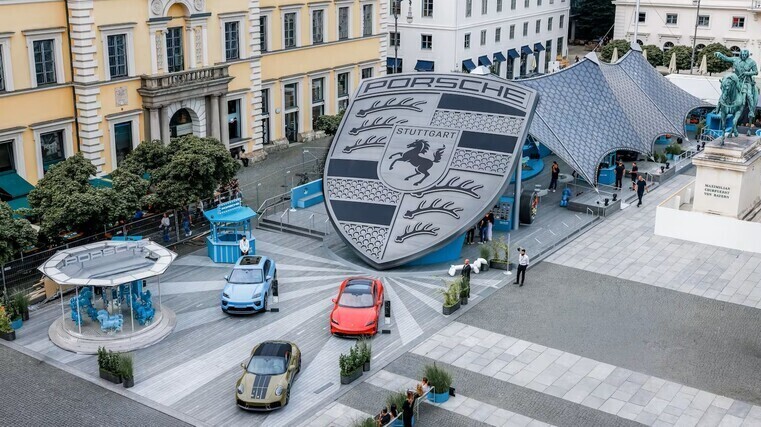
The deal means a five per cent import duty on EU-built vehicles will be canned, putting marques such as Audi, BMW, Mercedes-Benz, Porsche and Volkswagen on a more level playing field with China, Japan, South Korea, whose cars already enter Australia tariff-free.
The FTA, which was signed on March 24 in Canberra by Prime Minister Anthony Albanese and EU President Ursula von der Leyen, is part of a broader EU push to secure access to raw minerals such as lithium, a key input for EV batteries. The minerals deal will reduce European dependency on China.
Australia’s Federal Chamber of Automotive Industries (FCAI) says the tariff cuts will make European vehicles more affordable for consumers across the Tasman.
The ACEA, the European carmakers’ lobby group, adds the FTA will align EU exporters with competitors already enjoying duty-free access, while Germany’s VDA describes the agreement as a positive signal.
German marques have market share in Australia in recent years to about nine per cent from 12.7 per cent in 2020. VW posted the steepest decline, with sales dropping to 28,970 in 2025 from nearly 40,000 in 2022, according to the FCAI.
Mercedes-Benz’s deliveries were 27,581, down from 29,455. BMW posted growth with sales increasing to 26,842 in 2025 from 23,520 in 2020. Porsche fell to 5,133 from 4,243.
Australia’s automotive market totals around 1.2 million annual sales. Toyota, Ford, Mazda, Kia and Hyundai dominate, and Chinese brands have surged to a 15 per cent share.
Luxury-car tax changes
German premium brands are tipped to benefit from changes to Australia’s luxury-car tax. The threshold for the 33 per cent levy on imported EVs will rise to the equivalent of about NZ$144,640 under the agreement from around NZ$110,500, which will allow more high-end fully electric models to avoid the charge.
Hildegard Müller, the VDA’s president, describes the tax adjustment as “particularly important” for German marques and has welcomed Australia’s commitment to recognise EU type approvals, which should speed up certification processes for new models.
The deal requires ratification by Australia’s legislature and the European Parliament. It will not take effect until at least 2027.
Tony Weber, chief executive of the FCAI, says the tariff outcome is welcome and will make European-sourced vehicles more affordable.
As for the federal government also announcing the increase in the luxury-car tax threshold for zero-emissions models to A$120,000, he adds: “This is a positive outcome for consumers and brings European vehicles in-line with those imported from other major markets such as China, Japan, South Korea and Thailand.
“The change to the tax is incremental and leaves in place an outdated measure that no longer reflects the structure of the Australian automotive market.
“Luxury-car taxes were first introduced nearly 40 years ago to protect a domestic manufacturing industry which no longer exists. It serves no clear purpose other than raising revenue and continues to impose unnecessary costs on consumers.”
The luxury-car tax currently applies a 33 per cent tax to the value of a vehicle above a set threshold, which in 2025-26 is A$80,567 or A$91,387 for fuel-efficient models. A car costing A$100,000 can attract about $7,000 in such tax. Weber says this discourages the uptake of models with advanced safety and low-emissions technologies.