


2 Cheap sets profit goals
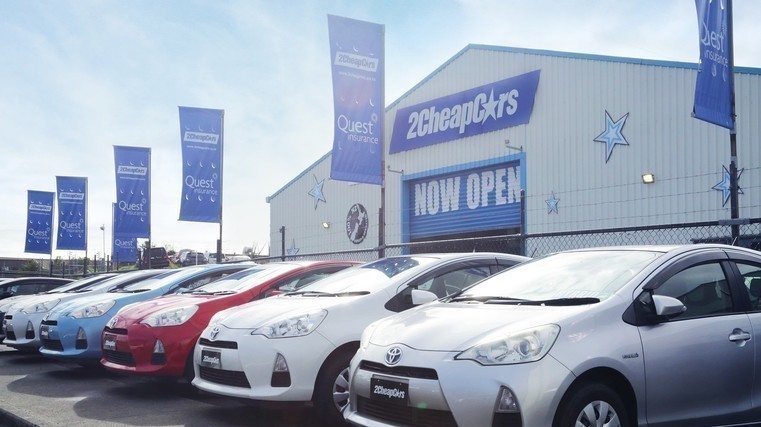
Bosses at 2 Cheap Cars Group are seeking to double the company’s net profit after tax (NPAT) in the current financial year after outlining a five-point action plan following a “reset and rebuild” of the business.
After achieving NPAT of $2 million in the 2023 financial year, 2 Cheap aims to increase that figure to between $3.8m and $4.2m for the year ending March 31, 2024.
The goal is outlined in the company’s annual report, which was released to the NZX on June 29, and it says it will take steps towards this by concentrating on gross margin expansion, prudent cost management and increasing direct control of the value chain.
The group, formerly known as NZ Automotive Investments, has recently rebranded to put all its focus on its chain of 12 dealerships operating under the 2 Cheap Cars name.
“This plan will drive increased NPAT. We are seeking to double NPAT to between $3.8m and $4.2m in FY24 by concentrating on gross margin expansion, prudent cost management and increasing direct control of the value chain.”
Year in review
Michael Stiassny, chairman, and Paul Millward, chief executive officer, note in the report that following well-publicised board and management issues in the first half of the 2023 financial year, the priority has been to transition the company to profitable growth, restore market confidence and importantly, shareholder value.
The new board appointed in late August 2022 committed to stabilising the company and appointed Millward in January 2023.
“With strong leadership and a focused plan now in place, our foundations are reset and the company rebuild is gaining pace,” the report from Stiassny and Millward says.
“It has been a year of reset and rebuild and much has been achieved, particularly in the fourth quarter which saw significantly improved underlying earnings and profitability.
“Importantly, the board made the decision to reset the company’s foundations to focus on the core vehicle retail business and to act only as a finance agent.
“Consequently, the NZ Motor Finance loan book will remain in run-down mode with the business collecting the loan receivables and recouping investment.”
The company’s full-year revenue and income rose 25 per cent from the previous financial year to $82.7m. This was driven by a boost in sales volumes against the same period a year earlier and an inflationary uplift in the prices of vehicles sold.
2 Cheap notes that while the New Zealand dealer-to-public used vehicle market increased by three per cent in the year to March 31, 2023, its own sales were up six per cent over the same timeframe.
Operating costs, excluding non-recurring costs, rose 2.3 per cent to $8.8m, due to an additional investment in marketing.
Underlying EBITDA, including finance income, increased 26 per cent to $6m. Higher vehicle sales volumes and improved vehicle margins in the fourth quarter contributed to the increase.
Underlying NPAT, excluding non-recurring costs, grew by 18 per cent to $2m and 2 Cheap adds that figures from the last quarter represent 40 per cent of the total year’s profit.
Net operating cash flow, excluding lending, has improved to $10.9m, up from $600,000 for the same period last year.
“These results indicate that the business is moving in the right direction,” the report states. “The board is confident that the turnaround promised is well under way.”
Market activity
2 Cheap Cars sold 8,367 vehicles in the 2023 financial year and its market share reached 4.5 per cent.
It says margin was prioritised over volume in the back half of the year as management refocused the sales strategy on margin expansion.
“While finance and insurance penetration rates were down for the full year, we saw significant improvement in March and that positive trend continued into April.”
Electric and hybrid electric vehicles accounted for 41 per cent of sales at 2 Cheap Cars, an increase of 65 per cent over the previous year and this segment will “continue to be a focus for the team, particularly hybrids”.
Online vehicle sales lifted to 17 per cent of total sales and website development is planned to improve the digital customer journey and take advantage of online opportunities.
Stiassny and Millward observe that most import businesses still face economic headwinds and shipping constraints, with 2 Cheap working to mitigate shipping issues by utilising the services of additional suppliers.
They add that the government’s clean car regime has constrained supply, and increased the cost, of used vehicles into New Zealand. “2 Cheap Cars has a reliable source of used vehicles from Japan and has increased prices to offset cost pressures, further supporting the company’s strategic focus on margin expansion.”
Looking ahead
Bosses say with the group’s foundations now reset, they are concentrating on growing a more profitable vehicle retail business and accelerating the finance and insurance business.
The company reports good demand for vehicles, finance and insurance driven by immigration, the clean car programme and the tightening economic environment.
“Despite the economic headwinds, our market segment is expected to remain buoyant, and our business model and brand are well-positioned to maximise customers’ reduced spending power,” it adds.
In order to achieve more success, the business has revealed a five-point action plan moving into the 2024 financial year:
• Gross margin expansion – Margin delivery will take priority over market share.
• Electric and hybrid vehicles – Continuing to supply a range of quality, affordable vehicles.
• Supply chain – Focusing on a quality-first approach, navigating shipping risks and gaining increased end-to-end control.
• Finance and insurance – Continuing to accelerate its finance and insurance plan.
• Three-year strategic property plan – Focusing on retail locations where the 2 Cheap Cars Group scale model works well and provides opportunities for profitable growth.