

Police put hybrid on the beat
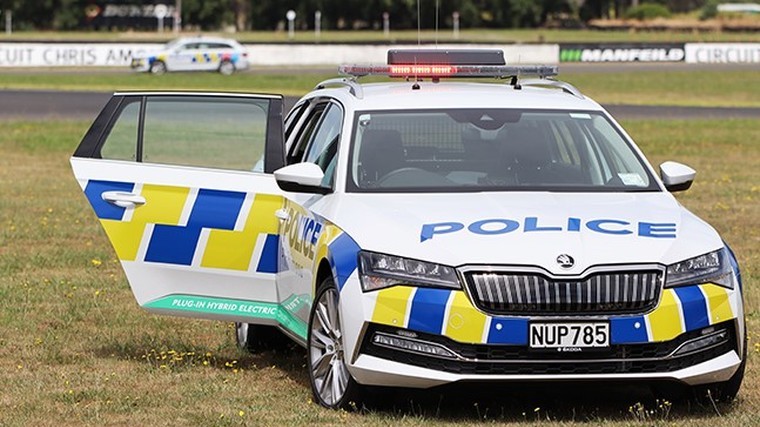
Police officers will soon be on the beat with a plug-in hybrid (PHEV) as the force begins a trial as it seeks to reduce the carbon footprint of its fleet of vehicles.
The Skoda Superb PHEV in full livery is due to be taken out on duty by NZ Police staff to test its capabilities in a range of operational settings.
Inspector Brian Yanko, manager fleet service group, says officers will already be familiar with the Superb because the force is in the process of replacing its Holden Commodores with more than 2,000 Skoda Superb station wagons, most of which will run on standard fuel.
The latest trial follows the PHEV being put through a range of tests including radio frequency interference, brake and road trials as well as performance testing at Manfeild, where it performed well with the added weight of police kit and equipment.
Yanko says it’s expected the Superb will be suited to frontline duties in an environment allowing for downtime during which it can recharge, a process that takes about seven hours from a standard 240-volt wall outlet.
“There is an expectation on us to decarbonise our fleet but vehicles have to be fully operational and fit for purpose to meet our operational requirements,” he explains.
“That means they need to help keep our people safe and the New Zealand public safe.
“No vehicle gets a free pass. We won’t put it in the fleet because it’s cool and trendy – it has to meet our operational requirements.”
Yanko notes the PHEV would be unsuitable for a 24/7 metro environment “where the engine never cools down” but looks likely to meet the needs of staff in other urban or rural settings, or possibly in community roles.
“With a long-distance range capacity of 930km, we think this will be more than enough.”
Police have already purchased three Superb iV PHEVs, with one designated an executive pool car and an unmarked operational vehicle will also be put through its paces.
The force has a fleet of about 3500 vehicles, including around 2200 liveried patrol cars, which produces approximately 70 per cent of police carbon emissions.
Yanko adds the long-term goal is to adopt “non-petrol/decarbonised vehicles” as advances in technology make them able to meet the requirements of the roles performed by its fleet.
As part of this, officials are monitoring other vehicle manufacturers and police jurisdictions, such as the UK, where fully electric vehicles (EVs) are being used in the operational environment.
“We are interested in anything that has potential to meet the requirements of frontline and other areas of policing in New Zealand.”
Police are also looking to soon test various EV makes and models to act as pool cars, for non-operational use.