

Marque creates biofuel first
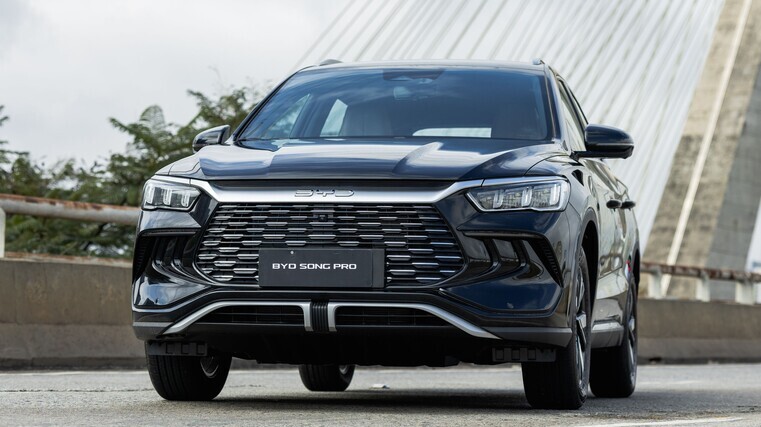
BYD has claimed a global breakthrough in powertrain technology after creating what it says is the first super hybrid vehicle with biofuel compatibility.
Developed specifically for the Brazilian market, the innovation features in the Song Pro COP30, a special edition that will be donated to the United Nations climate summit in that country this month.
The car features dual-mode intelligent (DM-i) technology that offers a predominantly EV driving experience, with the combustion engine functioning primarily as a power generator for the battery, even when driving in hybrid mode.
Engineers from China and Brazil collaborated on the Song Pro’s version of the super hybrid system’s 1.5-litre engine that can run on any ratio of petrol and ethanol, Brazil's most popular green fuel.
The new technology was officially launched as a model rolled off the production line in Camaçari, Brazil, to become BYD’s 14 millionth new-energy vehicle globally.
Thirty examples of this special edition are being donated to COP30, the climate summit being held on November 13 and 14.
Wang Chuanfu, BYD founder and chief executive officer, says: “After two years of effort by more than 100 Chinese and Brazilian engineers … our 14 millionth vehicle rolled off the production line equipped with the world's first plug-in hybrid engine dedicated to biofuel.
“This is not just a technological breakthrough – it is a green and sustainable solution tailor-made for Brazil.”
Part of BYD’s policy of localised production in key regions, the new Camacari factory has been operating since July after being built in 15 months. It has the capacity to produce 150,000 vehicles per year in its first phase and 300,000 in the later stage.
Tyler Li, president of BYD Brazil, describes ethanol as one of the country’s greatest strategic advantages in the energy transition of vehicles.
“Incorporating it into our DM-i architecture represents a historic advance: we value the national renewable energy matrix, in addition to offering consumers a vehicle with greater efficiency, lower environmental impact, and aligned with the country’s energy reality,” he adds
“It is a crucial step toward consolidating Brazil as a global leader in sustainable mobility.”