


Iran war hits car industry
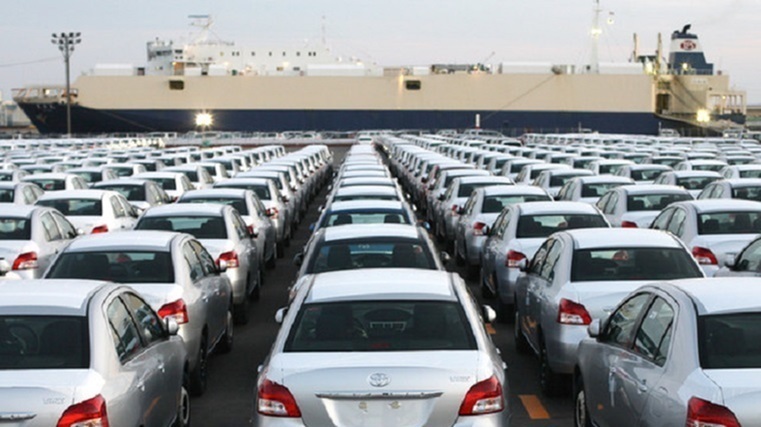
Major Japanese carmakers are concerned the situation in the Middle East could deal a major blow to automotive exports.
The war-afflicted region is a growing market with exports there reaching a record high in 2025, but the prolonged closure of the Strait of Hormuz could disrupt this due to a lack of production bases in the area.
“We’ve been discussing the expansion [of our presence there], but the development of the situation may force us to revise the strategy,” says a spokesman for Mitsubishi Motors. “If the situation drags on like Ukraine, it will become serious.”
In 2023, the company positioned the Middle East and Africa as a “second pillar” after its core market in south-east Asia. This decision was based on the expectation its cars, which boast high durability in harsh environments such as deserts, would be well received there.
According to Finance Ministry trade statistics, Japan’s automotive exports to the Middle East in 2025 reached about 820,000 units, up by 15.3 per cent year-on-year. Vehicles accounted for half of Japan’s total exports to the region.
Toyota exported 320,000 units to the region in 2025 and Nissan 77,784, up by 24 per cent from the previous year. Mitsubishi’s exports there were about 30,000.
“Exports to the Middle East often rely on a route that passes through the Strait of Hormuz,” says Joji Izawa, of the Japan External Trade Organisation. “If this restriction drags on, companies’ inventories in the region may run out, potentially leading to a decrease in car sales.”
The impact could extend to exports other than those destined for the Middle East, reports the Japan News. That’s because the United Arab Emirates is used as a base for exporting used vehicles to developing countries, such as African nations.
Jump in oil prices
Oil prices have surged past US$100 per barrel for the first time since 2022 with Brent crude reported at US$101.19 on March 9 and West Texas Intermediate (WTI) at US $107.06 a barrel.
Qatar has declared force majeure on LNG production at its giant Ras Laffan complex and Saudi Arabia has shut its Ras Tanura plant, the world’s largest oil refinery, after drone strikes. The kingdom is now channelling exports through the much smaller facility at Yanbu on the Red Sea.
Saad al-Kaabi, Qatar’s energy minister, predicts other oil and gas producers in the region will be forced to declare force majeure. He says all Gulf production is likely to stop within days and could push prices up to US$150 a barrel if the conflict continues for some weeks.
Of the top countries for importing oil and gas via the Strait of Hormuz, Japan faces the most direct risk of disruption because of its high share of oil and gas trade through the route and its reliance on imported energy. South Korea ranks second, India third and China fourth.
Fuel up in New Zealand
The average price of unleaded 91 rose by 14 cents to $2.64 over the weekend, according to fuel-tracking app Gaspy. In Auckland, the price of petrol hit a high of $2.99 at a service station in New Lynn by Monday morning. The cheapest available petrol in the city increased 21 cents in six days to $2.41.
In Wellington, the cheapest available petrol had risen 14 cents in the past six days. Meanwhile, 95 octane increased past $3 a litre nationally, hitting $3.12 in Auckland.
Terry Collins, the AA’s principal policy adviser, says $3 a litre could be seen in some places very soon. “I expect it to continue that trend. You’d be struggling to get anything under $2.50 now.” He believes the pressure on oil prices is “going to go months, not weeks”.
European exposure high
Carmakers in Europe say production is still running normally despite the US-Israel conflict with Iran, but shipping lanes critical to the industry’s Asia–Europe supply chains are being strained, raising costs and the risk of fresh disruption.
The Volkswagen Group is “very concerned about the situation in the region”, says a spokesman, adding it is continuously assessing possible influences on its operations and “the safety of employees in the region is a top priority”.
The car industry’s exposure to maritime trade remains significant. Marques and suppliers depend heavily on Asia-Europe sea lanes for semiconductors, battery materials, electronics and other high-value components.