


Green fuel plan for ships
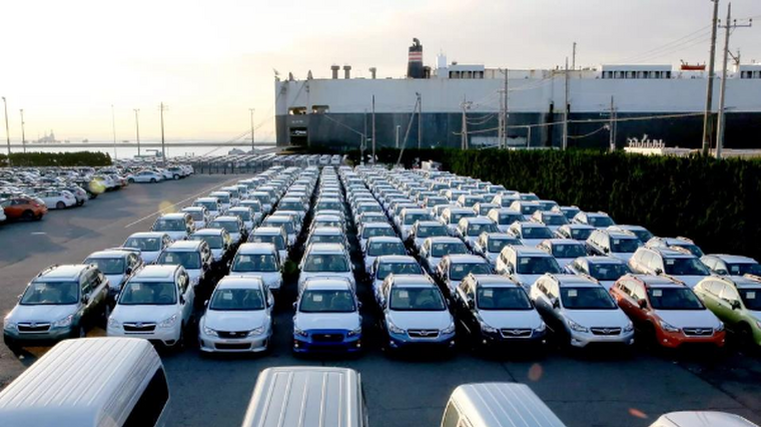
A project including fuel imports, bunkering infrastructure and vessel building aims to establish commercial ammonia bunkering for Japan’s first four ammonia-fuelled car carriers.
Major companies across the country’s shipping industry have launched a joint venture to create an ammonia fuel supply chain to support four vessels constructed and operated by partners in the scheme.
The project will be developed in the Chubu region and, upstream, will extend to fuel procurement and the development of ship-loading facilities.
Power-generation company Jera will source green ammonia produced using renewable energy from India and other areas.
It will also develop ship-loading facilities at a receiving terminal next to its thermal power station in Hekinan, Aichi prefecture, which will serve as an ammonia supply hub for ship bunkering and truck loading to supply the fuel to other businesses.
The next step will be an ammonia bunkering vessel, which is due to be built by Kyokuyo Shipyard with a targeted delivery of 2030. It will conduct ship-to-ship bunkering of ammonia.
It will be owned and operated by NYK, which will establish a 50-50 fuel-sales collaboration with K Line to supply ammonia as a fuel to car carriers. They will apply their operational expertise and experience from handling ammonia and LNG to establish an efficient fuel supply system with strict safety standards.
The bunkering vessel will serve Japan’s first ammonia-fuelled car carriers, two each for K Line and NYK, which are scheduled for delivery in 2030. The ships’ dual-fuel engines will be capable of using ammonia and will have sufficient capacity to complete a trans-Pacific voyage on ammonia alone.
Basic design of the ships will be led by Shin Kurushima Dockyard, which also holds the contract for the two car carriers for NYK Line. The car carriers for K Line will be built by Imabari Shipbuilding and Nihon Shipyard.
The project partners say the development of the ammonia fuel supply chain, and building of the bunkering vessel and car carriers, will create the world’s first integrated commercial supply chain of its type.
They add: “Through this initiative, the companies will promote the decarbonisation of international shipping through a Japanese industry collaboration while also supporting the broader utilisation of ammonia for industrial and other applications.
“In doing so, they aim to contribute to the realisation of a sustainable society and development of a low-carbon ammonia market.”
Scheduled for completion in 2030, the ships are expected to transport finished vehicles for customers including Toyota Motor Corporation. Safety systems will include measures to prevent and detect leaks and neutralise ammonia in the event of a release.
Ammonia produces no carbon dioxide during combustion although its overall environmental benefits depend on how it is made. Green ammonia is produced using renewable energy, while lower-carbon ammonia is manufactured through processes that reduce associated emissions.