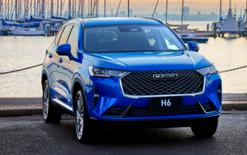


Enter sodium-ion batteries
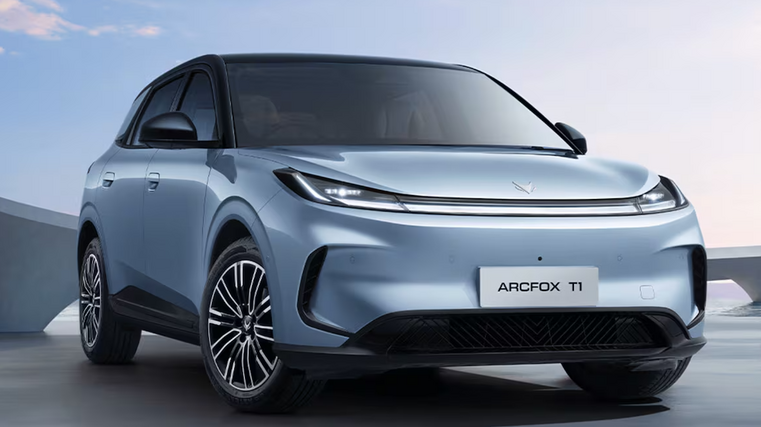
Chinese battery maker Xupai will supply sodium-ion batteries for BAIC’s Arcfox electric vehicles from next year.
It marks a commercial breakthrough for the emerging battery chemistry in automotive low-voltage systems where temperature tolerance and cost matter more than energy density.
The shift signals growing viability for the new technology, which German automotive service provider IAV projects could capture 90 per cent of automotive low-voltage applications within a decade as software-defined vehicles demand more auxiliary power.
Xupai expects to equip at least 200,000 Arcfoxes, potentially more, as China’s market for fully electric vehicles and plug-in hybrids expands.
The sodium-ion batteries will be integrated as the 12-volt auxiliary power responsible for handling non-propulsion functions such as vehicle wake-up operations, including lights, seat adjustments and the centre display, before the car is started and the high-voltage system activates.
The system works alongside the DC-DC converter as a buffer and back-up power source once the vehicle is running.
Desmond Zhang, chief executive of Xupai Power, says the company is also in talks with several unnamed carmakers. Xupai expects sodium-ion to capture significant market share in low-voltage battery systems due to its combination of power performance, cold weather endurance, cycle life, safety and cost.
Zhang says the company’s batteries operate effectively from minus-20C to 80C without thermal management systems for a major advantage over lithium batteries, which degrade at 40C and face charging limitations below minus 20C.
That temperature resilience reduces vehicle complexity and cost by eliminating thermal management hardware, making sodium-ion attractive for marques seeking to reduce bill-of-materials expenses.
This battery technology has been in development for decades but only recently achieved the cycle life and power density needed for motor-vehicle applications. Earlier versions suffered capacity fade and weren’t cost-competitive with lead-acid batteries.
Demand for low-voltage systems is growing as cars become increasingly software-defined and electrified, with low-voltage batteries poised to power more systems including intelligent cockpits, electronic control systems and advanced driver-assistance systems.
High-rate lithium batteries used in low-voltage car systems cost US$0.12 to $0.20 per watt-hour, compared with sodium batteries at $0.10 per watt-hour, Zhang told Automotive News.
“This gives us a cost advantage at the cell level against the lithium chemistry automakers use for these applications.”
Energy storage-grade lithium costs only $0.06 per watt-hour, according to Zhang, but lacks delivery characteristics needed for automotive low-voltage systems.