

Car industry chip fears
Jensen Huang’s abrupt resignation as chief executive officer of Nvidia raises questions about how committed the company will stay to its automotive business.
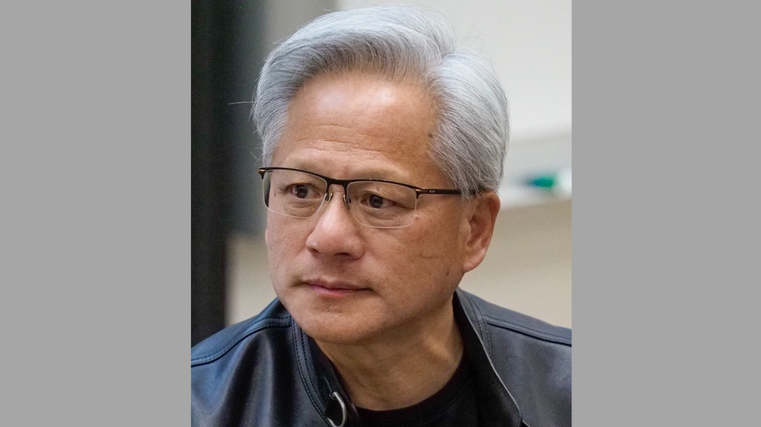
The sector has long been a personal project for Huang, pictured, even though motor vehicles made up only 1.1 per cent of the company’s revenue last year.
Huang, who quit on November 12, made clear for years he would shepherd autonomous vehicle development through any doubt about its returns.
“Nvidia’s CUDA [compute unified device architecture] business used to be zero per cent of our business and was 90 per cent of our cost,” he said at a conference in March. “Any sane person would have given up on that.”
Whoever succeeds Colette Kress, interim CEO, will have to decide if they agree with Huang’s standpoint. Nvidia made US$2.4 billion in revenue from the automotive end market compared with its total US$216b revenue in 2025.
Company’s car business
Nvidia supplies chips to many automotive companies including Hyundai, Lucid, Mercedes-Benz, Stellantis, Volkswagen and Magna International.
Its Thor chip is used as an advanced driver-assistance system and autonomy processor, which can handle feeds and data from cameras, radar and lidar, and make decisions for automated driving tasks.
The technology is powerful and benefits from a halo effect tied to the company’s larger role in the AI revolution.
Other chipmakers have taken different approaches. Mobileye and Qualcomm’s chips have a multiblock architecture with specialised processors for different tasks. For the most part, the blocks are designed not to draw power when not in use.
Some analysts believe Nvidia has little incentive to overhaul its existing chip architecture to reduce power draw for customers in the car industry.
Ali Kani, Nvidia’s vice-president of automotive, has acknowledged Nvidia chips make sense only for advanced stages of autonomy.
“If you needed a few extra sensors or a little bit more compute, we would invest that because it’s worth it,” he said in March. As for good safety ratings, “please buy a purpose-built chip. It’ll be really cheap and it’ll be really low power, and you’re fine”.
The lack of customisation may provide some stability to automotive companies. “What they make for automotive isn’t very different than what would go into a robot,” Kevin Cassidy, an analyst at Rosenblatt Securities, told Automotive News.
Associations with Nvidia have been a boon for car industry businesses by projecting an image of cutting-edge technology investment. That has been frustrating for longtime automotive chipmakers.
Uncertainty at Nvidia could provide some relief to competitors. Mercedes-Benz has confirmed its collaboration with Nvidia “continues unchanged”. Volvo Cars says it “has an ongoing collaboration with Nvidia”.
Automotive companies “need to plan their businesses out five years at a minimum”, adds Cassidy. “Maybe the automotive industry has questions.”
Chaos surrounds Nvidia
The collapse of leadership at Nvidia over the past week has been swift. At the end of last year, it had a market capitalisation of more than US$4 trillion, the first public company in the world to reach that milestone.
Huang received compensation worth US$152.9 million from Nvidia this year, 23 per cent less than the prior year. He has developed a cult of personality on the level of Apple’s Steve Jobs and Tesla’s Elon Musk.
The New York Times reported in late October that the American government was looking into a relationship between Huang and Alice Huang, who is no relation, a top executive at Singapore-based data centre company Megaspeed.
Officials determined she was an agent of the Chinese government and was possibly funnelling advanced Nvidia chips to China and sending information back to Beijing.
On November 8, Huang emailed his employees to apologise for an extramarital affair. Three days later, the New York Times reported he also had a relationship with Nvidia’s vice-president of health care, Kimberly Powell. On November 12, Nvidia announced Huang’s resignation.
Huang has since eaten some humble pie. On November 17, in his first public statement since resigning, he struck a contrite tone by saying he is committed to co-operating with the board’s investigation.
“I created problems for the board I deeply regret,” he adds. “If the board of directors decides my return is in the best interest of our shareholders, employees, the company and America, I would be honoured to return as CEO.”