


Boost in port’s profits
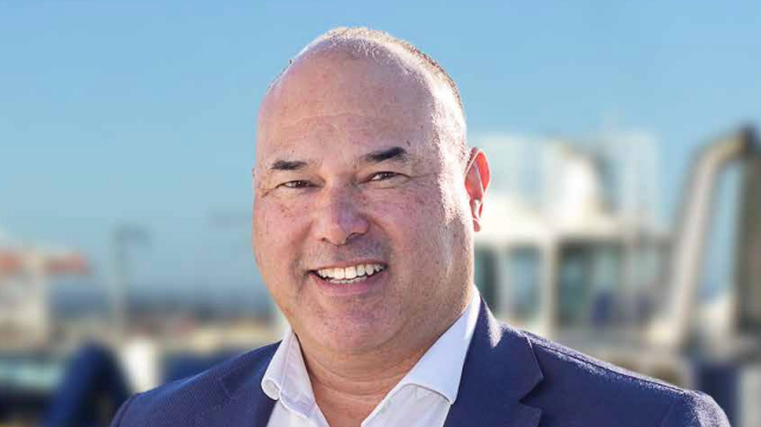
Changes in cargo mix and a higher proportion of containers has seen Port of Tauranga’s profit increase in 2021/22 despite flat annual trade.
The company recorded net profit of $111.3 million, which was up by 8.7 per cent on the previous financial year and off revenue of $375.3m – up from $338.3m.
The improvement was off the back of total trade of 25.6 million tonnes compared with 25.7m tonnes in 2020/21.
Chief executive Leonard Sampson, pictured, describes all of this as a pleasing result for what was another year of challenging operation conditions stemming from supply-chain disruption in New Zealand and globally.
“The highlight for me is operational resilience. That’s down to our people, service partners and customers continuing to be able to trade in what have been tough conditions.”
The improved outcome on trade was down to a number of factors. “There’s obviously a cargo-mix shift, we’ve had flat volumes, but an increase in container volumes for the year, and it’s slightly less than to some of the bulk commodities with logs being down slightly,” says Sampson.
“There’s also an element of pricing but, rather than specifically pricing, we’ve seen an increase in containers in the terminal. Because of continued congestion and delays with vessels arriving, we still have more containers sitting in terminal at any stage and [charging] the storage costs associated with those.”
Log-export volumes dropped by 4.4 per cent to 6.1m tonnes due to weak pricing, while dairy and meat exports declined by 5.5 and 9.1 per cent respectively. Kiwifruit exports continued to grow in volume, with direct exports climbing by 8.8 per cent.
Overall, imports increased by three per cent to 9.7m tonnes and exports decreased 2.5 per cent to 15.9m.
Volumes through MetroPort – Port of Tauranga and KiwiRail’s inland container port in Auckland – increased by 10.2 per cent, reflecting import cargo being diverted to Tauranga to avoid delays in Auckland.
Sampson says: “That really is a reflection of ongoing challenges in Auckland throughout the course of the year, and our elements have been able to help out and get more volume to Auckland.”
Ship visits increased for the first time since 2018, up 4.7 per cent to 1,369. Twenty-six fewer vessels called at the container terminal, but volume exchanged per container ship increased by 10.7 per cent compared with the previous year.
Julia Hoare, who chairs Port of Tauranga, says the congestion situation has been exacerbated by berth capacity at the container terminal.
“We could take more container ships if we had the extra berth that we’ve been trying to get started for the past three-and-a-half years.”
Planning and consultation for the berth extension began in early 2019. The company was unsuccessful in getting the project included in the government’s shovel-ready scheme and for fast-track consenting. It’s now facing a delayed Environment Court hearing in March 2023.
“It is incredibly frustrating after years of consultation and planning to be still ‘on hold’,” adds Hoare. “Had we not had these delays, we would be finishing construction now. Our customers are facing the prospect of continued supply chain disruption and deteriorating service levels with little relief in sight.
“New Zealand relies heavily on international shipping and it is critical that the country expedites further capacity as soon as possible. Tauranga is the best and easiest option to achieve this quickly.”
In its annual report, the company stresses the importance of an efficient Upper North Island supply chain.
After numerous reports and reviews on aspects of this freight network, including ports, the Ministry of Transport is currently drafting a national supply-chain strategy.
“Our preference has always been pragmatic, fact-based analysis and solutions, rather than politically motivated, interest-driven proposals,” states Ports of Tauranga.
“Our vision for the Upper North Island supply chain involves enhancing existing assets while investing in supporting infrastructure such as rail connections. An integrated, efficient and cost-effective supply chain can be achieved with government assistance by removing regulatory and legislative barriers, and investment in transport networks.
“It is our belief current legislation and policy does not encourage nor facilitate investment, even when it is environmentally sound and/or nationally significant. The consenting process is complex, time-consuming and costly.
“It prevents the adoption of new technology – with its economic and environmental benefits, ensures we are always ‘playing catch-up’ with capacity and stops existing assets from being used to their full potential.”
The port is hopeful that vessel-schedule reliability will regain some consistency in the second half of the 2023 financial year.
However, the pandemic hangover of high costs, increasing interest rates and reduced consumer demand is likely to temporarily impact some cargo volumes. Geopolitical pressures, including Russia’s invasion of Ukraine and China’s elimination strategy for Covid-19, will also continue to impact the global supply chain.
Sampson notes that timeframe related to when other ports in the county have been saying they might be in a position to reinstate berthing windows.
“From a Tauranga perspective, we could reinstate windows now, but we can’t do it in isolation. We need all the ports to be able to do the same.”