


Association tackles sustainability
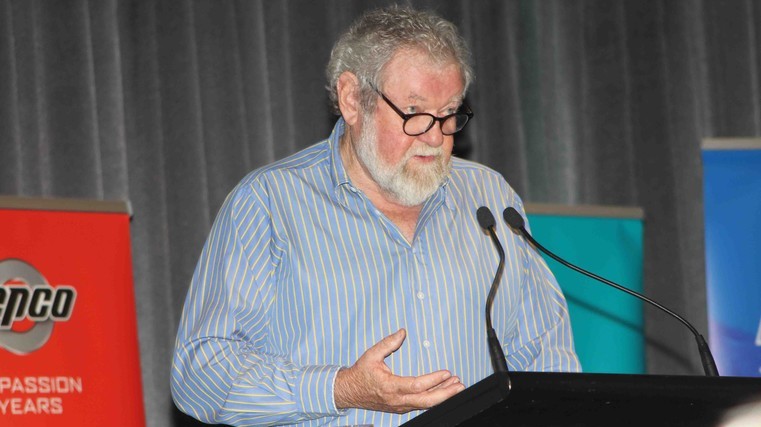
In-service emissions from the fleet and the safety of vehicles on our roads need to be considered as the automotive industry shifts to a more sustainable future.
Those were among the messages from the chairman of the Motor Trade Association (MTA) at its annual conference on October 14.
Bob Boniface, pictured, says the association has just finished the country’s “first empirical data-point collection” after emissions testing about 300 vehicles aged eight years and over on arrival for service and post-service.
“We are currently commencing analysis and will engage with the government and Ministry of Transport when we have a conclusion and recommendation,” he told members in Auckland.
“Early data suggests significant improvement in HC [high hydrocarbon] levels from servicing and we’re keen to engage in more conversation around the benefits to New Zealand’s footprint of in-service testing to underpin regular servicing.”
Boniface also flags the review of warrant of fitness (WOF) frequency implemented in 2014 was never contemplated as being “set in stone” when it comes to one-year inspections for post-2000 vehicles.
“We now have cars 22 years old only being inspected annually. During the period from 2013-19 and based on latest data, the percentage of deaths caused by mechanical malfunction has risen from five to 11 per cent. Stricter maintenance of the older fleet must be addressed.”
In a wider context, the MTA views it as essential for all participants in the automotive industry to be moving in a sustainable direction.
Boniface says the association defines sustainability as “improving the business efficiency and financial performance of our member businesses, while also improving their real carbon footprints, environmental reputation, compliance and ethical performance”.
“Sustainable practices, in the environmental sense, are good for our planet and families,” he told conference delegates. “It’s the right thing to do and offers opportunities for everyone. However, we aren’t of a mind to measure our members’ footprints, and plant trees and veggies to cover them.
“The MTA’s goal in this space is to further develop resources, materials, referrals, case studies and sector expertise to assist and encourage members to make great day to day and investment decisions that result in incremental improvements in our industry’s footprint while increasing the viability of businesses.
“We have initially established an internal cross-functional team to operationalise this strategy and we’re actively seeking a lead specialist to join this team by early 2023.
“You will already be seeing a different emphasis in much of our communications. For instance, there will be case studies in Radiator magazine demonstrating easy gains to be made, and money to be saved in areas such as waste-stream minimisation and recycling.
“I see the wider membership as a team with common goals, and many of our larger member groups are active locally and cascading down practices and ideas from their parent groups.
“I’m hoping we can develop a sharing approach of good ideas for the MTA to cascade down to smaller, lower overhead members, who tend to be battling alligators all day but can pick up ready-made solutions with our assistance.
“In terms of business efficiency, you will see significant areas of emphasis in efficiency and productivity from our thrust on training. Since we have a method to monitor, we’re setting a target of 20 per cent improvement in average member workshop productivity in five years.
“There will be many other issues to face as decarbonisation progresses, new types of members, the need for agility, but also the need to be here to profitably service the four million-plus ICEs on the road, many of which will still be for the next generation.”
Internal matters
Boniface is pleased with the way the MTA’s communications have improved.
“Radiator is now an informative and vibrant publication, and our weekly newsletters carry important material. Born in the Covid period, these have a superb opening rate of 45 per cent. That’s fantastic because some years back it was under 10 per cent.
“Just to make the year more interesting for me as new chairman, we also dealt with our CEO of five years leaving, our landlord kicking us out, and significant churn and wild salary inflation in the overheated Wellington market.
“Most of this turmoil is now behind us thanks to the diligent efforts of interim CEO Ian Pike. Also, I must thank the board for their faith and conviction to navigate all the rocky bits.
“Ian has made some 21 fantastic staff appointments during the year, some replacements and some new roles, so we’re nearly fully staffed to continue executing our strategy.
“In addition, we have now left our old building, will soon have a permanent smaller Wellington home, and have opened the MTA Auckland Campus in the Auxo [Sam] Software building and secured further space there to future-proof it.”